 Save
Save There's something about the smell of ginger and garlic hitting hot broth that makes a kitchen feel instantly alive. I discovered this soup on a gray afternoon when my neighbor stopped by with a bag of fresh bok choy from her garden, and I realized I had everything else already waiting in my pantry. Twenty minutes later, we were sitting with steaming bowls, and she asked for the recipe before she'd even finished her first spoonful. It became the thing I make when someone needs comfort but doesn't have time to wait.
My partner surprised me by making this for dinner after I'd mentioned wanting something warming but light, and I realized then how a simple soup can feel like someone really listened. We added extra cilantro because that's what we had, and somehow that small choice made it feel entirely ours. That's when I understood this recipe isn't rigid—it bends to whatever you have and whoever you're feeding.
Ingredients
- Low-sodium chicken or vegetable broth (6 cups): This is your foundation, so use something you'd actually drink on its own, not the salty stuff that overpowers everything else.
- Fresh ginger, peeled and thinly sliced (1 tablespoon): Slicing rather than mincing lets you fish out the pieces later if you want, and releases a gentler warmth than grated ginger would.
- Garlic, minced (2 cloves): Two cloves keeps the flavor bright without turning aggressive—save the heavy garlic hands for other dishes.
- Soy sauce (1 tablespoon): The salt and umami anchor, so taste before adding more because broth saltiness varies wildly.
- Sesame oil (1 teaspoon): A small amount goes far; this is about fragrance and richness, not drowning the soup.
- Rice vinegar (1 teaspoon): Just enough to keep everything from tasting flat and one-note.
- Green onions, sliced (2, plus extra for garnish): Split these into white parts for the broth and green parts for finishing so you get two different flavor moments.
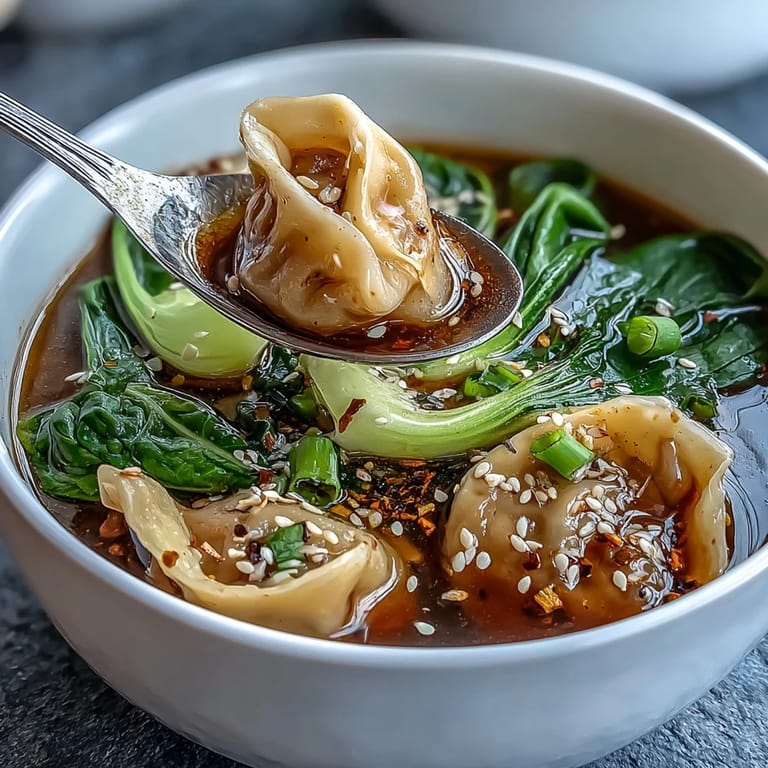
- Baby bok choy, halved or quartered lengthwise (2 cups): Keeping them in pieces means they stay tender-crisp instead of turning to mush, and they look prettier in the bowl.
- Carrot, julienned or thinly sliced (1 medium): Thin cuts mean they cook in minutes and add a subtle sweetness without dominating.
- Shiitake mushrooms, stems removed and sliced (½ cup): Those earthy caps are what you want; the stems are tough so don't waste time chewing them.
- Frozen or fresh Asian dumplings (16-20): Check the package for cooking time because it varies, and use whatever filling calls to you—this soup welcomes them all.
Tired of Takeout? 🥡
Get 10 meals you can make faster than delivery arrives. Seriously.
One email. No spam. Unsubscribe anytime.
Instructions
- Build your flavor base:
- Pour the broth into a large pot and add the ginger slices, minced garlic, soy sauce, sesame oil, rice vinegar, and the white parts of your green onions. Bring it all to a gentle boil over medium-high heat, watching for the moment the surface ripples with movement.
- Let the magic happen:
- Turn the heat down to medium and let everything simmer quietly for five minutes—this is when the ginger and garlic surrender their flavors to the broth, making it taste like it's been cooking all day. You'll notice the aroma changing, becoming deeper and more inviting.
- Add the vegetables that need time:
- Drop in your carrot slices and mushroom pieces, and simmer for three minutes until they just begin to soften. They should still have some resistance when you bite them.
- Welcome the dumplings:
- Gently add your dumplings to the simmering broth and let them cook according to their package instructions—usually five to seven minutes for frozen ones, or three to five if they're fresh. They'll sink at first, then float to the surface when they're done, which is your signal they're ready.
- Finish with the tender greens:
- Add the bok choy pieces and cook for just two to three minutes until they're bright green and tender but still have a little bite to them. This timing is crucial because overcooked bok choy turns to sadness.
- Taste and adjust:
- Taste a spoonful of broth and decide if it needs more soy sauce for saltiness or another splash of vinegar for brightness. Trust your tongue here because every broth brand behaves differently.
- Serve with intention:
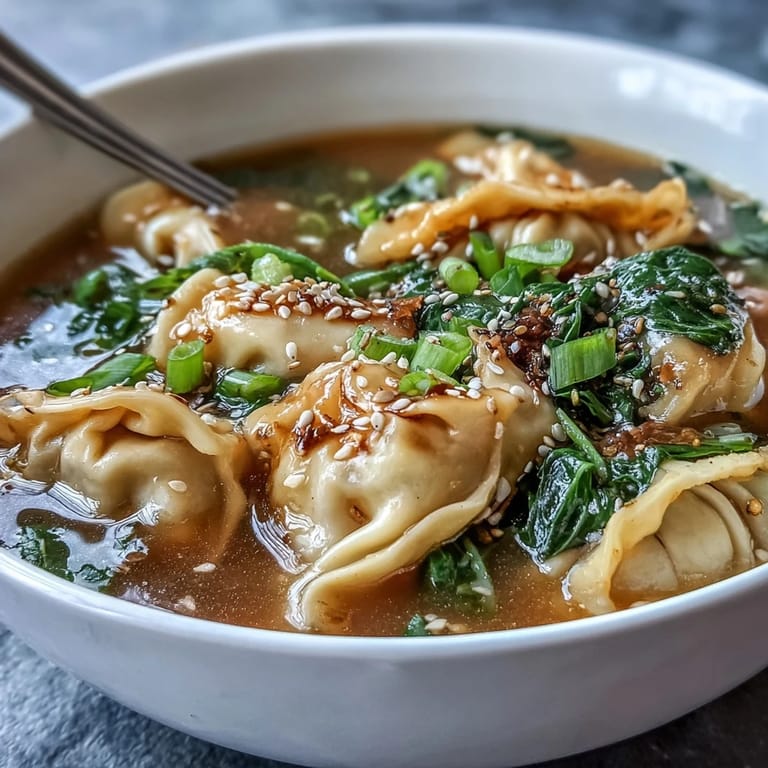
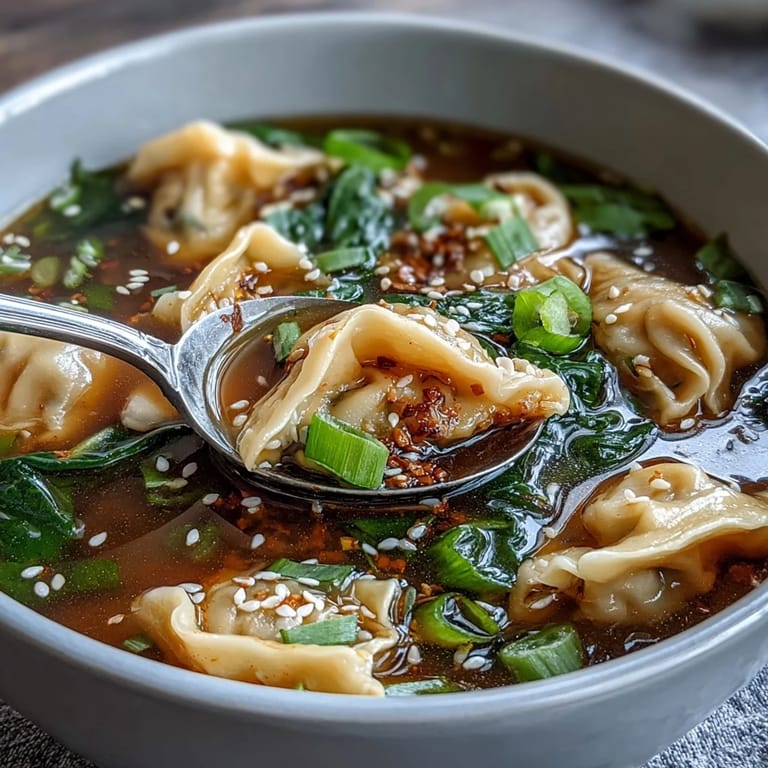
- Ladle the soup into bowls, making sure each one gets dumplings, vegetables, and plenty of that golden broth. Scatter the fresh green parts of your green onions over top, add cilantro if you have it, a drizzle of chili oil if you like heat, and a pinch of sesame seeds for texture and nuttiness.
 Save
Save A friend's daughter asked for a second bowl after barely touching the first, then whispered that she usually hated vegetables—but something about them floating in this warm broth made them feel different, almost like they belonged there. Watching her discover that food doesn't have to be complicated to be memorable reminded me why I keep making this soup.
The Ginger Question
Fresh ginger sliced thin and left in the broth gives you a warming sensation that builds as you sip, but some people find whole slices distracting. If you prefer a more integrated flavor, you can mince it finely or even grate it, though the soup will look slightly cloudier. I've also made this with powdered ginger in a pinch—use ¼ teaspoon because it's concentrated and can quickly overwhelm everything else.
When You Don't Have Bok Choy
Spinach works beautifully and cooks even faster, taking maybe a minute and a half before it's perfectly wilted. Napa cabbage adds a subtle sweetness and keeps its structure longer, so you can cook it for three full minutes without worry. Even hearty greens like kale or Swiss chard belong in this soup if that's what's in your fridge—just extend the cooking time by another minute or two.
Making It Entirely Your Own
This is one of those soups that invites personalization without demanding it, which is part of why it works so well as a weeknight meal. Some nights I add a splash of fish sauce for umami depth, other times I stir in a teaspoon of chili paste for warmth that builds on your tongue. The bones of the recipe stay the same, but the details shift with whatever mood you're in and whatever ingredients are actually in your kitchen.
- A few cashews or peanuts scattered on top add a richness that nobody expects but everyone remembers.
- Rice wine vinegar can be swapped for regular white vinegar if you need to, though the flavor will be slightly sharper.
- If you make extra broth intentionally, you've got the foundation for a quick meal the next day.
 Save
Save There's something deeply satisfying about ladling a bowl of this soup and knowing that warmth, flavor, and real food are arriving in about thirty-five minutes from now. Make it once and you'll understand why it gets requested again and again.
Recipe FAQs
- → How long should I cook the dumplings?
Frozen dumplings generally take 5–7 minutes to cook until they float, while fresh dumplings require about 3–5 minutes.
- → Can I substitute bok choy with another vegetable?
Yes, spinach or napa cabbage work well as substitutes and maintain a similar texture.
- → What broth options can I use?
Chicken or vegetable broth both provide a great base, suitable for various dietary preferences.
- → How can I enhance the umami flavor?
Adding a splash of fish sauce or extra soy sauce can deepen the savory notes of the broth.
- → Are there any allergen concerns with the ingredients?
Be aware that dumplings and soy sauce contain wheat and soy; check labels for possible egg or shellfish in the dumplings.