 Save
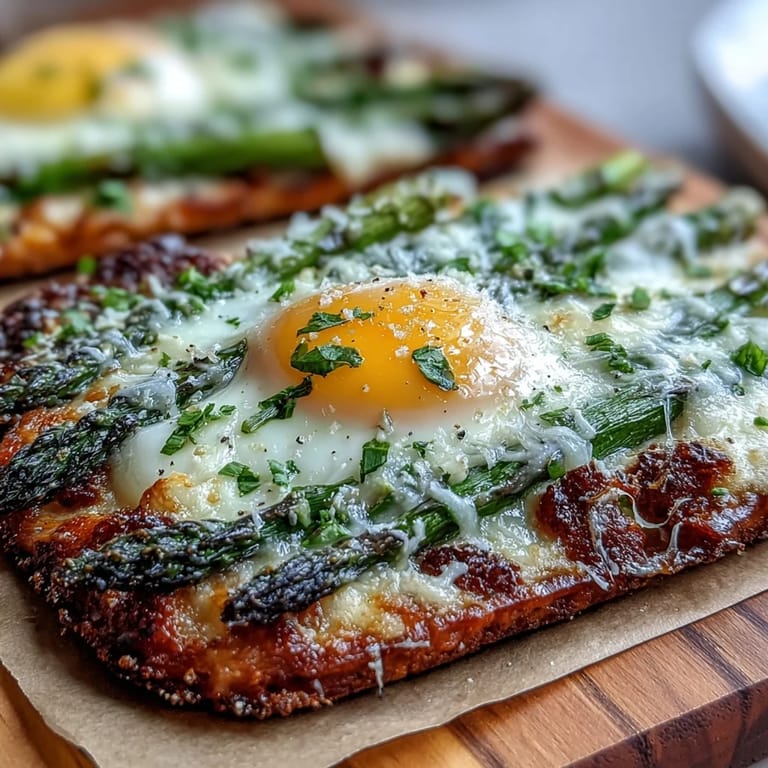
Save There’s a special kind of quiet that settles over the kitchen when I’m making this asparagus and egg flatbread in the early afternoon. Between the gentle snap of asparagus spears and the anticipation as eggs crack open just so, the whole process has a meditative charm. The scent of olive oil warming in the oven is so inviting it often lures my partner from their home office. While simple, this dish always surprises me with its elegance, turning what might seem ordinary into something you’d happily linger over at brunch.
One gloomy Sunday, I made these flatbreads for friends who dropped by unexpectedly—what began as a ‘let’s just snack’ turned into an impromptu brunch, laughter echoing as we tried slicing the flatbread without letting yolk escape. I still smile at the memory of us negotiating over the crispest corners and crackling asparagus tips.
Ingredients
- Thin store-bought flatbreads or naan (2 pieces): Trust me, sturdy and thin flatbreads crisp up beautifully without overwhelming the toppings—pitched just right for holding everything.
- Olive oil (2 tbsp): Brushing the bread ensures golden edges and a subtly earthy aroma; try a good, peppery oil if you have it.
- Asparagus spears (12–14, thin, trimmed): Snapping off the woody ends makes prep quick, and using thinner stalks ensures they cook perfectly without turning mushy.
- Large eggs (2): Crack them gently into a well among the asparagus; farm-fresh eggs show off the richest color and flavor here.
- Freshly grated parmesan cheese (1/2 cup): Grate it yourself for melty, salty clouds that pull all the flavors together (pre-shredded can go a little gummy).
- Lemon zest (1/2 tsp): It wakes the whole dish up—zest just the yellow part to avoid bitterness.
- Black pepper (1/4 tsp): Gives subtle heat and depth, best cracked fresh if you can.
- Sea salt (1/2 tsp): Sprinkle evenly—readily enhances every bite, especially the cheesy, eggy middles.
- Crushed red pepper flakes (1/2 tsp, optional): Adds a nice kick; I usually leave it on the table for everyone to add their own.
- Fresh chives or parsley (2 tbsp, finely chopped): These fresh herbs sprinkled at the end make everything look and taste brighter.
Tired of Takeout? 🥡
Get 10 meals you can make faster than delivery arrives. Seriously.
One email. No spam. Unsubscribe anytime.
Instructions
- Get the Oven Ready:
- Preheat your oven to 220°C (425°F), sliding a baking sheet or pizza stone in so it’s properly hot and ready for crisping.
- Prepare the Flatbreads:
- Brush one side of each flatbread with olive oil—the gentle swish of the brush helps coat every patch and promises extra crunch later.
- Layer Those Goodies:
- Arrange asparagus on each flatbread, nestling them diagonally or straight for a casual look; sprinkle with half the parmesan, lemon zest, pepper, salt, and red pepper flakes if you crave a little heat.
- Make the Egg Wells:
- Part the asparagus in the center of each flatbread, then carefully crack one egg into each space so the yolks stay as puddles, not rivers.
- Cheese it Up:
- Sprinkle over the rest of the parmesan—don’t worry if a little falls onto the parchment, those bits brown nicely.
- Into the Oven:
- Slide the flatbreads (parchment and all) onto your roaring hot baking sheet or stone; bake for 10–13 minutes or until the edges are golden, eggs just set, and the asparagus turns a glossy, bright green.
- Finish and Garnish:
- Once out, rain down fresh chives or parsley, slice into wedges, and get ready—these don’t stick around long.
 Save
Save There was a moment when our normally rushed weekday dinner joyfully paused as my partner and I hovered over the cutting board, marveling at the runny yolks and green spears, forks at the ready, both grinning before the first bite.
Baking Sheet or Pizza Stone – Which Works Best?
Both options get you nicely crisped flatbreads, but I’ve found a pizza stone really ups the crunch factor and mimics a wood-oven finish. If you have one, preheat that stone well—it’s worth the wait for the shattering snap when you cut in.
Ways to Make This Dish Your Own
Sometimes I get playful by swapping in pecorino or a dollop of goat cheese in place of parmesan, or drizzle a touch of truffle oil right before serving for special brunches. Mixing in different herbs, or tossing the asparagus with a splash of balsamic, brings new personality each time.
Making Flatbread Brunch a Breeze
Keeping prepped asparagus and fresh herbs on hand means turning out this flatbread takes barely any time or thinking. I often do the assembly right on the parchment, so I can transfer the whole thing without worrying about sticking or spills just as the oven is ready.
- If you don’t have parchment, a lightly floured pan works too but clean up is easier with paper.
- Want crisper yolks? Bake a minute longer and check them through the oven window.
- A big spatula helps move everything without breaking that beautiful egg center.
 Save
Save If you ever need a meal that feels both inviting and impressive with basically zero fuss, this flatbread is a winner. Here’s hoping it becomes a go-to for you, too.
Recipe FAQs
- → How do I get a crispier flatbread base?
Brush the flatbread lightly with olive oil and preheat a baking sheet or pizza stone in the oven. Bake directly on the hot surface and avoid excess toppings that add moisture; this helps the edges brown and crisp quickly.
- → How can I ensure the egg yolk stays runny?
Create a small well in the asparagus nest so the white sets around the yolk. Bake 10–13 minutes at 220°C (425°F) and check visually—remove when whites are set but yolks still jiggle slightly. Reduce time for softer whites, increase for firmer yolks.
- → Can I use frozen asparagus?
Thaw and pat the spears very dry before arranging on the flatbread. Blotting removes excess water that would prevent crisping; you can also roast briefly before adding to concentrate flavor and avoid sogginess.
- → What are good cheese substitutions?
Pecorino adds a sharper tang and crumbled goat cheese lends creaminess and acidity. Use finely grated hard cheeses sparingly to avoid overwhelming the delicate asparagus and egg balance.
- → How to adapt for gluten-free or whole-grain options?
Swap store-bought flatbread for a whole-wheat or certified gluten-free flatbread of similar size. Adjust baking time slightly if the alternative base is thinner or denser to reach desired crispness without overcooking the egg.
- → How should leftovers be stored and reheated?
Store cooled flatbreads in an airtight container in the fridge for up to 2 days. Reheat on a baking sheet in a 180°C (350°F) oven until warmed and edges crisp; avoid microwave reheating, which softens the crust.