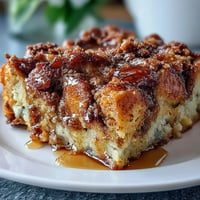
 Save
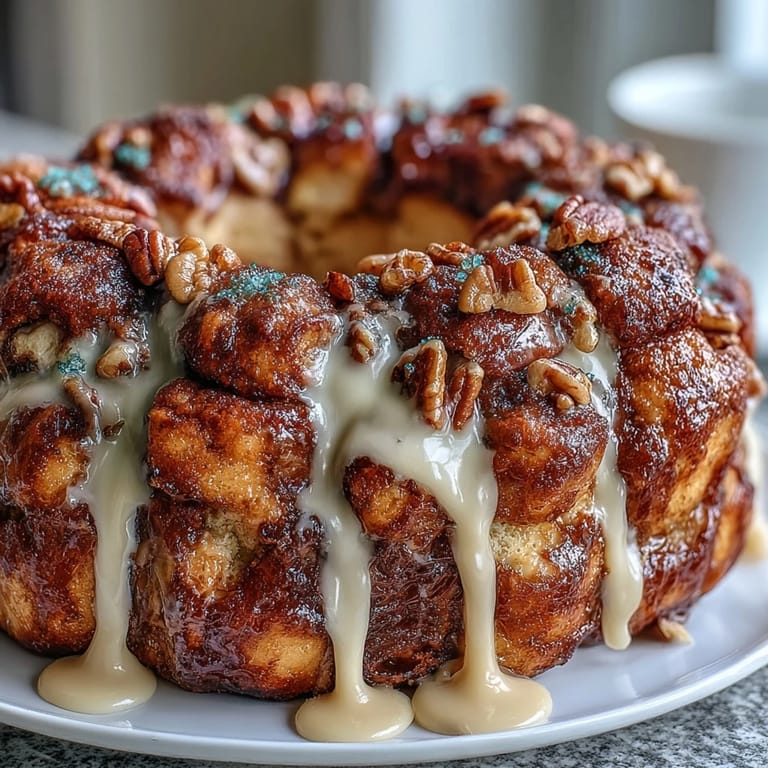
Save The first time I made King Cake monkey bread, I wasn't thinking about Mardi Gras traditions or New Orleans history—I was thinking about my sister's disappointed face when she found out we couldn't attend the parade that year. So I decided to bring the celebration to her kitchen instead, armed with cinnamon sugar, cream cheese, and those jewel-toned sugars that practically glow under kitchen lights. Watching her pull apart those first warm, buttery pieces while purple and green sugar dusted her fingers felt like creating a small magic trick with just butter and biscuits. That's when I realized this wasn't just a dessert; it was a way to say we're still celebrating together, even when plans change.
My neighbor stopped by mid-preparation one February afternoon, and I ended up recruiting her to help dip dough balls in butter while we listened to old brass band recordings. She was skeptical at first—"It's just monkey bread with food coloring"—until the Bundt pan came out of the oven and that smell hit us both. The way the caramelized brown sugar and pecans had created this golden crust while the inside stayed pillowy soft changed her mind entirely. Now she texts me every year asking if I'm making it again.
Ingredients
- Refrigerated biscuit dough (2 cans, 16 oz each): These are your canvas—they bake up tender and absorb all those buttery, sugary layers without becoming dense or heavy.
- Unsalted butter (1/2 cup melted): This carries all the flavor and helps everything turn golden and cohesive, so don't skip it or substitute it with oil.
- Granulated sugar and ground cinnamon (3/4 cup sugar, 2 tsp cinnamon): The ratio here matters—too much cinnamon tastes medicinal, too little and you lose that warm spice note that makes this feel special.
- Light brown sugar (1/2 cup packed): This adds deeper caramel notes and slight moisture that keeps layers from drying out during baking.
- Chopped pecans (1/2 cup, optional): They add texture and richness, but skip them entirely if allergies are a concern—the bread is stunning either way.
- Cream cheese (4 oz softened): Softening it at room temperature matters more than you'd think; cold cream cheese won't blend smoothly and you'll end up with lumps in your icing.
- Powdered sugar, milk, and vanilla (1 cup, 2 tbsp, 1/2 tsp): These create an icing that's pourable but not too thin—thick enough to cling to warm bread but fluid enough to drizzle.
- Colored sanding sugars (purple, green, gold): Find these in the baking aisle or online; regular sprinkles work but sanding sugar catches the light and looks more intentional and celebratory.
Tired of Takeout? 🥡
Get 10 meals you can make faster than delivery arrives. Seriously.
One email. No spam. Unsubscribe anytime.
Instructions
- Prepare your pan and oven:
- Preheat to 350°F and grease a 10-inch Bundt pan thoroughly—this bread has enough sugar that sticking is a real possibility, so don't skip this step.
- Make the cinnamon coating:
- Whisk together granulated sugar and cinnamon in a shallow bowl, breaking up any clumps so every dough ball gets an even coating.
- Shape the dough:
- Cut each biscuit into quarters and roll them into balls between your palms—this takes a few minutes but meditative, and you'll end up with roughly 64 pieces.
- Coat each piece:
- Dip each ball in melted butter, then roll in cinnamon sugar, making sure every surface gets covered so you get that caramelized flavor in every bite.
- Begin the first layer:
- Place half the coated balls into the Bundt pan, nestling them together so they form an even layer across the bottom.
- Add filling between layers:
- Sprinkle half the brown sugar and half the pecans over the first layer of dough balls, distributing them evenly so every section gets some.
- Complete with second layer:
- Add the remaining dough balls, then top with the rest of the brown sugar and pecans, finishing with any remaining melted butter drizzled over the top.
- Bake until golden:
- Bake for 32 to 38 minutes—the bread should be deep golden brown and a toothpick inserted into the center should come out clean or with just a few moist crumbs.
- Cool and invert carefully:
- Let the bread rest in the pan for 10 minutes (this matters—it firms up enough to hold together), then run a knife around the edges and invert onto a serving plate or cake stand.
- Make the icing while bread cools:
- Beat softened cream cheese until completely smooth, then add powdered sugar gradually, mixing in milk and vanilla until you have a consistency that's thick enough to coat but still pourable.
- Frost and decorate:
- Drizzle icing over the still-warm monkey bread, then immediately—while the icing is wet—sprinkle purple, green, and gold sugars over different sections to create that authentic King Cake striped effect.
- Serve and share:
- Let people pull apart pieces while it's still warm; the butter and icing are at their best when the bread is still radiating heat from the oven.
 Save
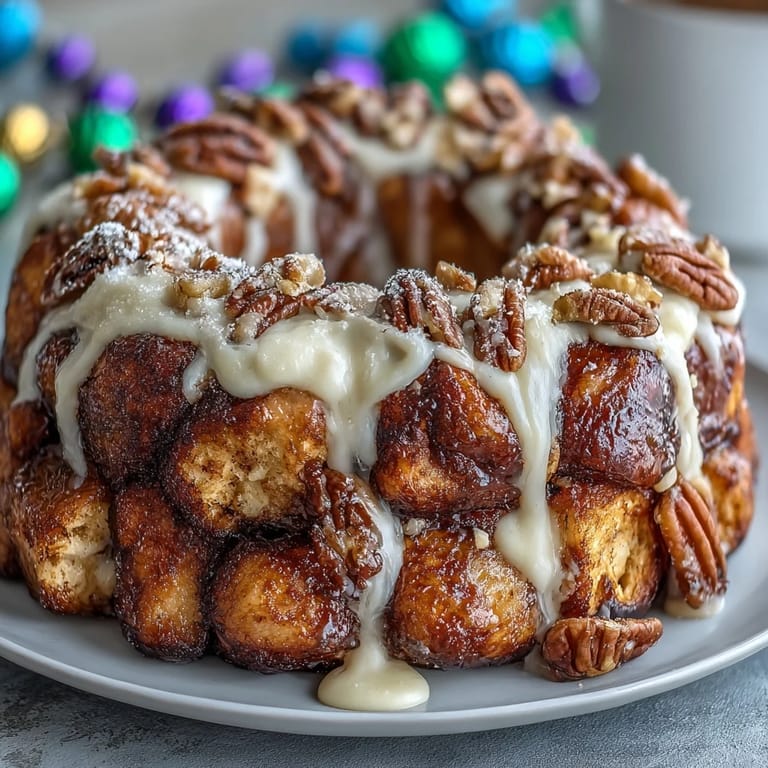
Save There's something about watching a group of people reach for a piece of this bread that feels different from other desserts—maybe because pulling it apart gives permission to be a little messy, a little less formal. My parents' book club fell silent for a full minute after their first bites, which for that particular group felt like the highest compliment imaginable.
The Magic of Mardi Gras Flavors at Home
You don't need to be in New Orleans to capture that celebratory spirit, and this bread proves it. The cinnamon brings warmth and familiarity, the brown sugar adds depth that plain granulated sugar can't match, and the pecans (if you use them) ground everything in Southern tradition. What makes it feel festive is mostly the colors and the ritual of layering—when you're arranging dough balls and sprinkling sugars, you're building anticipation for something special. It's the kind of dessert that tastes like occasion, even if you're just marking an ordinary Tuesday.
Timing and Make-Ahead Options
From start to finish, this takes just over an hour, which means you can make it in the morning and serve it warm for dessert without spending your whole day in the kitchen. The real time commitment is the assembly—cutting and rolling the dough balls and dipping each one—but it's the kind of task you can do while listening to music or chatting with someone, making it feel less like work. If you're genuinely short on time, you can prep everything except baking the night before; just cover the assembled Bundt pan and refrigerate it, then add 5 to 10 minutes to the baking time to account for the cold start.
Storage and Keeping It Fresh
This bread keeps well at room temperature in an airtight container for up to two days, though honestly it's best eaten within 24 hours when the texture is still tender and the icing hasn't fully hardened. If you're storing leftovers, wrap the whole thing loosely in foil or transfer it to a container with a secure lid, and don't refrigerate it unless you absolutely have to—cold makes the butter firm up and the bread taste stale. One last thing: if you're hiding a plastic baby in the bread as tradition dictates, make sure to tell your guests before anyone bites down, and retrieve it before serving.
- Serve this warm or at room temperature, but not cold, or the butter coating becomes waxy and unpleasant.
- If making ahead, you can assemble it completely, let it cool, wrap it well, and gently reheat it in a 300°F oven for 10 minutes before serving.
- This freezes beautifully for up to a month—just thaw it completely at room temperature and reheat gently before adding fresh icing and sugars.
 Save
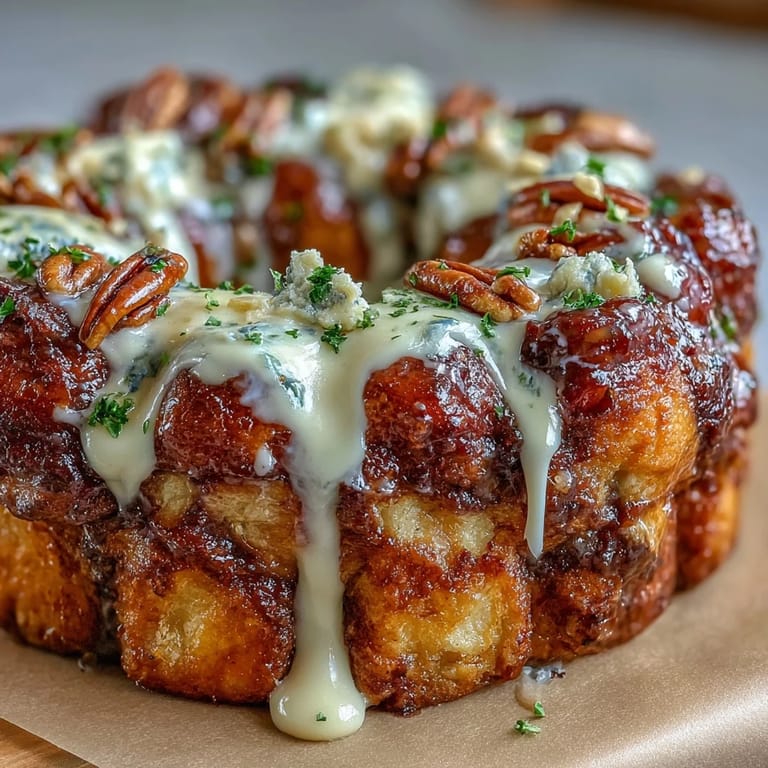
Save This bread becomes the thing people ask you to make, the dessert that gets remembered long after the meal ends. Make it when you want to turn an ordinary gathering into something that feels intentional and celebratory.
Recipe FAQs
- → What type of dough is used?
Refrigerated biscuit dough forms soft, pull-apart pieces with a tender crumb.
- → How is the cinnamon sugar applied?
Dough balls are dipped in melted butter then rolled in cinnamon sugar for sweet swirls.
- → Can nuts be omitted?
Yes, pecans are optional and can be left out or replaced with walnuts per preference.
- → How is the cream cheese icing prepared?
Softened cream cheese is mixed with powdered sugar, milk, and vanilla until smooth and pourable.
- → What gives the colorful look?
Sections of purple, green, and gold sanding sugars are sprinkled atop the icing for a festive appearance.
- → How long does leftover bread stay fresh?
Store leftovers covered at room temperature for up to two days to maintain softness.