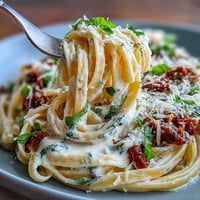
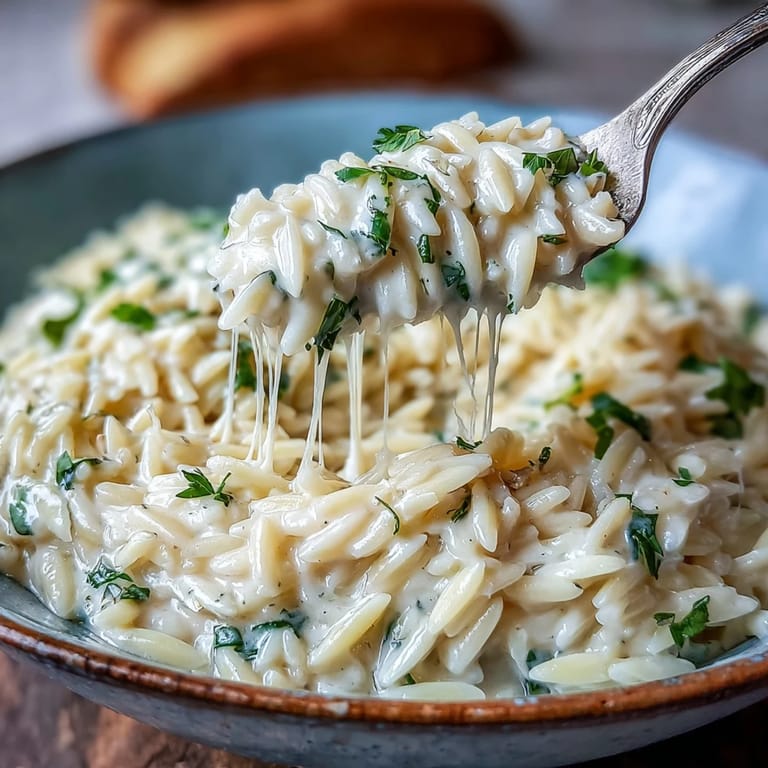
 Save
Save The first thing that caught my attention when I made Parmesan Truffle Orzo was the intoxicating smell of truffle oil gently mingling with rich cheese. It's one of those dishes that turns an ordinary weeknight into something unexpectedly luxurious. I still remember how my wooden spoon stuck just a bit to the pan as the orzo toasted, and suddenly I knew it was going to be special. Preparing this feels more like a ritual than a routine—tiny grains soaking up warmth, releasing a nutty aroma. The final spoonful in the pan always seems to disappear faster than I expect.
One evening, a friend wandered into my kitchen just as I was stirring in the heavy cream—her eyes widened at the silky swirl of orzo, and by the time I finished grating the last of the Parmesan, she'd declared herself sous chef for the night. We both hovered over the skillet, sneaking tastes before it even made it to plates. There was so much laughter as we realized how the recipe’s aroma had drawn half the household in, eager for a bite. That night, there were more compliments than leftovers. I’ve come to associate this dish with the happy commotion of good company gathering unplanned in the kitchen.
Ingredients
- Orzo pasta: The little rice-shaped pasta soaks up flavor like a sponge and turns beautifully creamy; gently toast it for a nuttier taste.
- Unsalted butter: Melting this first lets the entire dish begin on a mellow, rich note; just be careful not to brown it unless you want a toasty twist.
- Heavy cream: It’s the secret to that ultra-lush finish—room temperature cream incorporates most smoothly.
- Freshly grated Parmesan cheese: Use real Parmigiano-Reggiano if you can, and grate it yourself for the best melt and deepest flavor.
- Low-sodium vegetable broth: Warm broth is key for creamy orzo, just like with risotto; if it's too cold, the pasta texture gets uneven.
- Truffle oil: Just a drizzle does it—add at the end so the aroma lingers and doesn’t get lost in the heat.
- Garlic clove, finely minced: Cooking it just until fragrant prevents bitterness and infuses the base with subtle depth.
- Salt and freshly ground black pepper: Season gently, tasting as you go since the Parmesan brings plenty of saltiness on its own.
- Additional grated Parmesan (optional): For an irresistibly cheesy crust on top or to satisfy true cheese fanatics.
- Fresh chopped parsley (optional): This bright touch isn’t just for looks—it adds fresh flavor and a little crunch.
Tired of Takeout? 🥡
Get 10 meals you can make faster than delivery arrives. Seriously.
One email. No spam. Unsubscribe anytime.
Instructions
- Simmer the broth:
- Pour the vegetable broth into your saucepan and let it heat gently—it should be just barely bubbling so it's ready to ladle and keep the orzo creamy.
- Start the flavor base:
- Melt the butter in your deep skillet over medium heat, then add minced garlic; listen for that soft sizzle and breathe in the scent for about a minute.
- Toast the orzo:
- Stir in the dry orzo and give it a steady mix for a few minutes, watching for a light golden hint and a nutty aroma that means it's ready for liquid.
- Build up the creaminess:
- Ladle in the warm broth little by little, stirring often—watch how the orzo plumps and the pan transforms, keeping things gently simmering all the while.
- Creamy transformation:
- When the orzo is soft but still a touch firm (about 15 minutes in), turn the heat down so nothing scorches on the bottom.
- Add the cheese and cream:
- Stir in the heavy cream and all that Parmesan until it glosses up and pulls together, turning every grain into a silky bite.
- Finish with truffle oil:
- Take the pan off the heat, drizzle over your truffle oil, and season lovingly—taste for salt and pepper as you go.
- Garnish and serve:
- Spoon out onto plates, scatter with extra Parmesan and a handful of parsley, and enjoy immediately while perfectly warm.
 Save
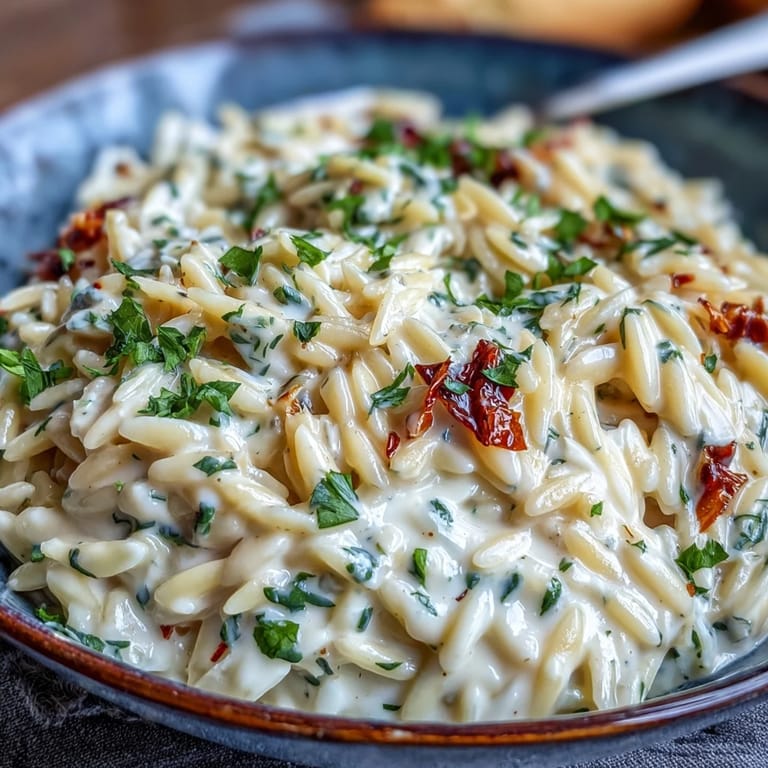
Save There was a birthday when this dish stole the show at dinner, and by the end, people were quietly scraping their plates to savor the very last drop. It’s when orzo stopped being just another pasta and became my go-to for celebrations where comfort and elegance meet.
How to Make It Your Own
Swapping in a handful of peas or a few sautéed mushrooms can turn this side into a complete meal, or play with different herbs for a signature flair. Don’t be afraid to gently experiment: a bit of lemon zest or a dusting of toasted pine nuts can change the whole mood of the dish. The trick is to keep the foundation creamy and let add-ins shine without overpowering the truffle. Every tweak makes it your own. Sometimes a surprise ingredient turns out to be a new favorite, so trust your taste buds.
Pairs and Leftovers
I’ve found that serving this orzo alongside crisp roasted asparagus or a simple green salad makes for just the right balance. This dish also pairs beautifully with a glass of chilled Sauvignon Blanc—the acidity plays off the richness. On rare occasions when leftovers survive, a quick reheat with a splash of broth brings it right back to its creamy prime. Refrigerate promptly to keep the flavors vibrant. No one ever minds eating this again the next day, trust me.
Serving Up a Showstopper
Right before serving, breathe in the heady scent of truffle oil—it’s the moment everyone in the house knows dinner is about to be memorable. Try bringing the skillet to the table and swirling in the last of the Parmesan in full view for extra drama. A finishing sprinkle of parsley brightens everything up and makes it look as good as it smells.
- Taste and season at the end for perfect balance.
- Keep extra Parmesan on hand for cheese lovers.
- Don’t let the orzo sit too long or it can thicken up—serve promptly.
 Save
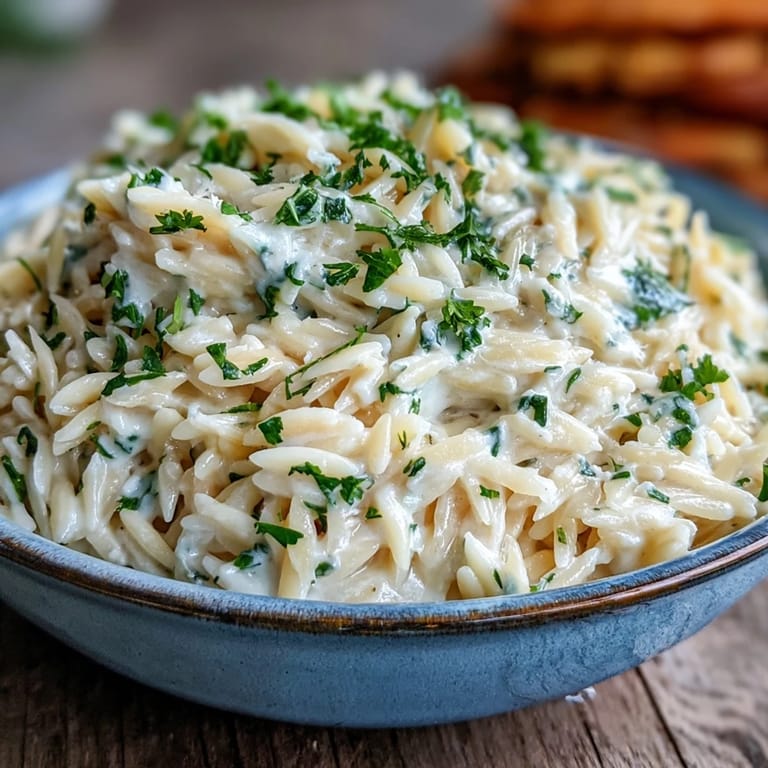
Save This recipe always draws a crowd, even if I was just planning a quiet evening in. The comfort and elegance all in one dish are sure to win hearts at any table.
Recipe FAQs
- → How do I achieve a creamy texture?
Slowly add warm broth, stirring until each addition is absorbed before pouring more. Finish with heavy cream and Parmesan for extra creaminess.
- → Can I use a different pasta?
Orzo provides a risotto-like consistency, but other small pasta shapes may work. Cooking times and texture will differ.
- → Is fresh Parmesan necessary?
Freshly grated Parmesan melts best and imparts superior flavor and creaminess to the orzo.
- → What alternatives are there to truffle oil?
If you don’t have truffle oil, finish with quality olive oil for richness—though the earthy aroma will be missing.
- → Can I add vegetables or protein?
Sautéed mushrooms, peas, or even spinach can be added. For protein, serve alongside grilled tofu or seared chicken.
- → What wine pairs well with this?
Crisp whites like Pinot Grigio or Sauvignon Blanc balance the dish's richness perfectly.