 Save
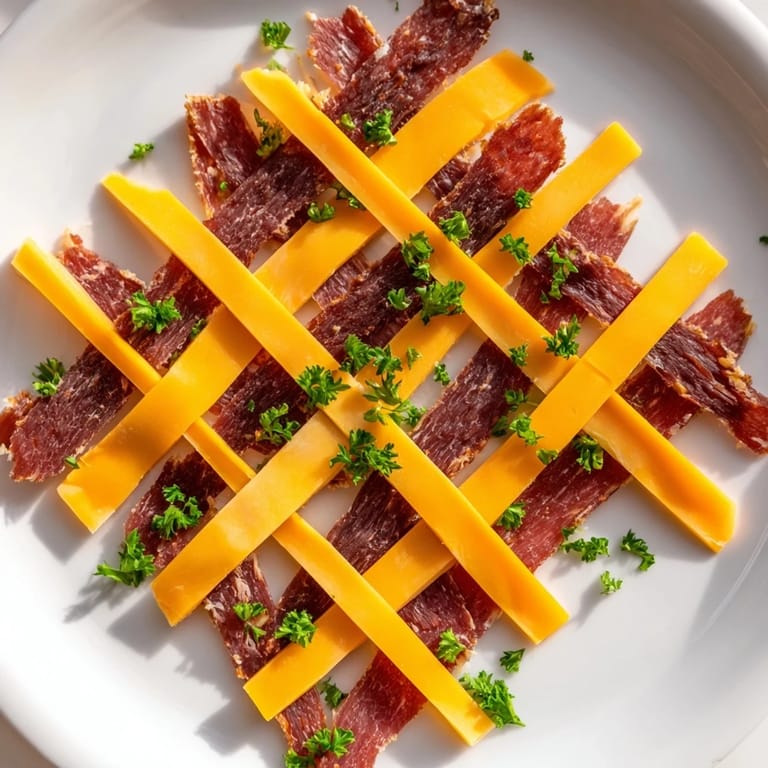
Save I discovered The Tartan Plaid at a friend's dinner party where someone casually assembled strips of jerky and cheese on a board, and I watched guests immediately gravitate toward it. There was something about the visual—those woven colors catching the light—that made people pick it up before anything else. It wasn't until later that I realized how simple the technique was, yet how impressive it looked. I started experimenting with different jerky and cheese combinations, treating the board like a canvas. Now it's become my secret weapon whenever I need an appetizer that feels elevated but requires zero cooking.
I made this for my coworkers' potluck last spring, nervous because it seemed too simple to bring as a main dish component. The moment I set it down, someone cut into it and the whole room went quiet—then they started asking for the recipe, which never happens. Turns out people are tired of the same old platters. This became proof that sometimes the best dishes aren't about complicated techniques but about doing something unexpected with familiar ingredients.
Ingredients
- Beef jerky: The foundation of your plaid—use a quality brand because you'll taste the difference, and look for strips that are thin enough to weave without cracking but sturdy enough to hold shape.
- Turkey jerky: This brings a lighter, slightly different flavor profile and keeps the colors varied so your pattern actually shows.
- Pork jerky: The richest of the three, it adds depth and rounds out the visual contrast when arranged with the other meats.
- Sharp cheddar cheese: The tang cuts through the saltiness of the jerky, and the bright yellow makes your plaid pattern actually pop.
- Monterey Jack cheese: Mild and creamy, it provides a visual break and softens the overall flavor so it's not all smoke and salt.
- Smoked gouda: This is where the magic happens—the smokiness mirrors the jerky and adds a sophisticated layer that makes people wonder what that subtle something is.
- Fresh parsley or chives: Optional, but that bit of green at the end is what makes someone stop mid-bite and say "this is really well done."
Tired of Takeout? 🥡
Get 10 meals you can make faster than delivery arrives. Seriously.
One email. No spam. Unsubscribe anytime.
Instructions
- Set your stage:
- Choose a cutting board or platter that's large enough to work comfortably—you need room to maneuver without bumping things. A clean, dry surface is your friend here.
- Build your vertical foundation:
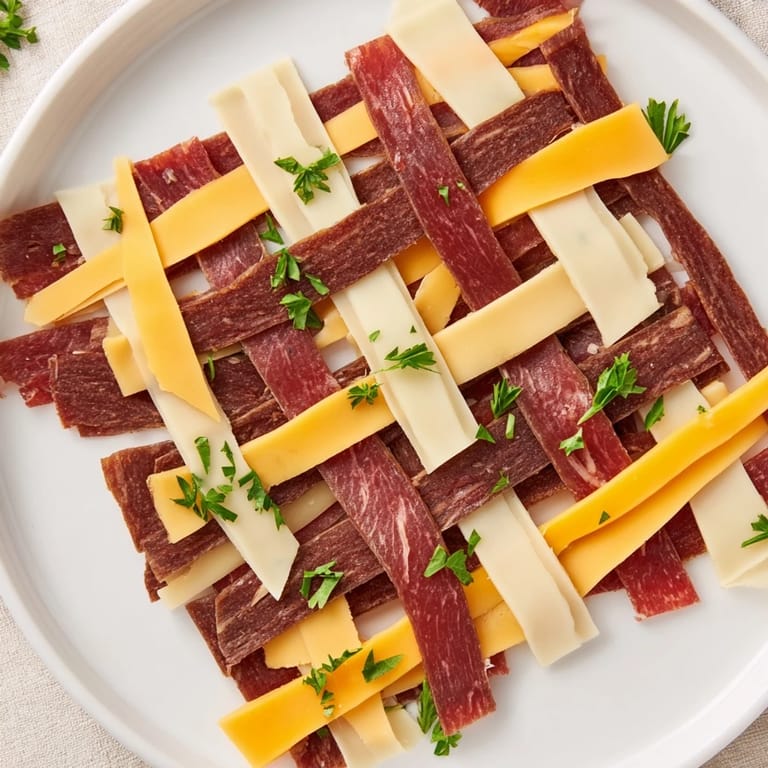
- Lay half your jerky strips down vertically, alternating between beef, turkey, and pork so you've got color variation from the start. Space them close enough that they'll hold together but not so tight they're impossible to weave through.
- Weave the first layer:
- Start at one edge and begin threading your cheese strips horizontally, going over one jerky strip and under the next, like you're weaving fabric. Alternate your cheese types as you go—cheddar, Monterey Jack, gouda, repeat.
- Build your pattern:
- Add the remaining jerky strips on top, going the opposite direction (horizontally now), continuing that over-under weave. This is where your tartan actually appears, so take a breath and enjoy the meditative part of this.
- Set it in place:
- Once your weave is done, gently press down across the whole surface to help everything bond slightly and stay put. Don't smash it, just a firm, even pressure.
- Finish with intention:
- Trim the edges if they're ragged and you want something polished, though some people love the rustic look as-is. A light sprinkle of green herbs brings the whole thing into focus.
 Save
Save One evening, I served this alongside wine and watched a group of friends get lost in conversation over it for nearly an hour. No one was checking their phones, no one was thinking about their day—they were just enjoying something beautiful and simple together. That's when I realized this dish isn't really about the jerky and cheese at all.
Playing with Color and Flavor
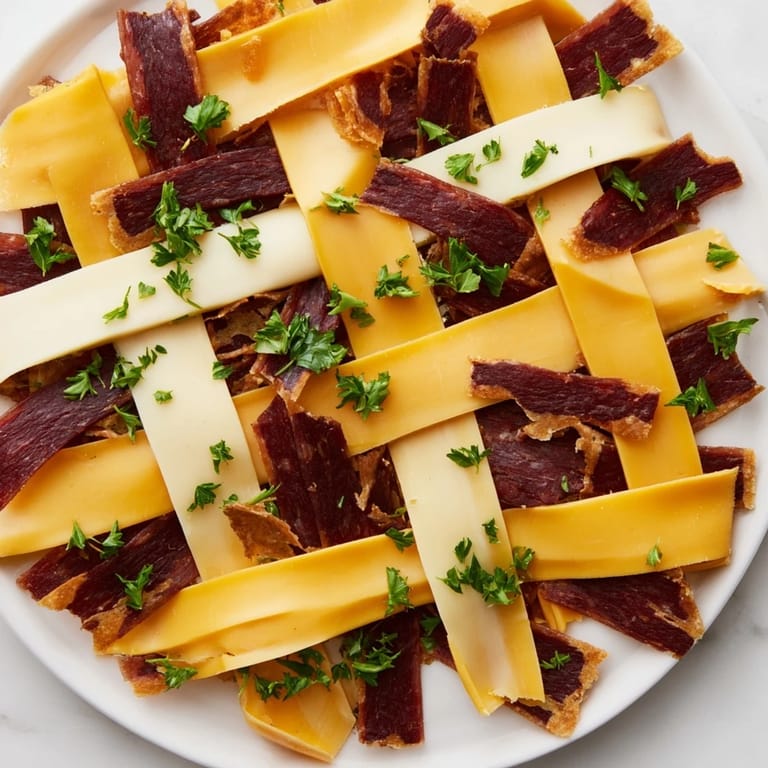
The beauty of this recipe is how flexible it is once you understand the weaving concept. I've made it with duck jerky for a fancier crowd, and once I tried peppered venison jerky with white cheddar and it stopped conversations. The plaid pattern is really about contrast—light against dark, smooth against textured—so once you see that, you can swap almost anything in and it'll still feel intentional and impressive.
When to Make This
This is your move when you want to contribute something to a gathering but don't want to spend your day cooking. It works equally well as part of a larger charcuterie spread or as its own moment—maybe served on a small slate with cocktails. I've also cut mine into squares and served them as finger food at events, and somehow the portion control made it feel even more thoughtful.
Storage and Serving Ideas
If you're prepping ahead, keep it covered in the fridge and don't let it sit longer than two hours before serving—this isn't a make-it-the-day-before kind of dish. The jerky starts to soften slightly and the whole thing loses its architectural integrity. Think of it as something you build when you're close to showtime, which is actually part of its appeal.
- Serve it alongside a crisp white wine or a hoppy beer that won't compete with the smoky, salty flavors.
- Cut into squares or leave it whole on the platter depending on your crowd and the vibe you're going for.
- If you're feeding vegetarians, swap in smoked tofu strips for the jerky and it still photographs beautifully.
 Save
Save The Tartan Plaid reminds me that some of the most memorable dishes aren't about technique or time in the kitchen—they're about showing up with something that makes people smile. Make it, serve it with confidence, and let the conversation flow.
Recipe FAQs
- → What types of jerky work best for this dish?
Beef, turkey, and pork jerky are ideal due to their firm texture and distinct flavors that complement the cheeses well.
- → Can I make a vegetarian version?
Yes, substitute the meat jerky with vegetarian jerky or smoked tofu strips for similar texture and taste.
- → How do you achieve the tartan plaid pattern?
Lay jerky strips vertically with alternating colors, then weave thin cheese strips horizontally over and under them to create the woven plaid effect.
- → What cheeses are recommended for this layering?
Sharp cheddar, Monterey Jack, and smoked gouda provide a mix of flavors and creamy textures that hold their shape when sliced.
- → How should this appetizer be served and stored?
Serve immediately sliced as part of a charcuterie spread. If preparing ahead, wrap tightly and refrigerate for up to two hours to maintain freshness.