 Save
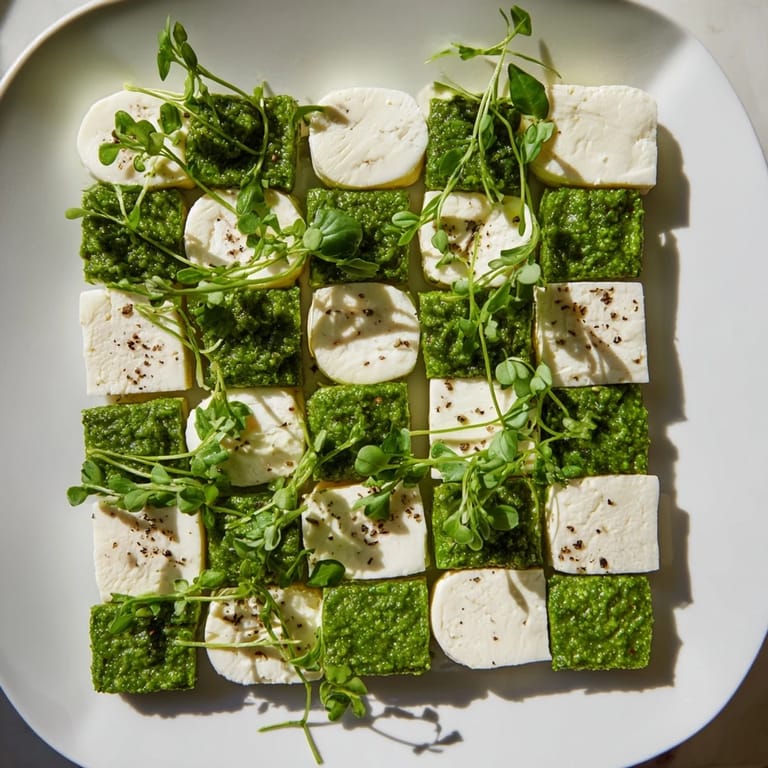
Save I discovered this dish by accident while rearranging my cutting board during a dinner party prep. I'd sliced cheeses into neat squares, and my herb puree was sitting in its own little bowl when suddenly the pattern clicked—what if I made them dance together? The checkerboard emerged as I arranged them, and my guests couldn't stop talking about how something so simple felt like edible art. That night taught me that the best appetizers are the ones that make people pause before they eat.
The first time I made this for my sister's garden party, she actually pulled out her phone to photograph it before anyone touched a piece. Watching grown-ups get genuinely excited about an appetizer reminded me that presentation matters just as much as taste. She kept one square as her "reference" before diving in, which made me laugh—but also made me realize I'd created something memorable.
Ingredients
- Fresh mozzarella: Use the softest, creamiest kind you can find; it spreads like a dream and gives you that delicate white base.
- Ricotta cheese: This is your blank canvas—smooth, mild, and perfect for piping into clean squares.
- Feta cheese: A touch salty and tangy, it adds personality to the white sections.
- Fresh basil: The real star; pick the youngest, most tender leaves for the brightest green.
- Fresh flat-leaf parsley: Adds depth and keeps the green mixture from tasting one-note.
- Chives: Just enough to whisper their presence without shouting.
- Extra virgin olive oil: The good stuff; this makes the herb mixture silky and luxurious.
- Garlic clove: One small clove is enough—you want flavor, not a garlic situation.
- Lemon zest: Brings brightness and keeps everything from feeling heavy.
- Salt and pepper: Taste as you go; this balances everything beautifully.
Tired of Takeout? 🥡
Get 10 meals you can make faster than delivery arrives. Seriously.
One email. No spam. Unsubscribe anytime.
Instructions
- Make your herb paste:
- Throw basil, parsley, chives, olive oil, garlic, and lemon zest into a food processor and pulse until it's vibrant green and smooth. You'll know it's ready when it looks like what you wish you could paint with.
- Set your stage:
- Line your tray with parchment paper so you can lift the whole masterpiece off without it falling apart. This step feels small but saves you mid-disaster.
- Cut with intention:
- Slice mozzarella and feta into even squares using a ruler or cookie cutter if you have the patience for precision. If not, just make them roughly the same size and call it rustic.
- Spread the ricotta:
- Using an offset spatula or piping bag, create ricotta squares matching your cheese squares. Clean lines make the checkerboard pop; wobbly lines give it charm.
- Build your pattern:
- Alternate white cheese, herb mixture, white cheese, herb mixture until your checkerboard is complete. Step back and look at it—this is the moment you'll feel like an artist.
- Add the final touches:
- Scatter microgreens, edible flowers, or a crack of black pepper across the top. Let it chill for 10–15 minutes so everything sets and the flavors settle.
- Serve and watch:
- Bring it out with crackers, toasted bread, or fresh vegetables. The reaction will be worth every careful square.
 Save
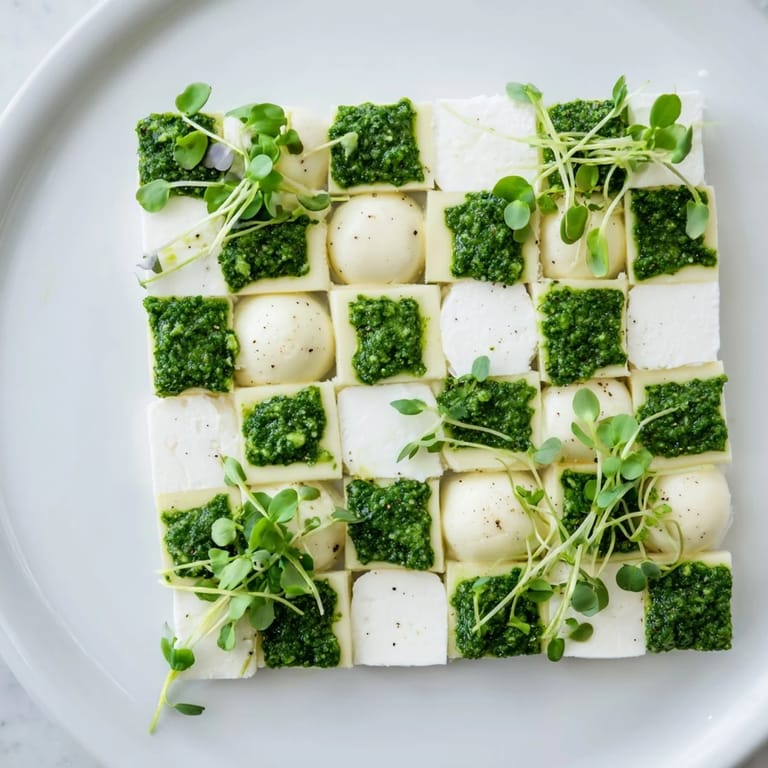
Save I'll never forget the moment a usually quiet dinner guest took a photo and asked for the recipe. That question, more than anything else, made me understand that food isn't just about feeding people—it's about creating something that makes them want to share it forward. That's when this appetizer stopped being just an arrangement of cheese and herbs and became something with real meaning.
The Power of Precision
Here's something I learned: the checkerboard only works because of the contrast between order and flavor. If your squares are wildly different sizes, the eye can't follow the pattern, and it loses its magic. Spending five extra minutes with a ruler or cookie cutter isn't overthinking it—it's the difference between a casual arrangement and something that actually stops people in their tracks.
Playing with Flavors
Once you nail the basic checkerboard, you can riff on it endlessly. I've layered thin cucumber slices under the white cheese for extra freshness, swapped feta for creamy goat cheese when I wanted tang, and even tried a red pepper paste instead of herbs. Each version tells a different story, but the architecture stays the same. The beauty is that the formula is flexible enough to match whatever's in season or whatever mood you're in.
Pairing and Presentation Tips
This appetizer is a blank slate that adapts to whatever you're pouring and whoever's at the table. I've served it at casual afternoons with just crackers and water, and at elegant evenings with a crisp Sauvignon Blanc or light Pinot Grigio alongside. The key is thinking about temperature, texture, and what your guests will be doing—standing, sitting, celebrating.
- Pair with something crisp and cold to let the creamy textures shine without getting lost.
- Make it a day ahead, keep it covered in the fridge, and bring it out 10 minutes before serving so the cheese isn't straight-from-cold.
- If someone asks what makes this special, tell them the truth: it's not complicated, but it asks you to care about how food looks, not just how it tastes.
 Save
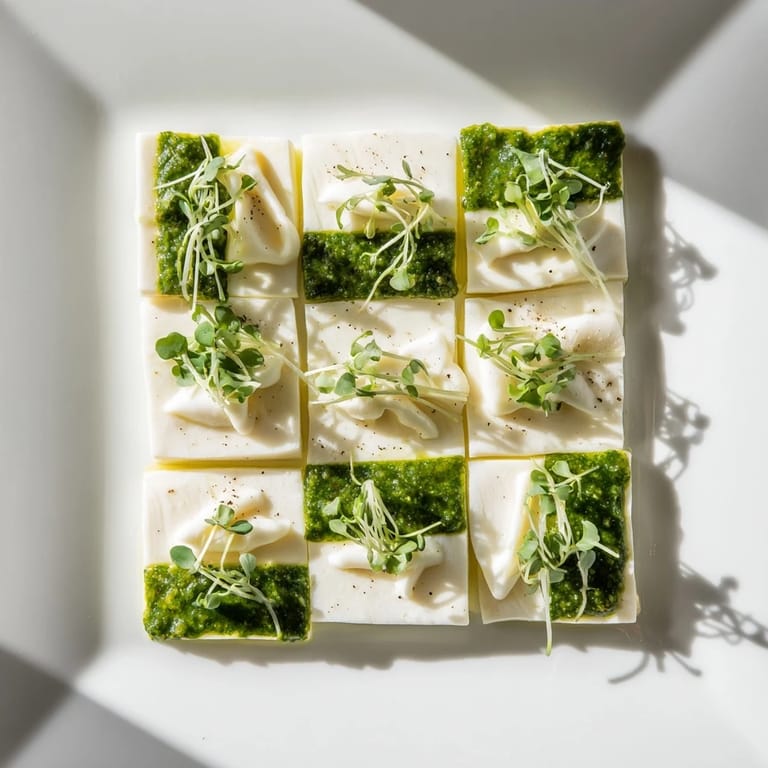
Save This checkerboard has taught me that sometimes the most impressive dishes are the ones where every choice is intentional and visible. Serve it with the confidence of someone who knows they've created something worth remembering.
Recipe FAQs
- → How is the herb mixture prepared?
Combine fresh basil, parsley, chives, olive oil, garlic, lemon zest, salt, and pepper in a food processor and blend until smooth.
- → What cheeses are used in this dish?
The dish includes fresh mozzarella, ricotta, and feta cheeses, each prepared to form neat square pieces.
- → Can this appetizer be made ahead of time?
Yes, assembling and chilling for 10–15 minutes before serving helps set the pattern and enhances the flavors.
- → What garnishes complement the checkerboard presentation?
Microgreens, edible flowers, or freshly ground black pepper add visual appeal and a fresh finish.
- → Are there suggestions for ingredient substitutions?
Goat cheese can replace ricotta for a tangier taste; thin cucumber or radish slices can be layered beneath the cheeses for added texture.
- → What tools are recommended for assembling the dish?
Use a food processor, knife, ruler or square cutter, offset spatula or piping bag, and a serving tray or platter for best results.