 Save
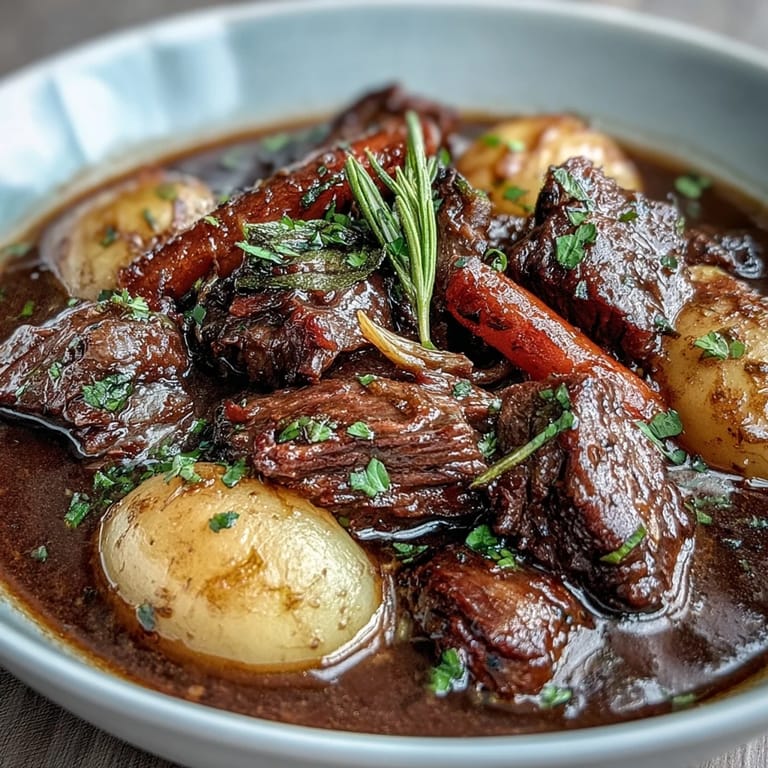
Save There's something about the sound of beef hitting a hot skillet that makes you feel like you're actually cooking something worthwhile. I discovered this stew on a gray October afternoon when my neighbor stopped by with an armful of root vegetables from her garden—parsnips, carrots, potatoes—and honestly, I had no idea what to do with half of them. She laughed and suggested a slow cooker stew, the kind that fills your whole house with warmth while you're doing literally anything else. Eight hours later, my kitchen smelled like a Michelin star restaurant, and I understood why she'd been so confident.
I made this for my sister's book club once, and I'll never forget how quiet the room got after everyone's first spoonful—the kind of quiet that means people are too busy eating to talk. Someone asked for the recipe, then someone else, and by the end of the night I was standing in my kitchen writing it down for three different people while they stood there with spoons still in their hands.
Ingredients
- Beef chuck, cut into 1.5-inch cubes (2 lbs): This is the magic cut—it has enough fat and connective tissue to become incredibly tender during the long, slow cook, and it won't dry out like leaner cuts would.
- Kosher salt and black pepper (1/2 tsp each): Don't skip the searing step; browning the beef before it hits the slow cooker builds a crust that adds serious depth to the whole pot.
- Carrots, peeled and cut into 1-inch pieces (3 large): Cut them bigger than you think—they shrink down and get almost creamy as the stew cooks.
- Parsnips, peeled and sliced (2): These add an earthy sweetness that makes people ask what that flavor is, and when you tell them it's parsnip, they always say they need to cook with these more.
- Yukon Gold potatoes, peeled and chopped into chunks (2 large): Gold potatoes hold their shape better than russets and have a buttery flavor that melts into the broth.
- Yellow onion, diced (1 large): Don't worry about perfect uniformity—it'll all meld together anyway, and the onion sweetens and softens into the background.
- Celery stalks, sliced (3): This is your secret umami layer; it gives the broth a savory roundness that makes people think you've been cooking all day.
- Garlic, minced (3 cloves): Fresh garlic makes a difference here—jarred will work in a pinch, but fresh has a brightness that bottled versions lose.
- Tomato paste (2 tbsp): This concentrated umami bomb needs to be stirred in with the other seasonings so it doesn't burn or clump.
- Worcestershire sauce (1 tbsp): The secret ingredient that most people can't identify but immediately notice is missing if you skip it.
- Bay leaf (1): It's easy to forget to remove this, so maybe place it somewhere visible—I once served a bowl with the leaf still floating in it and my mom thought I was trying to poison her.
- Dried thyme and rosemary (1 tsp each): Dried herbs are perfect for slow cooking; fresh would lose their punch over eight hours, so don't substitute.
- Beef broth (4 cups): This is the foundation of everything, so choose something you'd actually drink—low-sodium is better because you control the salt level.
- Dry red wine (1 cup): The alcohol cooks off and leaves behind this subtle richness that makes the broth taste more complex; if you skip it, add more broth instead.
- Cornstarch and cold water (2 tbsp each): Mix these into a slurry just before adding—if you dump cornstarch in dry, you'll get lumps that no amount of stirring can fix.
Tired of Takeout? 🥡
Get 10 meals you can make faster than delivery arrives. Seriously.
One email. No spam. Unsubscribe anytime.
Instructions
- Season and sear the beef:
- Pat your beef cubes dry with paper towels—moisture is the enemy of browning. Sprinkle salt and pepper directly on the meat, heat your skillet until it's almost smoking, and listen for that loud sizzle when the beef hits the pan; that sound means you're doing it right.
- Brown the beef in batches:
- Don't crowd the skillet; give each piece space to develop a golden crust on all sides, about three minutes total. Transfer the browned beef to your slow cooker and resist the urge to wash the skillet—those browned bits are flavor gold.
- Prep and layer the vegetables:
- Add all your cut vegetables directly to the slow cooker on top of the beef. The vegetables will release their own moisture and settle as they cook, so don't worry about them being piled high.
- Build the flavor base:
- Stir in the garlic, tomato paste, Worcestershire sauce, bay leaf, thyme, and rosemary, making sure the tomato paste gets distributed throughout so no pockets of concentrated flavor get left behind. The smell at this point is when you know something good is about to happen.
- Add your liquids and combine:
- Pour in the beef broth and red wine, then give everything a gentle stir to make sure the herbs and seasonings are evenly distributed. The liquid should just barely cover the beef—don't worry if some vegetables peek out.
- Let time do the heavy lifting:
- Cover the slow cooker and set it to low for eight hours. This is when you get to walk away—the gentle, sustained heat breaks down the tough collagen in the beef and transforms it into silky, melt-in-your-mouth tenderness.
- Thicken the stew at the end:
- Mix cornstarch with cold water in a small bowl until smooth, then stir it into the hot stew. Switch your slow cooker to high and leave it uncovered for fifteen minutes while the cornstarch does its magic and the broth transforms into something that coats the back of a spoon.
- Finish and taste:
- Fish out that bay leaf, then taste a spoonful of broth and adjust salt and pepper if needed. This final tasting moment is where you claim ownership of the dish—it's yours now, seasoned exactly how you like it.
 Save
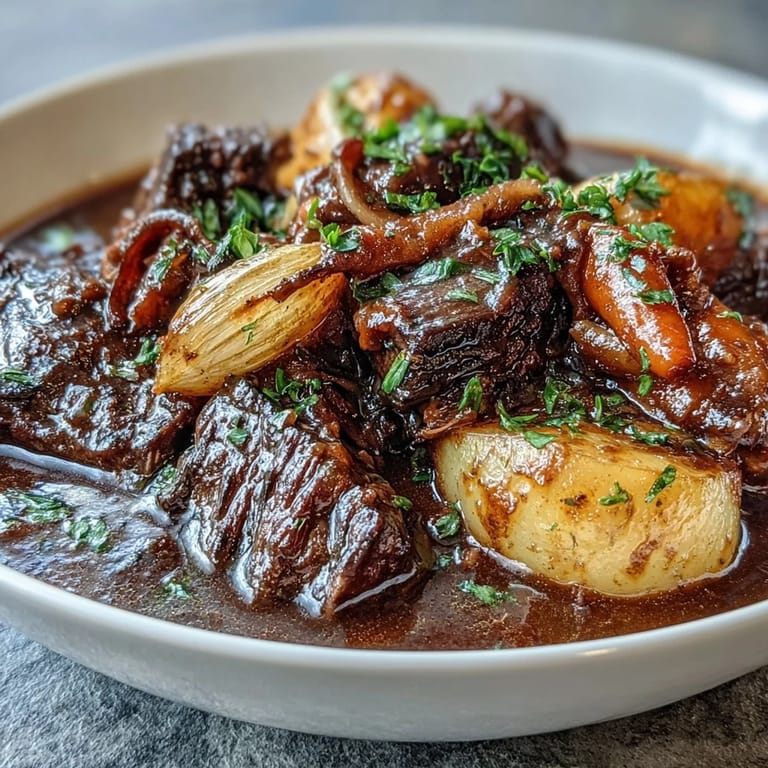
Save My dad ate three bowls of this stew one winter night and just kept shaking his head, saying something about how simple it is but how complete it feels. I think that's when I realized that the best food isn't about being complicated—it's about patience and letting flavors have time to become themselves.
Why This Stew Works Every Single Time
The combination of beef chuck and slow cooking is almost foolproof because the long, gentle heat dissolves all that connective tissue and transforms tough meat into something luxurious. The vegetables don't fight back either—they soften and sweeten and basically become part of the broth rather than staying separate. By the time eight hours have passed, everything has married together into one cohesive, deeply satisfying dish.
The Vegetables Actually Matter
People often think of stew vegetables as afterthoughts, but each one in this recipe serves a purpose—the carrots bring sweetness, the parsnips add earthiness, the potatoes provide body and substance, the celery and onion create the savory foundation, and together they build a flavor profile that's way more interesting than just meat and broth. I learned this the hard way by making a stew with only potatoes and carrots, and it tasted one-dimensional in comparison. The parsnips especially changed my life—they're the secret that makes people pause and wonder what they're tasting.
Making It Your Own
This recipe is a blueprint more than a rigid formula, and once you understand how it works, you can adapt it based on what's in your kitchen or what sounds good. I've added mushrooms, thrown in frozen peas at the end, swapped sweet potatoes for regular ones, and even experimented with different wine choices. The core concept—seared beef, aromatic vegetables, long slow cooking, and a thickened broth—stays constant, but everything else can flex based on your mood and your ingredients.
- If you want extra depth, brown your onions with the beef before everything goes into the slow cooker.
- A splash of balsamic vinegar added at the end brings brightness and complexity that people always ask about.
- Serve it with crusty bread for soaking up that incredible broth, or over mashed potatoes for maximum comfort.
 Save
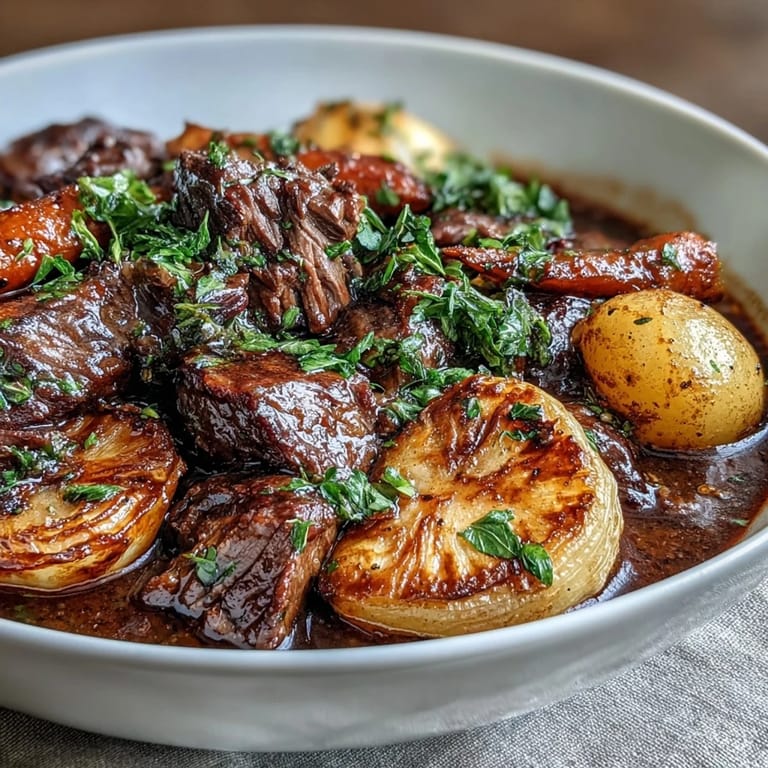
Save This stew has become my default dish for showing people I care, because there's something about serving a bowl of something warm and nourishing that says more than words ever could. It's the kind of food that makes any night feel special.
Recipe FAQs
- → What cut of beef works best for this stew?
Beef chuck is ideal as it becomes tender and flavorful after long, slow cooking.
- → Can I prepare this without red wine?
Yes, simply substitute the wine with extra beef broth for a rich, alcohol-free option.
- → How do I thicken the stew naturally?
Mix cornstarch with cold water to create a slurry, then stir it into the stew and cook until thickened.
- → What vegetables are included for flavor and texture?
Carrots, parsnips, Yukon Gold potatoes, celery, and onion combine to add depth and heartiness.
- → Can I add other ingredients to enhance flavor?
Adding sliced mushrooms or frozen peas during the last hour of cooking adds extra taste and texture.
- → Is this meal suitable for gluten-free diets?
Ensure the beef broth and Worcestershire sauce used are gluten-free to maintain suitability.