 Save
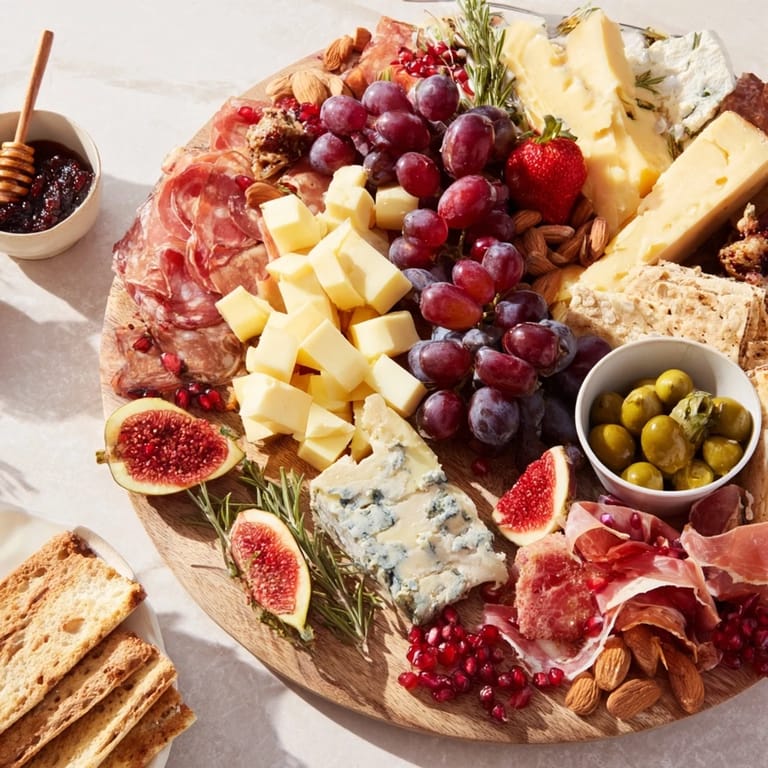
Save I discovered the magic of grazing boards entirely by accident during a theater opening night party. My friend asked me to bring something impressive but minimal effort, and I found myself arranging cheeses and fruits on a wooden board at the last minute. When guests arrived and saw those dramatic cascades of prosciutto and figs tumbling over the edge like velvet curtains, I realized I'd stumbled onto something special, something that turned casual snacking into theater itself.
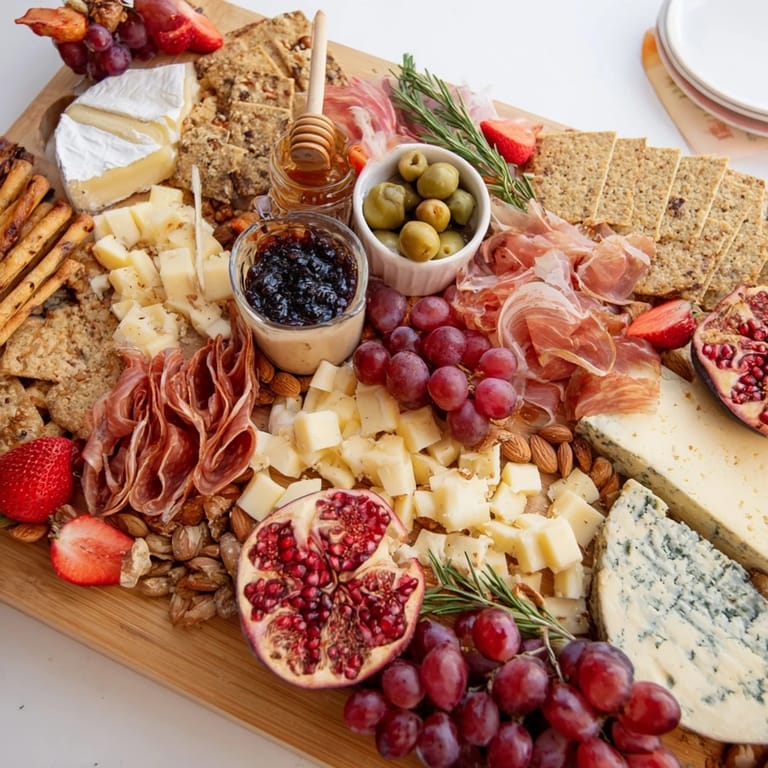
I made this for my sister's engagement announcement, and watching her eyes light up when she saw the board cascade down the table like a designer installation made me understand why this arrangement feels different. It's not just food; it's a moment where presentation becomes part of the celebration, where guests linger longer and conversations flow easier because everything feels intentional and luxurious.
Ingredients
- Brie, 150g: Slice it into thin wedges so it catches the light and looks almost translucent; this cheese is your leading actor and deserves to be seen.
- Aged Cheddar, 150g: Cut into irregular sticks rather than perfect cubes, which makes the board feel more generous and less contrived.
- Blue Cheese, 120g: Break it into honest chunks; this pungent player needs room to breathe and surprise people who love funk.
- Prosciutto, 100g: Buy it sliced thin and drape it loosely so it catches the light and creates actual folds, not crumpled paper.
- Soppressata, 100g: Fold these slices into quarters or thirds; the geometry creates visual interest and makes each piece easier to grab.
- Red Grapes, 1 cup: Keep them on the stem whenever possible because that trailing line guides the eye and creates movement.
- Fresh Figs, 1 cup: Halve them just before serving so the rosy interior doesn't oxidize and turn gray; the color contrast is half the appeal.
- Strawberries, 1 cup: Slice these in halves so they nestle into gaps and add pops of red throughout, not just clustered in one spot.
- Pomegranate Seeds, 1 cup: These are your jewels; scatter them deliberately where the board might look bare.
- Baguette, 1 whole: Slice at a slight angle for elegance, and toast lightly if you have time; it prevents sogginess and adds textural contrast.
- Seeded Crackers, 150g: Choose ones with visual texture because they photograph better and feel more intentional than plain rounds.
- Fig Jam, 1/2 cup: Small bowl or ramekin, nestled into the arrangement; this sweetness is your secret handshake with people who love complexity.
- Honey, 1/4 cup: Drizzle it into a shallow dish before serving so it stays liquid and accessible; room temperature honey is more forgiving than warm.
- Marcona Almonds, 1/2 cup: These buttery Spanish almonds are worth the splurge; they taste like luxury and feel like celebration.
- Olives, 1/2 cup: Mix green and black, pitted always, because nobody wants to work that hard during grazing.
- Fresh Herbs: Rosemary and thyme sprigs tucked between ingredients add fragrance and make everything look intentional.
Tired of Takeout? 🥡
Get 10 meals you can make faster than delivery arrives. Seriously.
One email. No spam. Unsubscribe anytime.
Instructions
- Set the stage:
- Choose your board—marble, wood, or slate all work—and position it so part of it actually overhangs the table edge. This isn't just placement; it's permission to let things cascade.
- Anchor with cheese:
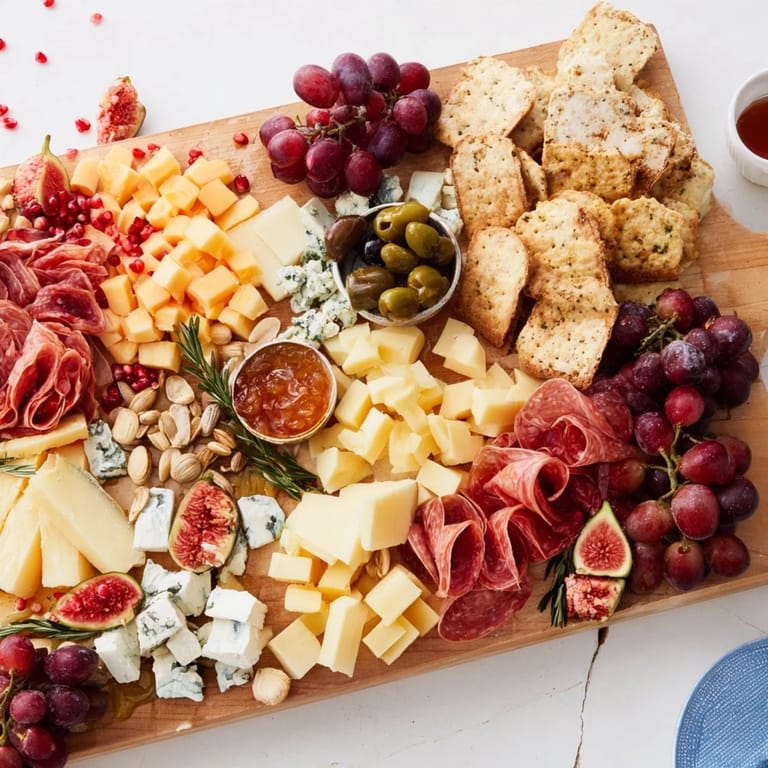
- Arrange your three cheeses in strategic spots, letting wedges and chunks spill slightly over the edge like they've tumbled down velvet. Think landscape, not grid.
- Layer the charcuterie:
- Fold prosciutto and soppressata into soft ruffles and arrange them so they drape and catch light. This is where the curtain metaphor becomes real.
- Scatter fruit with intention:
- Nestle grapes, figs, strawberries, and pomegranate seeds into pockets and gaps, letting some trail down the sides. Let the reds and golds create a visual flow.
- Weave in bread and crackers:
- Fan slices slightly so they peek out, and let some overhang the board's edge for that generous, theatrical effect.
- Settle in the accompaniments:
- Place small bowls of fig jam, honey, almonds, and olives into the landscape you've created. They should feel discovered, not placed.
- Crown with herbs:
- Tuck fresh rosemary and thyme sprigs throughout so they frame other ingredients and add fragrance to the experience.
- Invite people to graze:
- Step back, let guests approach, and watch how the informality of grazing transforms into an experience because everything feels both luxurious and approachable.
 Save
Save My favorite memory of this board came when my architect friend leaned back and said it looked like someone had designed a still life painting. That's when I realized this board isn't really about the food at all; it's about creating a moment where everyone feels like they're part of something beautiful and unrushed.
The Psychology of Grazing
There's something about a board arranged like this that makes people slow down and actually taste things instead of just consuming them. When you remove the structure of a formal meal, something shifts—conversations get deeper, people reach for things they might normally skip, and the whole gathering feels less obligatory and more like genuine connection. The cascading ingredients create a visual permission slip to be a little bit indulgent, a little bit theatrical.
Building Flavor Combinations
The real skill here isn't arrangement; it's understanding how flavors speak to each other. The blue cheese wants to crash into something sweet like fig jam or honey, while the aged cheddar bridges wild and refined. The prosciutto becomes a salty echo of the almonds, and the pomegranate seeds cut through everything with brightness. When you place these together, you're not just feeding people; you're teaching their palates a conversation.
Making It Your Own
The best part about grazing boards is that they're infinitely flexible without losing their drama. You can swap cheeses based on what your market has that day, adjust fruits to the season, or omit the charcuterie entirely and nobody will feel like something's missing. The structure stays the same—that gorgeous cascade, that theatrical arrangement—but the specifics can dance around your preferences and what makes you feel excited to cook. The vegetarian version loses nothing in translation, and adding edible flowers or switching to different nuts never feels like compromise.
- Pair this with crisp rosé or sparkling wine for that complete theater-night feeling.
- Make this the centerpiece of your table, not just an appetizer, and let people build their entire meal from what's here.
- Don't overthink it; the imperfections are what make it feel real and honest, not like something from a magazine.
 Save
Save This board taught me that the most memorable meals aren't always the most complicated ones; they're the ones where someone took time to think about how food should make you feel. Serve it with generosity and joy, and watch it transform any gathering into something everyone will remember.
Recipe FAQs
- → Can this grazing board be made vegetarian?
Yes, simply omit the charcuterie and use plant-based cheeses to keep it vegetarian-friendly while maintaining flavor variety.
- → What types of cheeses work best on this board?
Soft Brie, aged Cheddar, and blue cheese create a balanced mix of creamy, sharp, and pungent flavors to complement the fruits and nuts.
- → How should the fruits be prepared for serving?
Red grapes stay on the stem, figs and strawberries are halved, and pomegranate seeds are scattered to create visual flow and easy picking.
- → Are there suggested beverage pairings?
A crisp rosé or sparkling wine pairs beautifully with the sweet and savory elements, enhancing the tasting experience.
- → How can I add extra visual drama to the board?
Adding edible flowers and draping ingredients over the edges recreates the effect of velvet curtains cascading, adding depth and elegance.
- → What tools assist in arranging this board effectively?
Use a large wooden or marble board, small serving bowls for condiments, cheese knives, and tongs for neat arrangement and serving.