 Save
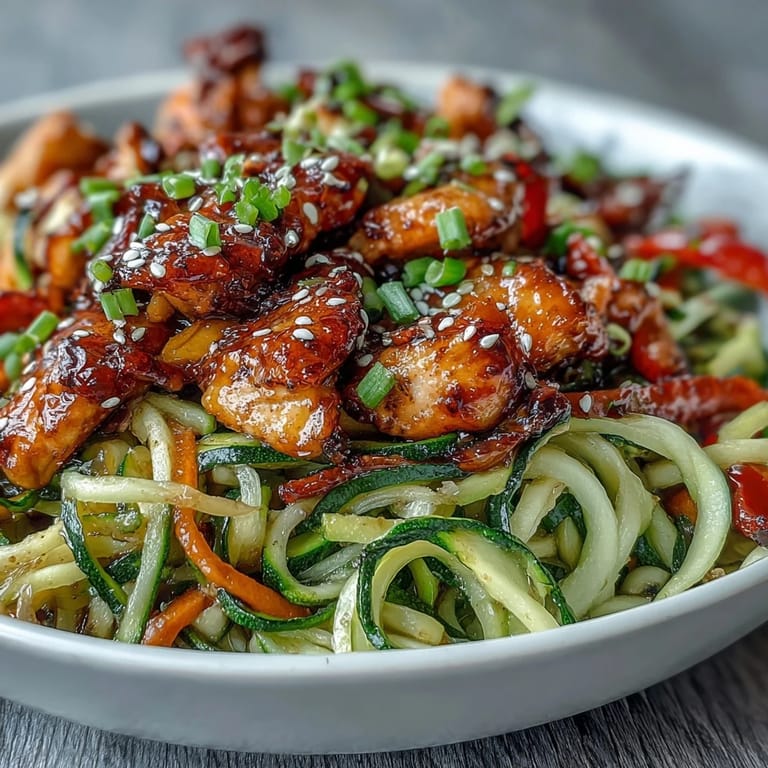
Save There's something almost meditative about the sound of a spiralizer working through fresh zucchini—that gentle whirring as it transforms an ordinary vegetable into something that tastes lighter than pasta but feels just as satisfying. I discovered this stir fry on a Tuesday afternoon when my kitchen felt too warm for anything heavy, and I had chicken thawing and a garden overflowing with zucchini. What started as a quiet lunch became my go-to weeknight dinner, the kind of meal that somehow tastes both comforting and energizing at the same time.
I made this for my sister when she was going through a strict eating phase, and watching her face light up when she realized how flavorful something so clean could be was worth every minute in the kitchen. She asked for the recipe that night, then made it three times the following week. That's when I knew this wasn't just another healthy recipe—it was the kind of dish that converts people without them feeling like they're missing anything.
Ingredients
- Boneless, skinless chicken breast (500 g): Slice it thin so it cooks evenly and picks up all that sauce; thinner pieces also mean you're done faster.
- Zucchini (3 medium, spiralized): The hero of the dish, but the trick is using a spiralizer to get those delicate noodles that cook in seconds instead of becoming waterlogged mush.
- Red bell pepper (1 large, thinly sliced): Adds sweetness and a slight crunch that holds up beautifully through the cooking.
- Carrots (2 medium, julienned): These need the head start so they soften slightly before the zucchini noodles go in.
- Red onion (1 small, thinly sliced): Brings a gentle bite that balances the richness of the sauce.
- Garlic and ginger (2 cloves and 1 tablespoon): The aromatics that make everything smell like you've been cooking for hours when you've barely started.
- Low-sodium soy sauce or tamari (3 tablespoons): Use tamari if you need gluten-free, and the low-sodium version keeps the salt balanced since you'll taste-test anyway.
- Sesame oil (1 tablespoon): Just a splash, because this oil is intense in the most wonderful way—it's what makes this taste authentically Asian-inspired.
- Rice vinegar (1 tablespoon): The bright note that cuts through the richness and keeps everything tasting fresh.
- Honey or maple syrup (1 tablespoon): Honey dissolves better and gives a cleaner sweetness, but maple works if that's what you have.
- Cornstarch (1 teaspoon, optional): Use this if you prefer a glossy, slightly thickened sauce that clings to the noodles.
- Chili flakes (1/2 teaspoon, optional): Add heat if you like it, leave it out if you're cooking for someone cautious about spice.
- Olive oil or neutral cooking oil (1 tablespoon): For cooking the chicken and vegetables without burning anything.
- Green onions (2, sliced): Save these for the very end; they add a fresh pop of color and a mild onion note that ties everything together.
Tired of Takeout? 🥡
Get 10 meals you can make faster than delivery arrives. Seriously.
One email. No spam. Unsubscribe anytime.
Instructions
- Blend your sauce first:
- Whisk soy sauce, sesame oil, rice vinegar, honey, cornstarch if using, and chili flakes in a small bowl, stirring until the honey dissolves and everything comes together smoothly. Setting this aside before you start cooking means you won't be fumbling with bottles while things are sizzling.
- Sear the chicken until it's golden:
- Heat oil in a large skillet or wok over medium-high heat, then add your sliced chicken with a pinch of salt and pepper, stirring every minute or so until the edges turn golden and the meat is cooked through, about four to five minutes. The chicken doesn't need to be pristine—those golden-brown bits are where the flavor hides.
- Build your flavor base:
- Push the cooked chicken to the side, add your minced garlic, ginger, and sliced red onion to the same skillet, and stir for about a minute until your kitchen smells like an Asian restaurant. You'll know it's ready when the raw edge leaves the garlic and everything becomes fragrant.
- Add the heartier vegetables:
- Toss in your julienned carrots and sliced bell pepper, stirring constantly for two to three minutes until they soften just slightly but still have a gentle snap. This is where you start to see the color building on the plate.
- Introduce the zucchini noodles gently:
- Add your spiralized zucchini and stir everything together for just one to two minutes—zucchini noodles are delicate and will turn to mush if you're not watching. The whole skillet will look full for a moment, then the noodles will soften and everything settles down.
- Bring it all together with sauce:
- Return the cooked chicken to the skillet, pour in your prepared sauce, and toss everything for one to two minutes until the sauce coats every noodle and vegetable and starts to cling and slightly thicken. This is the moment everything transforms from separate ingredients into a cohesive dish.
- Taste and adjust:
- Before you plate anything, taste it and decide if it needs more salt, a splash more vinegar for brightness, or a pinch more chili flakes for heat.
- Serve and garnish:
- Transfer to plates while everything is still warm, scatter those fresh green onions on top, and eat it immediately while the noodles still have their slight firmness.
 Save
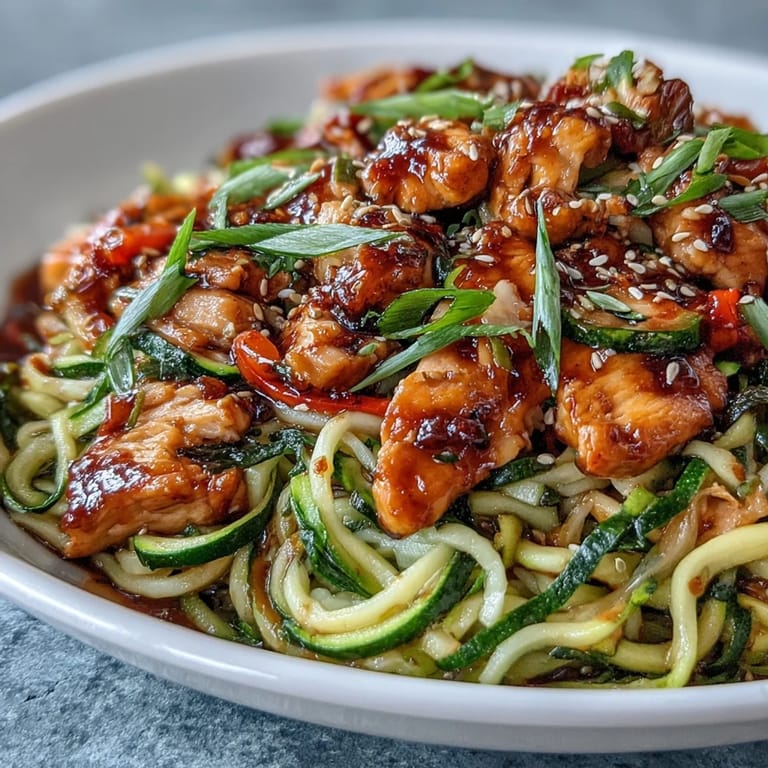
Save My neighbor borrowed this recipe after smelling it from her porch, and now she makes it every Thursday without fail. There's something about sharing a meal this simple but thoughtful that builds connection—it says you care about what people put in their bodies without making them feel like they're eating something boring or punitive.
The Magic of Spiralized Vegetables
The first time I tried zucchini noodles, I was skeptical, expecting them to taste like disappointment in vegetable form. But something changes when you spiralize them—the increased surface area means they absorb sauce like traditional pasta never could, and the texture stays delicate rather than starchy. Once you own a spiralizer, you start seeing possibilities everywhere: sweet potatoes for a slightly different texture, carrots for natural sweetness, even cucumbers if you want something completely raw tossed in at the end.
Why This Sauce Works So Well
The balance in this sauce is what makes the whole dish sing—salty from the soy, bright from the rice vinegar, warm from the ginger and garlic, and just enough honey to round everything out without making it sweet. I've made versions with more vinegar when I wanted brightness, less honey when I was cooking for someone watching their sugar intake, and it held up beautifully each time. The sesame oil is non-negotiable though; it's the ingredient that makes someone take a bite and wonder what restaurant you ordered this from.
Variations That Still Feel Like Home
This recipe is flexible enough to bend without breaking—swap the chicken for shrimp if you want something lighter, or use tofu if you're cooking vegetarian and nobody loses anything in translation. In winter I sometimes add broccoli florets alongside the carrots for more substance, and in summer I've tossed in fresh snap peas right at the end for extra crunch. The sauce is what holds everything together, so as long as you respect the zucchini noodle timing and don't overcook them, you're working with something forgiving and honest.
- For extra umami depth, stir in a teaspoon of miso paste when you're whisking the sauce together.
- Toast sesame seeds in a dry pan for thirty seconds and scatter them on top—they add a nuttiness that feels indulgent.
- If you can't find a spiralizer, a vegetable peeler creates ribbon noodles that work beautifully and cook just as quickly.
 Save
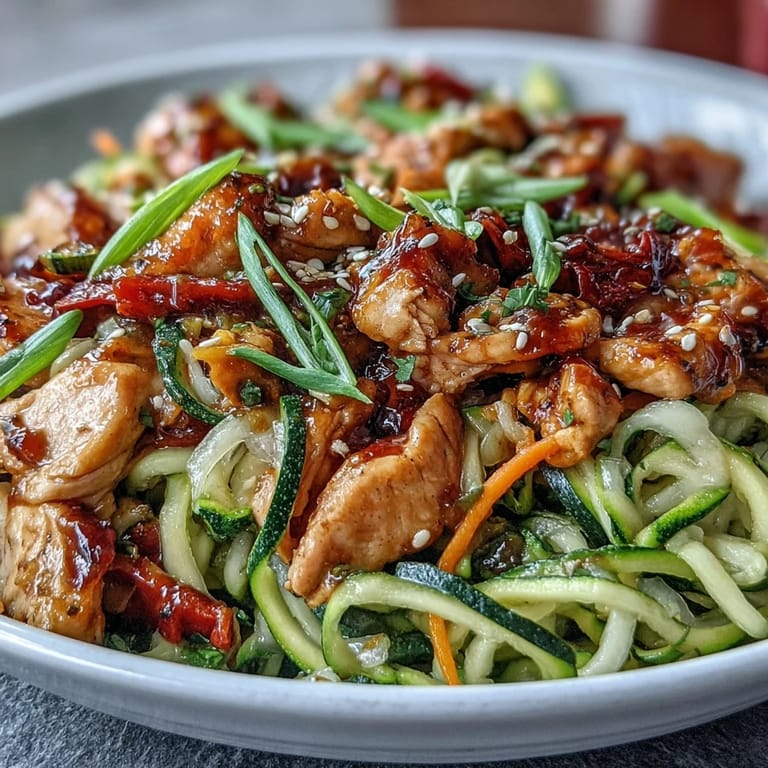
Save This is the kind of dinner that makes you feel like you've taken care of yourself and the people you're feeding. It's fast enough for a weeknight but interesting enough that you won't get tired of making it.
Recipe FAQs
- → How do I prevent zucchini noodles from becoming soggy?
Stir-fry zucchini noodles only 1–2 minutes until just softened. Avoid overcooking to maintain their crisp texture.
- → Can I substitute chicken with another protein?
Yes, tofu can be used for a vegetarian version or other proteins like shrimp or beef can be substituted based on preference.
- → What type of soy sauce works best for gluten-free options?
Use tamari, a gluten-free soy sauce alternative, to keep this dish gluten-free without compromising flavor.
- → Is it necessary to use cornstarch in the sauce?
Cornstarch is optional and used for thickening. You can omit it for a lighter sauce consistency.
- → What garnishes complement this stir fry?
Sliced green onions, toasted sesame seeds, or chopped cilantro add fresh, aromatic notes to the dish.
- → How can I add heat to this dish?
Include chili flakes in the sauce or sprinkle extra on top to add a spicy kick.