 Save
Save My neighbor stopped by one evening with a bag of Brussels sprouts from her garden, and I suddenly realized I'd been roasting them the same uninspired way for years—just salt, oil, and heat. That night, I decided to raid my pantry and mix honey with mustard, thinking it might be interesting. The kitchen filled with this incredible sweet-tangy aroma, and when those little green heads hit the oven, something magical happened. Now this glaze is the only way I make them, and honestly, it's converted every Brussels sprout skeptic who's ever tried them at my table.
I made this for a holiday dinner last year, and my brother—who'd spent his whole childhood avoiding vegetables—ate nearly half the pan. He kept reaching over without thinking about it, and when he finally noticed what he was eating, he laughed at himself. That moment crystallized for me why this recipe matters: it's not about tricking people into eating something healthy. It's about creating something so genuinely delicious that the vegetable part almost becomes irrelevant.
Ingredients
- Brussels sprouts, 1 lb trimmed and halved: Halving them flat-side-down is the real secret—that cut face presses against the hot pan and caramelizes into something crispy and golden instead of just steamed.
- Olive oil, 2 tbsp: Don't skip this or swap it for cooking spray; it helps the glaze adhere and creates those essential caramelized edges.
- Honey, 2 tbsp: The sweetness should feel balanced, not cloying—honey dissolves into the glaze more smoothly than sugar would.
- Dijon mustard, 1 ½ tbsp: This brings the sophisticated tang that keeps everything from tasting one-note.
- Whole-grain mustard, 1 tbsp: The little seeds add texture and a slightly earthier flavor that rounds out the Dijon's sharpness.
- Garlic powder, ½ tsp: A whisper of garlic that ties the whole flavor profile together without any raw harshness.
- Apple cider vinegar, 1 tbsp: This is what keeps the glaze from being too sweet and adds a subtle brightness that makes you want another bite.
- Salt and pepper to taste: These aren't afterthoughts—the salt helps caramelization, and the pepper adds a tiny peppery snap.
- Fresh parsley, 2 tbsp optional: A handful of green on top makes everything look fresher and adds a clean finish.
Tired of Takeout? 🥡
Get 10 meals you can make faster than delivery arrives. Seriously.
One email. No spam. Unsubscribe anytime.
Instructions
- Get your oven ready:
- Heat to 425°F and line a baking sheet with parchment paper. The higher heat means faster caramelization, so don't be tempted to go lower—your Brussels sprouts need that aggressive heat to develop color.
- Build the glaze:
- Whisk together the oil, honey, both mustards, garlic powder, vinegar, salt, and pepper in a large bowl. The mixture should be smooth and glossy, not separated or gritty.
- Coat everything evenly:
- Add the halved Brussels sprouts and toss thoroughly, making sure each piece gets a good layer of glaze. Don't be shy—use your hands if needed to get them well coated.
- Arrange for maximum crust:
- Spread them on the prepared sheet with the flat cut side facing down. This position lets that honey-mustard glaze caramelize directly on the pan, creating a crispy, caramelized bottom.
- Watch them transform:
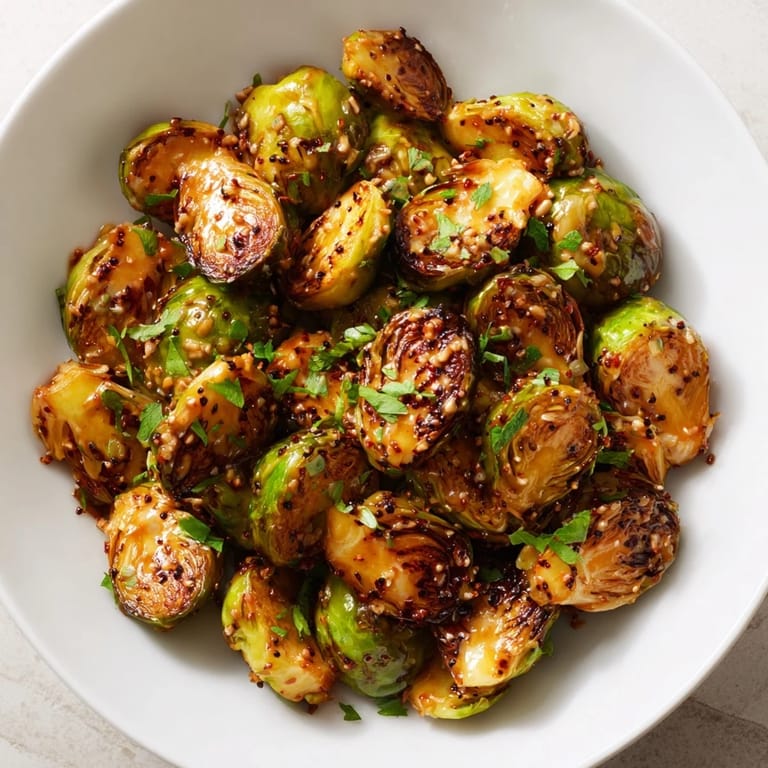
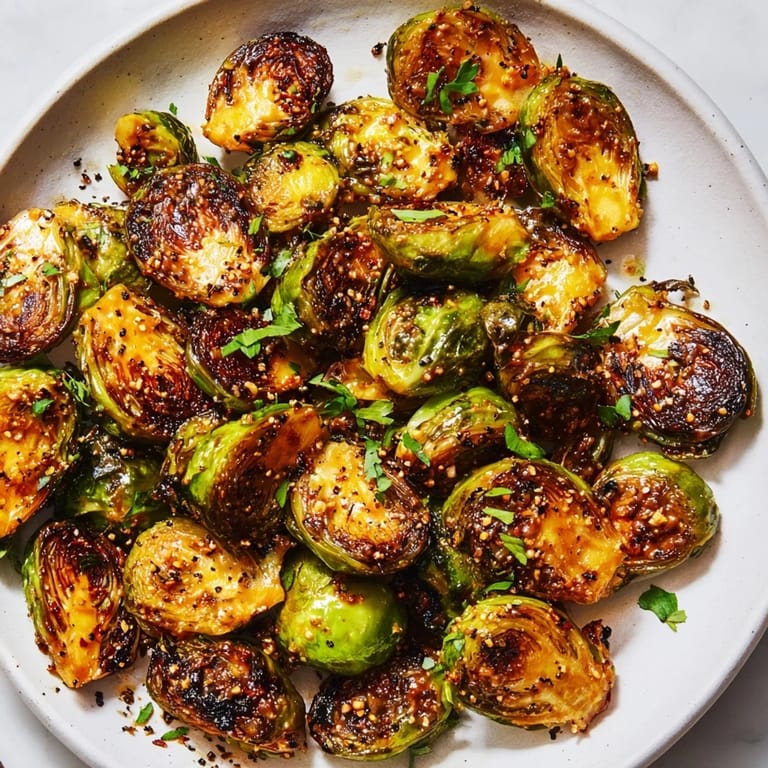
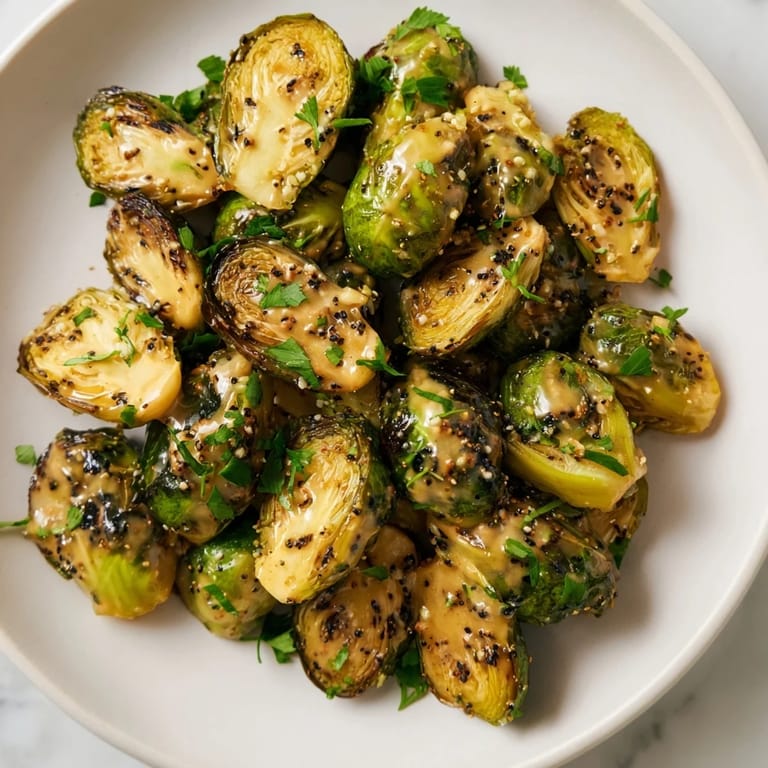
- Roast for 20 to 25 minutes, flipping halfway through so the rounded side gets a chance to color too. You'll know they're done when the edges are deep golden-brown and slightly charred, and a fork slides through the center easily.
- Finish with brightness:
- Transfer to a serving dish and scatter with fresh parsley if you have it. Serve right away while they're still warm and the exteriors are crispy.
 Save
Save I burned a batch once—turned away for a few minutes too long—and instead of throwing them out, I tasted one. The edges were almost charred, almost bitter, and somehow that made the honey-mustard even more compelling, like dark chocolate versus milk chocolate. Since then, I don't fear a little extra color on these.
The Glaze Matters Most
This isn't a Brussels sprouts recipe that happens to have glaze on top—the glaze is the entire point. That balance of sweet, tangy, and garlicky is what transforms something vegetables into something craveable. If you love this flavor profile, you can use it on roasted root vegetables, chicken thighs, or even drizzle it over roasted chickpeas for a crunchy snack. The magic isn't really Brussels sprouts specific; it's the alchemy of honey and mustard finding each other over high heat.
Texture Is Everything
The contrast between the caramelized, slightly crispy exterior and the tender, almost creamy center is what makes people come back for more. That flat-side-down arrangement isn't fussy—it's the single most important technique in this recipe. When you skip it and just toss them randomly, they steam instead of roast, and you lose all that burnished flavor. The oven does most of the work; your job is just creating the conditions for greatness.
Ways to Make It Your Own
Once you understand how the glaze works, you can start playing with it. Some nights I add a pinch of smoked paprika for a subtle depth, other times I swap in maple syrup for a earthier sweetness. The framework is strong enough to support variation without falling apart.
- Toast some chopped pecans or walnuts and scatter them over the finished dish for a nutty crunch that complements the glaze perfectly.
- Add a small pinch of red chili flakes to the glaze itself if you want a subtle heat that lingers in the background.
- Substitute maple syrup for the honey to make the whole dish vegan while keeping that caramelized sweetness.
 Save
Save This dish turned a weekly obligation—getting some vegetables on the table—into something I actually look forward to making. That's the real recipe right there.
Recipe FAQs
- → How do I achieve caramelization on Brussels sprouts?
Roast the sprouts at a high temperature (425°F/220°C) cut side down to encourage browning and create a crispy, caramelized exterior.
- → Can I substitute honey in the glaze?
Yes, maple syrup is a great vegan-friendly substitute that maintains the glaze's sweetness and balance.
- → What mustards are used in the glaze?
A combination of Dijon and whole-grain mustards adds depth, tanginess, and texture to the glaze.
- → How do I add a bit of heat to this dish?
Sprinkle a pinch of chili flakes into the glaze or over the finished dish for a mild spicy kick.
- → Are there any suggested garnishes?
Fresh chopped parsley adds a burst of color and freshness when sprinkled just before serving.
- → Can nuts be added for texture?
Yes, toasted chopped pecans or walnuts can be mixed in before serving for added crunch and flavor.