 Save
Save I'll never forget the day we got the keys to our first place together. The apartment was empty, echoing with possibility, and we decided right then to throw an open house to celebrate with everyone who'd supported us. That's when I discovered the magic of a truly generous cheese board—not as an afterthought appetizer, but as the star of the show. Something about gathering people around a table laden with cheese, fruit, and crackers felt like saying 'welcome home' in the most delicious way possible. That board became the bridge between strangers becoming friends, between nervous energy becoming laughter.
What I learned that first open house was that people don't remember the perfectly plated individual dishes—they remember the moments of abundance. They remember reaching for a cheese they'd never tried before, discovering that fig jam on sharp cheddar was life-changing, laughing while balancing a plate and a glass. That board became the conversation piece, the gathering point, the edible welcome mat that said we were so glad they came.
Ingredients
- Sharp Cheddar (250g / 9 oz), cut into blocks: This is your bold backbone—the cheese everyone reaches for first. The sharpness cuts through rich crackers and plays beautifully against sweet fruit.
- Creamy Brie (250g / 9 oz), cut into wedges: The luxurious moment on the board. Cut wedges instead of cubes so people can see the soft center oozing slightly—it's irresistible.
- Manchego (200g / 7 oz), sliced: The crowd-pleaser that feels sophisticated without demanding attention. Its nutty sweetness bridges every other flavor on the board.
- Blue Cheese (200g / 7 oz), crumbled or in blocks: For the brave souls and the ones who love bold flavors. It's the cheese that makes people pause and say 'oh, that's good.'
- Smoked Gouda (200g / 7 oz), cubed: The warming presence. Its subtle smokiness catches people off guard in the best way and makes them come back for more.
- Assorted Crackers (1 large box, 350g / 12 oz): Your blank canvas. Mix textures—some thin and crispy, some hearty and seeded. People eat with their eyes first.
- Baguette, sliced thinly: The elegant alternative. Toast it lightly before slicing if you want a sturdier vehicle for the creamier cheeses.
- Breadsticks (1 packet, 150g / 5 oz): The little architectural elements that add height and visual interest to your board.
- Red Grapes (1 cup in small clusters): Nature's jewels. Keeping them in clusters lets people grab a small handful and feel civilized while eating fruit with their hands.
- Green Grapes (1 cup in small clusters): The color contrast matters more than you'd think. Together they create a visual rhythm that draws the eye.
- Apples, sliced and tossed with lemon juice: This is the anti-browning trick I learned the hard way. Never forget the lemon juice. Your apples should look fresh when the last guest arrives.
- Dried Apricots (1/2 cup): These little jewels of concentrated sweetness deserve to be noticed. Tuck them into corners where they catch the light.
- Dried Figs (1/2 cup): The grown-up candy. Their wrinkled beauty adds sophisticated texture and their sweetness anchors the whole flavor story.
- Roasted Almonds (1 cup): Toasted just enough to remind people why nuts taste like possibility.
- Walnuts (1 cup): Slightly earthier than almonds. The combination gives people choices without feeling overwhelming.
- Honey (1/2 cup): Put it in a small bowl and watch it become the secret weapon. Sharp cheese plus honey equals everyone asking you for the recipe.
- Fig or Apricot Jam (1/2 cup): This is flavor magic. A small spoonful on creamy brie changes everything.
- Whole Grain Mustard (1/3 cup): The unexpected partner that makes people pause. It's the flavor that says you know what you're doing.
- Cherry Tomatoes (1 cup): Little pops of color and freshness. They're the visual punctuation mark between blocks of cheese.
- Baby Carrots (1 cup): The orange threads that tie the whole palette together. Raw and crunchy, they're the board's way of saying 'we thought of everyone.'
- Fresh Herbs—Rosemary and Thyme: A few sprigs tucked around the edges. They're barely eaten but they transform the whole thing into something that looks like it belongs in a magazine.
Tired of Takeout? 🥡
Get 10 meals you can make faster than delivery arrives. Seriously.
One email. No spam. Unsubscribe anytime.
Instructions
- Start with Your Foundation:
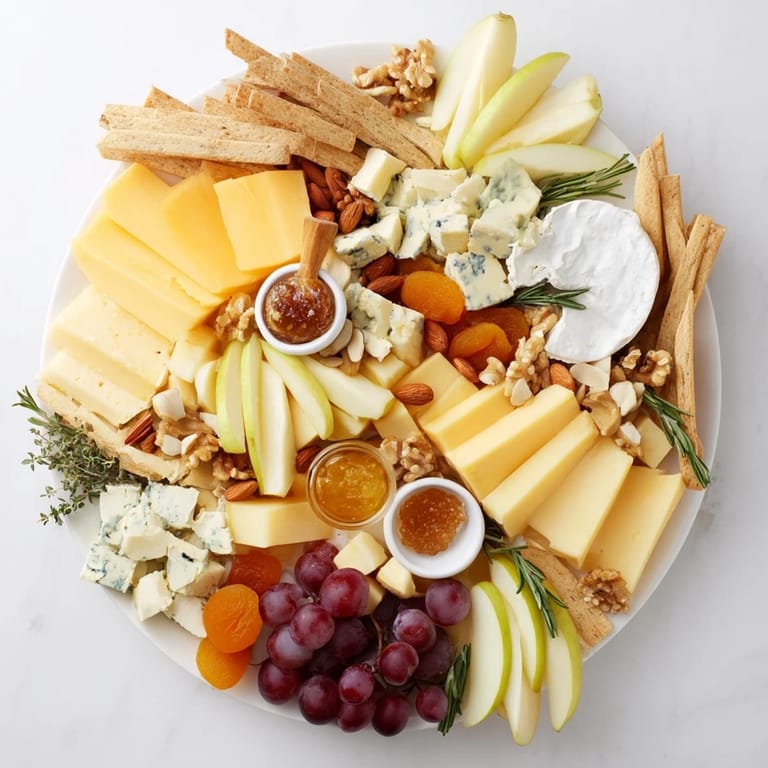
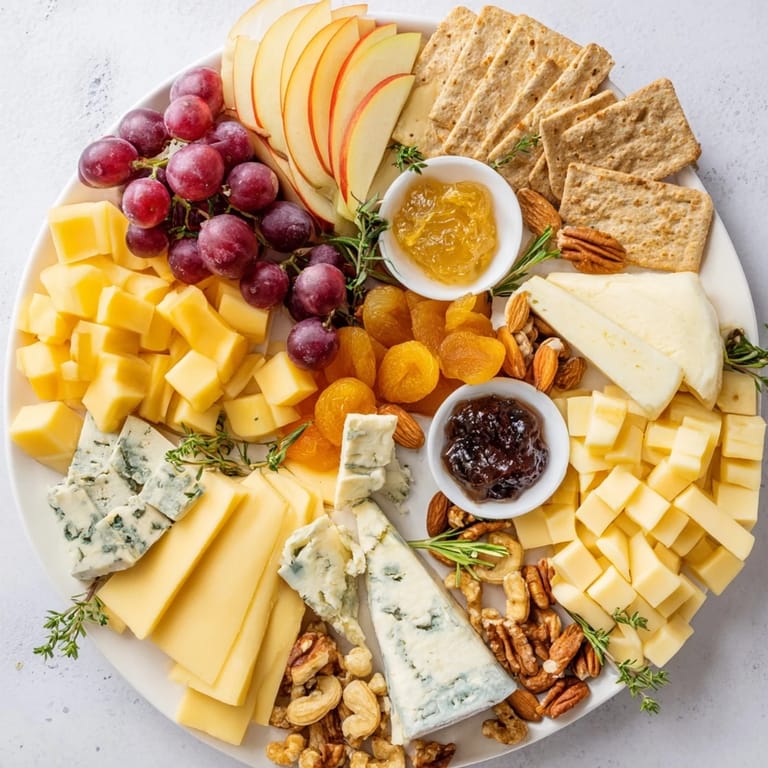
- Pull out your largest, most beautiful board or platter—this is the stage. Arrange the cheese blocks and wedges first, spacing them like you're arranging furniture in a room. Think about color balance and variety. Opposite corners get different cheeses so people naturally move around the board instead of crowding one spot.
- Build the Structure:
- Now fill the spaces between cheeses with those gorgeous piles of crackers and baguette slices. This is where the board starts looking abundant and generous. Fan the baguette slices slightly so people can grab one without toppling the whole tower. Let some crackers stand up vertically against the cheese—it adds dimension.
- Add the Sweet Elements:
- Nestle clusters of grapes—keep them grouped, not scattered—around the cheese. The grapes should look like intentional little jewel piles, not random dots. Scatter your apple slices (remember that lemon juice!) and tuck the dried apricots and figs into the gaps. They should catch the light and make people curious.
- Create the Flavor Stations:
- In small bowls or piled directly on the board, add your honey, jam, and mustard. These are your secret weapons. Position them near cheese so people see them and understand the pairing. If you only have one small bowl, you can let the other condiments pool slightly on the board itself—it looks rustic and intentional.
- Layer in the Nuts and Vegetables:
- Scatter your almonds and walnuts into piles, placing them to fill remaining gaps. Now add the cherry tomatoes and baby carrots. These vegetables are doing two jobs—adding freshness and making your board look like you spent more time than you actually did. The orange, red, and green should feel like they're dancing together.
- The Finishing Touch:
- Pull a few sprigs of fresh rosemary and thyme from your kitchen herbs. Tuck them around the edges and between cheeses. They're barely eaten but they transform the whole composition into something that feels intentional and beautiful. Step back. Look at it. You've created edible welcome.
- Set Yourself Up for Success:
- Place your cheese knives, spreaders, toothpicks, and cocktail forks nearby so people can serve themselves with confidence. This isn't just about function—it sends the message 'I trust you to enjoy this.' A small stack of napkins nearby is your final kindness.
- The Art of Replenishment:
- As your party flows, crackers will disappear before cheese, and grapes will vanish before carrots. This is the rhythm of a successful board. Keep an eye on the gaps and refill the most-loved items. A board that looks full and abundant keeps people engaged.
 Save
Save I think about that first open house board every time I set one up now. How my grandmother came through the door, saw it, and immediately started telling stories about boards her mother made in the 1970s. How my best friend finally tried blue cheese that night and discovered a whole new flavor world. How my neighbor asked if he could take a photo because he wanted to remember how something this simple could look this beautiful. That's when I understood—a cheese board isn't about showing off your cooking skills. It's about saying 'there's enough here for everyone, and I'm so glad you're here to share it.'
The Art of Choosing Your Cheeses
People always ask me how I choose what cheeses to put on the board, like there's some secret algorithm. The truth is simpler: I choose with texture, flavor, and color in mind. You want at least one hard cheese (that's your Cheddar or Manchego), one soft and spreadable (that's your Brie), one that makes a statement (that's your blue cheese), and one that surprises in the best way (that's where the smoked Gouda comes in). Together they tell a story. They make sure that whether someone loves bold flavors or prefers subtle and creamy, there's something that feels made just for them. That's generosity in cheese form.
Fruit as Your Silent Storyteller
Fresh fruit on a cheese board does something invisible but powerful—it cleanses the palate between bites, adds natural sweetness that echoes the jam, and creates visual rhythm with color. But dried fruit is where the real character lives. Dried apricots bring a concentrated sweetness that plays beautifully against sharp cheese. Dried figs feel luxurious and a little bit grown-up. Together with fresh grapes and apples, they're saying 'I thought about this' without being fussy about it. The fruit is the board's conversation partner with every cheese, smoothing transitions, suggesting pairings, making people want to try one more combination.
Building Flavor Harmony Without Speaking
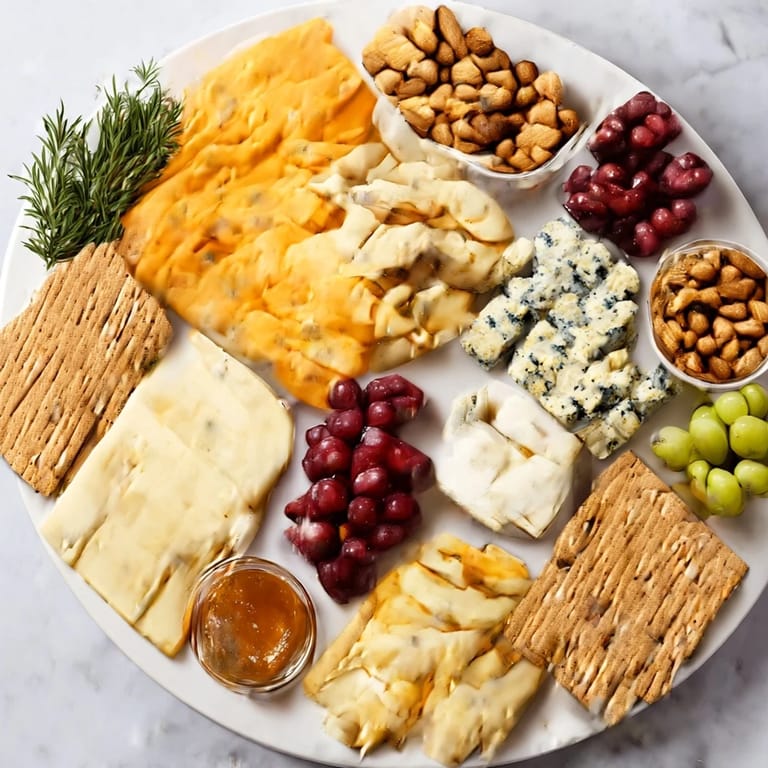
A really great cheese board speaks a quiet language of flavor compatibility, and here's what I've learned: honey finds sharp cheese like they were meant to be together. Fig jam whispers secrets to creamy Brie. Whole grain mustard wakes up everyone who tastes it. The nuts ground everything in earthiness. The vegetables cut through richness like they're doing you a favor. The bread and crackers are the supporting players that make every other flavor shine brighter. When you arrange these elements thoughtfully, you're not just putting food on a board—you're composing a flavor symphony where every instrument knows its part.
- Always put honey and jam within sight of the cheeses they pair with—people need visual permission to try combinations
- Toast your baguette slices lightly if you're making the board more than an hour before guests arrive—they'll stay crisp instead of going soft
- Keep your most adventurous cheeses (the blue, the smoked Gouda) slightly apart from the milder ones so people can find their comfort zone first
 Save
Save Every time I set out a cheese board now, I'm setting out that first welcome mat again—the one that said 'our home is open, our table is full, and we're so glad you're here.' That's what stays with people long after the last cracker is eaten.
Recipe FAQs
- → What cheeses are included in this spread?
The spread features sharp Cheddar, creamy Brie, Manchego, blue cheese, and smoked Gouda, offering a range of flavors and textures.
- → How can I cater to gluten-free guests?
Include gluten-free crackers or substitute sliced cucumbers to maintain the variety and accommodate gluten sensitivities.
- → What fruits complement the cheese selection?
Fresh red and green grapes, apple slices tossed with lemon juice, and dried apricots and figs balance savory cheeses with sweet and tart notes.
- → Can I add proteins or non-vegetarian options?
Yes, cured meats like prosciutto or salami can be added alongside the vegetarian spread for additional variety.
- → How should I arrange the board for best presentation?
Place cheese blocks evenly spaced, fill gaps with assorted crackers, nestle fruits and nuts around, add small bowls of honey, jam, and mustard, then garnish with fresh herbs and vegetables.
- → What tools are recommended for serving?
Use a large serving board, small bowls for condiments, cheese knives, spreaders, toothpicks, cocktail forks, and serving tongs for easy guest access.