 Save
Save I'll never forget the moment my sister called me from the highway, frustrated because her kids had knocked over a bag of trail mix all over the car seats. That's when I realized the road trip snack box wasn't just about food—it was about sanity. Now, whenever someone asks me how to keep everyone happy and the car clean on a long drive, I pull out my secret weapon: a thoughtfully organized snack box that turns munching into something intentional and mess-free. It's become the thing people actually request when they know we're heading somewhere together.
I remember assembling my first proper snack box for a twelve-hour road trip with my partner. By hour three, he said it was the best thing I'd ever done for us. By hour six, he was telling everyone in the rest stop about it. That's when I knew I'd figured out something special—something that transforms a grueling drive into something almost enjoyable.
Ingredients
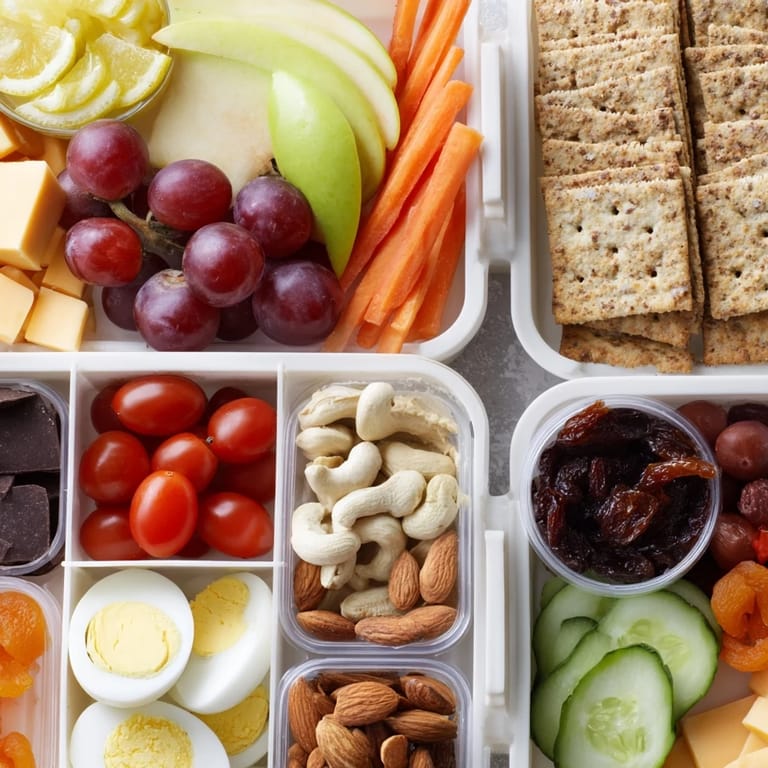
- Seedless grapes (1 cup, washed and dried): These stay fresh longer than you'd think and give you that burst of hydration when you need it most. The key is making sure they're completely dry before packing, or they'll get mushy.
- Medium apple, sliced and tossed with lemon juice: The lemon juice prevents browning and keeps them crisp for hours. This detail matters more than you might think.
- Baby carrots (1 cup): Nature's perfectly portable snack that doesn't need any prep beyond a quick rinse. They're sturdy enough not to get crushed in compartments.
- Cheese cubes (1 cup—cheddar, Swiss, or your preference): Choose a harder cheese that won't sweat in the heat. Softer cheeses get greasy; harder ones stay elegant even in July.
- Whole grain crackers (1 cup, gluten-free if needed): Keep these completely separate from anything moist or they'll soften within an hour. This separation is non-negotiable.
- Mixed nuts (1/2 cup, unsalted): Almonds, cashews, and walnuts together give you different textures and keep your energy steady. Unsalted means they won't make you thirsty halfway through Kansas.
- Hummus (1/2 cup, portioned into small containers): The small containers are essential—they prevent leaks and keep dips from touching everything else.
- Dried fruit (1/2 cup—apricots, cranberries, or raisins): These survive temperature changes that would destroy fresh fruit and satisfy sweet cravings without the guilt.
- Dark chocolate pieces or chocolate-covered pretzels (1/2 cup): The chocolate-covered pretzels give you sweet and salty in one bite, which is genuinely genius for fighting highway fatigue.
- Cherry tomatoes (1/2 cup): These little pops of freshness are so satisfying when you need something bright and slightly tangy.
- Cucumber slices (1/2 cup): Cool, refreshing, and they pair beautifully with the cheese and hummus combination.
- Hard-boiled eggs (4, peeled): These travel better than any other protein and keep you genuinely full. Make them the day before if you're leaving early.
Tired of Takeout? 🥡
Get 10 meals you can make faster than delivery arrives. Seriously.
One email. No spam. Unsubscribe anytime.
Instructions
- Prep everything with intention:
- Wash your grapes thoroughly and let them air dry completely—moisture is the enemy of freshness. Slice your apple and immediately toss with lemon juice so it doesn't oxidize and turn brown and sad. Peel your carrots, wash your cherry tomatoes and cucumbers, and hard-boil your eggs the day before if you can. This is where the magic starts.
- Assemble your container like you're creating art:
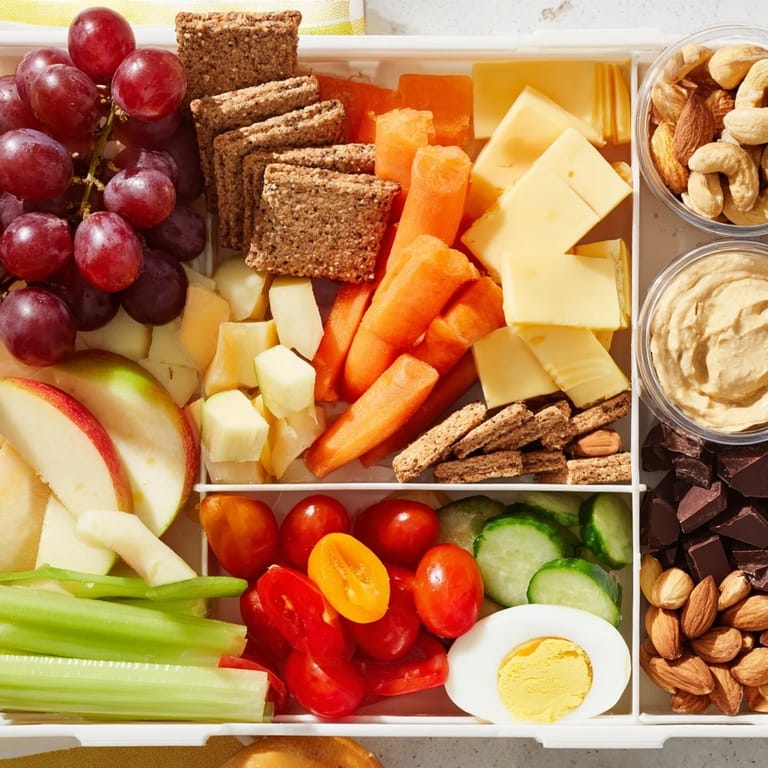
- Lay out your divided snack box or bento-style container and really think about placement. Put heavier items like cheese and nuts in the bottom compartments where they won't crush delicate items. Position your fruits where they catch the light—this sounds silly, but presentation makes you actually want to eat.
- Arrange everything in its own space:
- Each ingredient should have its own compartment so flavors stay pure and nothing gets confused together. Grapes in one section, apple slices in another, carrots in their own spot. This isn't just organization; it's respect for the ingredients.
- Secure your dips properly:
- Pour your hummus into small leak-proof containers—this is the step people skip and then regret. The containers keep the hummus from touching your crackers and making them soggy, which is the difference between a great snack and a disappointing one.
- Add the chocolate and dried fruit strategically:
- Place these where they won't get crushed by heavier items. They're your reward snacks, so treat them that way.
- Cover and chill until departure:
- Seal your box tightly with its lid and refrigerate until it's time to go. If you're traveling longer than two hours, add an ice pack or two. The cold keeps everything fresher and makes the grapes taste even better.
- Take it with you and enjoy freely:
- The entire point is that you eat directly from the container—no plates, no mess, no regrets. Just grab a compartment and go.
 Save
Save There was this moment on a cross-country drive where my nephew pulled out his snack box at sunset and actually got excited about eating his vegetables. That's when I realized this wasn't just about convenience anymore—it was about making time on the road feel intentional and cared for, which somehow made the whole journey feel shorter and sweeter.
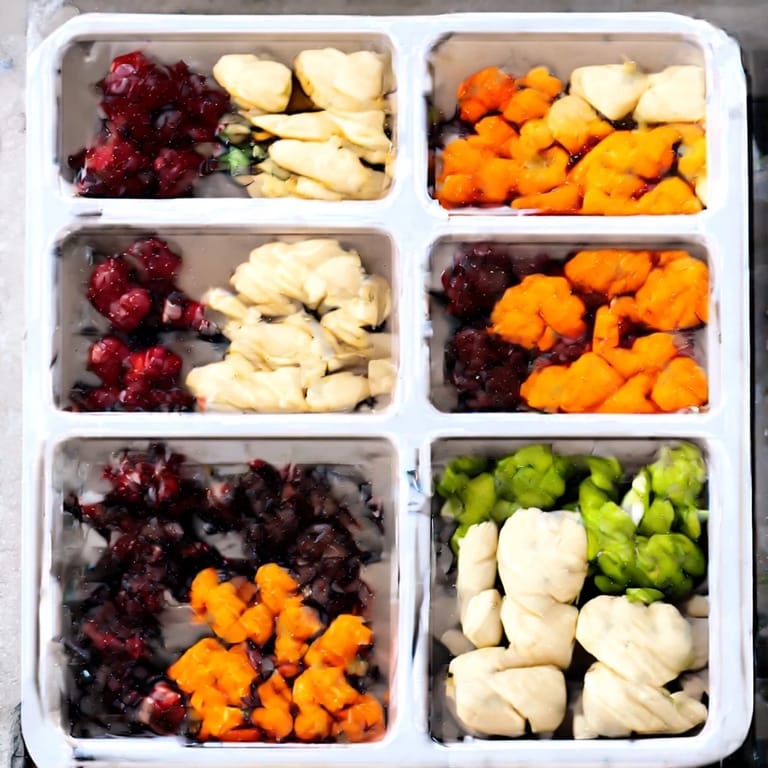
Compartments aren't just a nice touch—they're the entire foundation of this working well. When flavors stay separate, everything tastes like itself, which sounds obvious until you've eaten a cracker that tastes like hummus that tastes like chocolate. A good divided box prevents this tragedy entirely. Look for containers with at least eight compartments, and don't feel bad about spending a little more on quality here. Your sanity is worth it.
Everything in your snack box has a temperature sweet spot. Cheese is happiest when it stays cool, nuts stay fresher if they're a bit chilled, and chocolate actually tastes better cold than it does warm. An ice pack isn't optional for drives longer than two hours—it's essential infrastructure. Tuck it in a corner where it won't make other items wet, and your entire box stays fresher, crisper, and more delicious.
The beauty of the snack box is that it adapts to whoever needs it. Allergic to nuts? Swap them for roasted chickpeas or seeds. Want it vegan? Use plant-based cheese instead. Gluten-free? Pick up gluten-free crackers. Want to add protein? Slice some deli meat or turkey and give it its own compartment. The framework stays the same; you just fill in the specific ingredients that make sense for your people.
- Always assemble boxes on the day of travel for maximum freshness and to prevent things from wilting overnight
- Keep everything you pack as simple and recognizable as possible—you're on a road trip, not solving a puzzle
- Remember that small portions look more generous in divided compartments, so don't overpack each section
 Save
Save There's something special about turning a simple car ride into an experience that feels nourished and intentional. A well-made snack box does that for you.
Recipe FAQs
- → How can I keep the snacks fresh longer?
Use ice packs in the container and store it in the refrigerator until ready to go. Packing dips and moisture-rich items separately helps maintain freshness.
- → What are good alternatives for nut allergies?
Replace mixed nuts with roasted chickpeas, seeds, or crunchy vegetables to maintain texture and flavor without nuts.
- → Can this snack box accommodate dietary preferences?
Yes, you can swap cheese for plant-based options and use gluten-free crackers to fit vegetarian, vegan, or gluten-free diets.
- → How should ingredients be prepared for packing?
Wash, peel, slice, and portion fruits and vegetables as indicated. Use small containers for dips to prevent mixing of flavors.
- → What tools are recommended for assembling this snack box?
A divided snack box or bento-style container, small leak-proof containers, a sharp knife, and a cutting board ensure easy and tidy assembly.