 Save
Save I discovered this bowl on a Tuesday when my fridge had exactly three things: a can of salmon I'd been meaning to use, rice, and the remnants of last week's vegetable haul. There was something liberating about working within those constraints, layering flavors until that first spoonful hit with heat and creaminess and brightness all at once. Now I make it whenever I need something that feels both nurturing and a little adventurous, ready in the time it takes rice to steam.
My coworker Marcus watched me assemble this at my desk one afternoon and asked what smelled so good, then showed up the next day with his own version waiting in a container. There's something about a bowl this colorful and alive that makes people want to try it, and the best part is you can hand them the bowl five minutes after deciding to make it.
Ingredients
- Jasmine or sushi rice (1 cup uncooked, 2 cups water): The starch base matters more than you'd think, holding onto heat and soaking up the umami from the sauce without turning gummy.
- Canned salmon (6 oz, drained and flaked): That tin of fish is nutritional gold and cooks zero minutes, but don't skip the draining or your bowl gets watery.
- Mayonnaise (2 tablespoons): This is the binder that makes the spicy sauce cling to every flake, turning it glossy and almost creamy.
- Sriracha sauce (1–2 teaspoons): Start at one teaspoon unless you know your heat tolerance, since the intensity varies wildly between brands and a spoonful more changes everything.
- Soy sauce (1 teaspoon): The secret umami note that makes people ask what's in the mayo, pure savory depth.
- Toasted sesame oil (½ teaspoon): A small amount goes far, adding nutty complexity that regular oil never could.
- Shredded carrot (½ cup): The sweetness plays against the heat, and the texture stays crisp if you don't prep too far ahead.
- Cucumber (½ cup, sliced): Cool and refreshing, this keeps the bowl from feeling heavy even with the mayo-based salmon.
- Avocado (½, sliced): Creamy and mild, it softens the spice and adds richness without extra fat from cooking.
- Scallions (2 tablespoons, sliced): Fresh and sharp, the bright onion bite wakes up each bite.
- Toasted sesame seeds (1 teaspoon): Sprinkle these last so they stay crispy and deliver that nutty crunch.
- Nori strips (optional): If you add them, tear them just before serving so they don't get soggy from the heat.
Tired of Takeout? 🥡
Get 10 meals you can make faster than delivery arrives. Seriously.
One email. No spam. Unsubscribe anytime.
Instructions
- Rinse and cook the rice:
- Run cold water over your rice in a fine sieve until the water's clear, which takes just a minute but stops the grains from sticking into a block. Bring two cups of water to a boil, add the rinsed rice, cover it tight, and drop the heat to low for twelve to fifteen minutes until the water vanishes and the rice smells sweet and steamy.
- Make the spicy mayo:
- Drain your salmon thoroughly, then flake it into a bowl with the mayo, sriracha, soy sauce, and sesame oil. Stir until the salmon's coated in that creamy, reddish sauce, then taste it and add more sriracha if you want more kick, because this is where all the flavor lives.
- Prepare the vegetables:
- Slice your cucumber thin (or julienne if you're feeling fancy), slice the avocado, and make sure your carrot's shredded fine so everything feels delicate and fresh. If you're using edamame, microwave or steam them for a couple minutes until they're warm.
- Build the bowls:
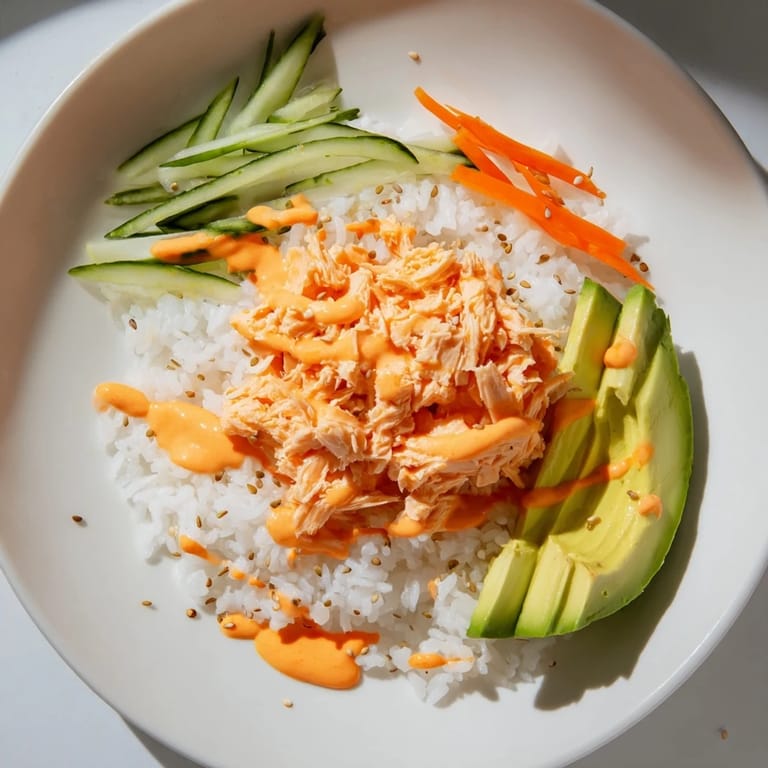
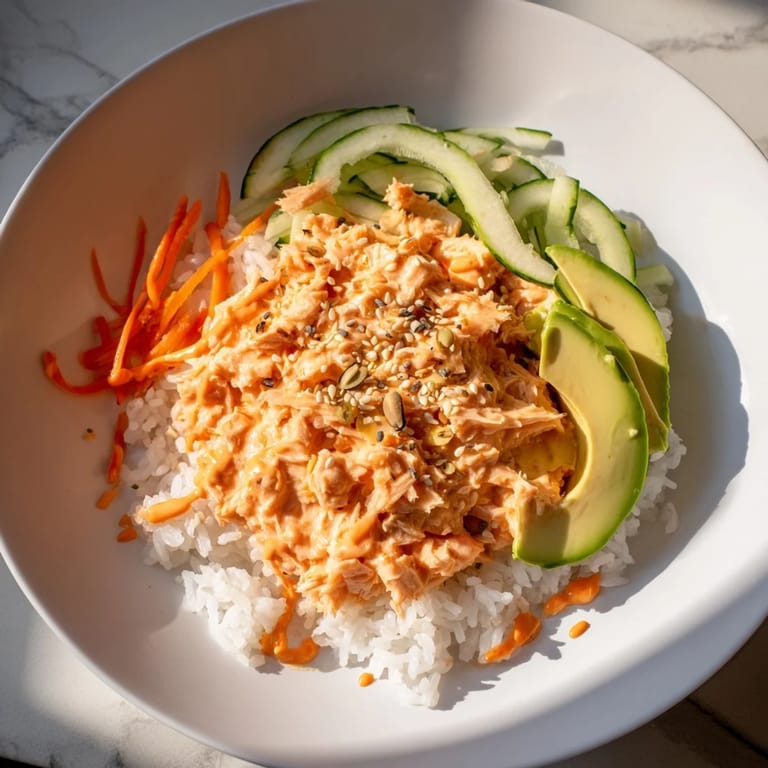
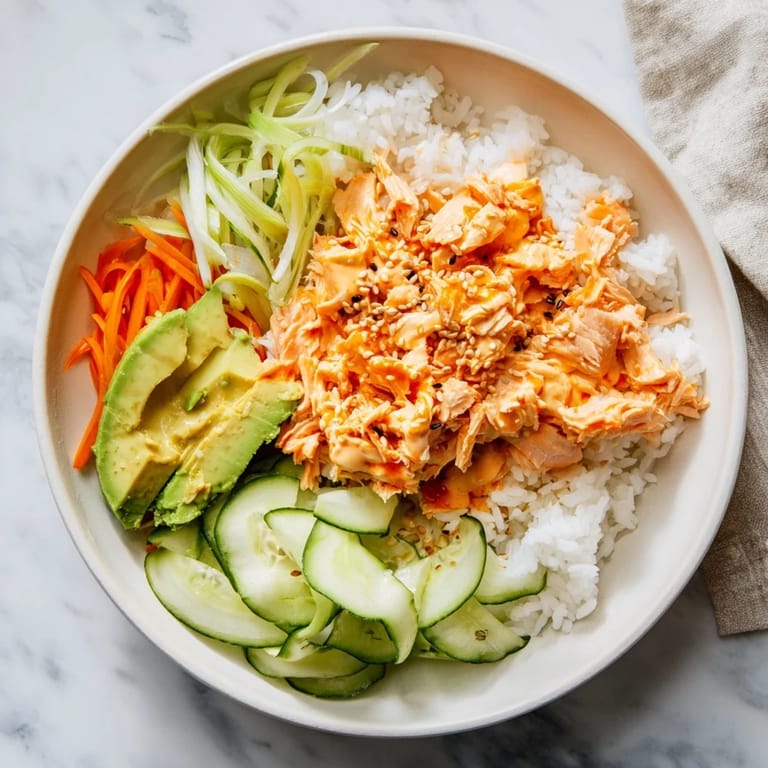
- Divide your fluffy rice between two bowls, then spoon half the salmon mixture onto each one, right in the center where people will dig first. This creates a little salmon nest that's visually gorgeous and makes sure everyone gets salmon in every bite.
- Layer the vegetables:
- Arrange the carrot, cucumber, avocado, and edamame around the salmon in those little gaps, letting colors show and making it look intentional. The arrangement doesn't have to be perfect, just beautiful enough that you want to photograph it.
- Finish and serve:
- Scatter scallions and sesame seeds over everything, add nori strips if you want that paper-thin crunch, and set it down immediately while the rice is still steaming. Offer extra sriracha or soy sauce on the side so people can adjust their own heat level.
 Save
Save I remember my mom tasting this and saying, "This is the opposite of complicated," which made me understand why I make it so often. Something about the layers and the textures and the way it comes together in minutes feels like abundance even though it's built from the simplest ingredients.
Why Canned Salmon Changes Everything
There's a moment when you realize canned salmon is not a compromise but an actual choice, packed with omega-3s and bones you eat for calcium, ready to use without any guilt about convenience. I used to think fresh was automatically better until I understood that the canning process locks in nutritional goodness and actually makes those oils even more bioavailable. Now a pantry stocked with a few cans feels like freedom, like having a meal waiting whenever hunger shows up.
Building Heat Without Burning
Sriracha is deceptive because the heat doesn't hit immediately, it builds, so mixing it into cold mayo and tasting it minutes later gives you a truer sense of what you're working with. I learned this the hard way after making a batch so spicy a friend with genuine heat tolerance had to add extra rice to survive it. Now I treat that tasting spoon like the most important tool in the bowl, adjusting until it's hot enough to feel alive but cool enough that vegetables and avocado still taste like themselves.
Variations That Actually Work
Swap the salmon for canned tuna if that's what you have, or layer in edamame for extra protein and earthiness, or add pickled ginger for sharp brightness that cuts through the richness. Some days I use brown rice for nuttiness, some days cauliflower rice when I want to lighten things up, and the core of what makes this bowl special stays exactly the same. The best part is there's no wrong version, just your version.
- Try radish ribbons instead of cucumber for peppery crunch that completely changes the texture story.
- A drizzle of that extra sriracha mixed with a tiny bit of lime juice becomes a sauce that brings everything together.
- Make extra salmon mayo and keep it in the fridge for quick lunches all week, just add fresh vegetables each time.
 Save
Save This bowl taught me that a good meal doesn't need to be complicated, just thoughtfully layered with flavors and colors that make you want to sit down and actually eat. Make it once and you'll find yourself reaching for those cans knowing exactly what comes next.
Recipe FAQs
- → How do I cook the rice perfectly?
Rinse the rice under cold water until clear. Boil with water, then simmer covered for 12–15 minutes until tender. Let it rest briefly before fluffing.
- → Can I adjust the spiciness level?
Yes, vary the sriracha amount in the mayo mixture to suit your preferred spice intensity without overpowering the other flavors.
- → What are good vegetable additions for this bowl?
Shredded carrot, julienned cucumber, sliced avocado, scallions, and edamame bring freshness, creaminess, and crunch, balancing the rich salmon mixture.
- → Can I substitute the salmon?
Swapping salmon for canned tuna creates a different flavor while maintaining a similar texture and ease of preparation.
- → What oils complement the dish best?
Toasted sesame oil adds a warm, nutty aroma that enhances the sriracha mayo and vegetables, tying the bowl together.