 Save
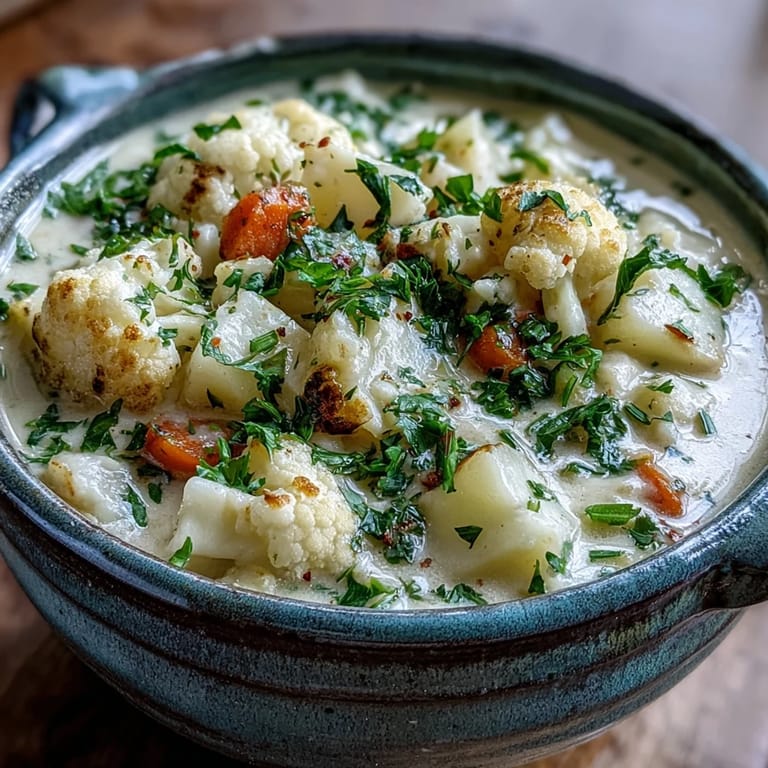
Save There's something about the smell of softened vegetables hitting hot oil that makes a kitchen feel like home, even on the coldest afternoons. My neighbor knocked on my door one November with a head of cauliflower from her garden and no real plan for it, so we ended up improvising this chowder together right there on my stove. What started as a vague idea became something so warm and nourishing that she's been asking for the recipe ever since. The beauty of this soup is that it doesn't need much to feel luxurious—just time, care, and the willingness to let vegetables soften into something creamy and gentle.
I made this for my sister during one of those rainy weekends when we both needed something to do with our hands and conversation in the background. She sat at my kitchen counter chopping vegetables while I handled the stove, and by the time it was simmering, we'd solved nothing important but everything felt better. The soup filled our space with this gentle warmth that made staying inside feel like a choice instead of a necessity.
Ingredients
- Cauliflower: One medium head, cut into small florets so they soften quickly and distribute evenly throughout the broth.
- Potatoes: Two medium ones, peeled and diced into roughly half-inch cubes—smaller than you might think, so they break down slightly and thicken the soup naturally.
- Carrot: One large one, diced fine enough that it softens in the same time as everything else.
- Celery: One stalk, diced and often overlooked, but it's the quiet backbone of flavor here.
- Onion: One small one, finely chopped so it almost disappears into the base.
- Garlic: Two cloves, minced fresh—the jarred stuff won't give you that sharp brightness you need.
- Vegetable broth: Three cups, homemade if you have it, but quality store-bought works just fine.
- Whole milk or plant-based milk: One cup, added toward the end to create that creamy richness without overpowering the vegetables.
- Olive oil or unsalted butter: Two tablespoons, your choice depending on whether you're leaning vegetarian or vegan.
- All-purpose flour: Two tablespoons, which creates a roux that thickens everything without any heavy cream.
- Dried thyme: Half a teaspoon, earthy and understated.
- Smoked paprika: Half a teaspoon, adding a whisper of depth that people can't quite put their finger on.
- Ground pepper: A quarter teaspoon, white or black depending on your preference.
- Salt: Half a teaspoon to start, adjusted at the end because vegetables release their own liquid as they cook.
- Fresh chives or parsley: Two tablespoons chopped, sprinkled on top just before serving so they stay bright and aromatic.
Tired of Takeout? 🥡
Get 10 meals you can make faster than delivery arrives. Seriously.
One email. No spam. Unsubscribe anytime.
Instructions
- Start with the soffritto base:
- Heat your oil or butter in a large pot over medium heat and add the onion, carrot, and celery together. Let them sauté for about four to five minutes, stirring occasionally, until they begin to soften and turn translucent at the edges. You'll know you're there when the onion starts to turn golden and the whole kitchen smells like gentle cooking.
- Bring in the garlic:
- Add your minced garlic and stir constantly for about one minute—no longer, or it'll start to brown and turn bitter. This brief moment is crucial because raw garlic would make the soup harsh, but cooked garlic becomes sweet and mellow.
- Make the roux:
- Sprinkle the flour over the vegetables and stir continuously for two full minutes, coating everything evenly. You're cooking out the raw flour taste and creating a pale, slightly golden paste that will thicken your broth.
- Add the broth carefully:
- Pour in the vegetable broth slowly while whisking constantly to avoid lumps forming at the bottom of the pot. Once it's mostly incorporated, add your potatoes and cauliflower florets and give everything a good stir to distribute them evenly.
- Season and simmer:
- Add the thyme, smoked paprika, pepper, and salt, then bring the whole pot to a boil over medium-high heat. Once it reaches a rolling boil, lower the heat and let it simmer gently for about twenty minutes until the vegetables are very tender and start to break down slightly.
- Add the milk and finish:
- Stir in your milk and let it simmer for another five minutes without boiling—you're just heating it through and letting the flavors meld together. Taste as you go because this is when you adjust salt and discover if you want to add that pinch of nutmeg or extra paprika.
- Choose your texture:
- For a creamier, more velvety chowder, use an immersion blender directly in the pot, pulsing it a few times to partially blend the vegetables while keeping some texture. If you don't have an immersion blender, carefully transfer about two cups of the chowder to a countertop blender, purée it smooth, and return it to the pot—this gives you the best of both worlds without turning everything into soup.
- Serve and garnish:
- Ladle the chowder into bowls while it's still steaming and top with fresh chives, parsley, or a sprinkle of cheese if you're in the mood. Serve immediately with crusty bread for soaking up every last drop.
 Save
Save The first time someone came back for seconds of this chowder without being asked, I realized I'd made something that went beyond just being food. It became the thing we made together on difficult mornings, the comfort we offered friends who were going through something, the reason someone said they finally felt warm again.
Why This Works Without Meat
Vegetarian chowder lives or dies by depth of flavor, and this one gets it through careful layering rather than relying on stock made from bones. The thyme and smoked paprika do real work here, creating a savory backbone that makes people forget they're eating vegetables instead of chicken or seafood. When you build it this way—starting with a properly made base, letting vegetables soften completely, and choosing seasonings that add complexity—richness happens naturally without anything being added that doesn't belong.
Variations and Customizations
This chowder is forgiving and honestly loves being experimented with. Some people add a splash of white wine along with the broth for extra brightness, or a pinch of nutmeg stirred in near the end for warmth. I've made it with roasted cauliflower for deeper flavor, added corn in the summer, even thrown in kale for something different, and it's never disappointed.
- A dash of cayenne or hot sauce turns this into something that warms you from the inside out.
- Roast your cauliflower first if you want more depth and a slightly nuttier flavor.
- Fresh dill instead of thyme completely changes the mood while keeping everything bright.
Serving and Storage
This chowder is best served hot and fresh, but it actually keeps beautifully in the refrigerator for up to four days, and the flavors even improve slightly as everything rests together overnight. If you're making it ahead, store the milk separately and stir it in just before reheating gently on the stove, which prevents any separation or curdling. It also freezes well for up to two months, though I rarely have leftovers long enough to find out.
 Save
Save There's something generous about a bowl of this chowder that has nothing to do with how much is in the pot. Make this when you want to feel taken care of, or when you want to take care of someone else.
Recipe FAQs
- → Can I make this chowder vegan?
Absolutely. Substitute whole milk with unsweetened plant-based milk like almond or oat milk, and use olive oil or vegan butter instead of dairy butter. The flavor and creaminess remain excellent.
- → How do I store leftovers?
Store cooled chowder in an airtight container in the refrigerator for up to 4 days. Reheat gently on the stovetop over medium-low heat, adding a splash of milk if it has thickened too much.
- → Can I freeze cauliflower chowder?
Yes, freeze for up to 3 months. Note that the texture may change slightly upon thawing. Re thaw in the refrigerator overnight and reheat slowly, whisking to restore consistency.
- → What can I serve with this chowder?
Crusty bread, dinner rolls, or crackers make perfect accompaniments. A simple green salad with vinaigrette also balances the richness beautifully.
- → How can I make it thicker?
For extra thickness, mash some of the cooked potatoes against the pot's side or blend more of the chowder. You can also increase the flour slightly when making the roux base.
- → Can I add other vegetables?
Certainly. Corn kernels, bell peppers, or even diced turnips work well. Add harder vegetables like turnips earlier so they cook through completely.