 Save
Save The first time I truly understood bouillabaisse wasn't from a recipe book but from watching an old fisherman's wife in Marseille work her magic in a cramped kitchen overlooking the harbor. She moved with such quiet confidence, layering flavors like she was painting—a handful of saffron here, fennel seeds there—all while the pot simmered and filled the room with an aroma so intoxicating it stopped conversation mid-sentence. What struck me most was that she never rushed, never fretted, just trusted that time and good fish would do most of the work. That lesson stuck with me, and now whenever I make bouillabaisse, I'm really trying to capture that unhurried grace.
I remember making this for my sister's birthday dinner, and the moment I ladled that golden broth into the bowls, everyone at the table went quiet. Not awkward quiet—the kind where you can feel people experiencing genuine happiness. She told me later it reminded her of a trip we'd talked about taking but never quite planned, and somehow this dish brought that feeling into the room anyway.
Ingredients
- Firm white fish fillets (monkfish or sea bass), 400g: These are your backbone—they stay intact through cooking and give the broth clean, subtle depth without falling apart into mush.
- Oily fish fillets (red mullet), 300g: Don't skip these; the fat carries flavor and richness in a way white fish alone simply cannot.
- Mussels, 300g: Buy them as close to cooking as possible, and watch for any with cracked shells or that won't close when tapped—those go straight to the bin.
- Shrimp and scallops, 200g and 6 pieces: These cook fast, so add them near the end to keep them tender and sweet.
- Olive oil, 2 tablespoons: Use a good one; its flavor matters here since it's one of the few fats in the dish.
- Onion, leek, fennel, and carrot: This is your flavor foundation—the longer you coax out their sweetness before adding stock, the better the final broth tastes.
- Garlic, tomatoes, and orange zest: Garlic should be minced fine so it melts into the vegetables; the tomato adds body and slight acidity; the orange zest whispers a bright note that makes people wonder what that 'something' is.
- Saffron threads, 1/2 teaspoon: This is the star—saffron gives bouillabaisse its iconic color and subtle floral warmth; buy it from a trusted source because fakes abound.
- Fennel seeds, thyme, bay leaf, and parsley: These herbs are traditional for a reason; they echo the coastal terroir and work in harmony rather than fighting each other.
- White wine and fish stock, 200ml and 1.5 liters: The wine adds acidity and brightness; good stock is worth hunting down because it becomes the soul of your stew.
- For the rouille—egg yolk, garlic, chili, saffron, mustard, and olive oil: This is essentially a saffron-spiked aioli; the emulsification takes patience but transforms everything when dolloped into warm bowls.
- Baguette for serving: Toasted and brushed with olive oil, it's not just bread—it's the perfect vehicle for soaking up every last drop of that golden broth.
Tired of Takeout? 🥡
Get 10 meals you can make faster than delivery arrives. Seriously.
One email. No spam. Unsubscribe anytime.
Instructions
- Build Your Flavor Base:
- Heat olive oil in your pot and add the onion, leek, fennel, carrot, and garlic, letting them soften for about 8 to 10 minutes without browning—you want them yielding and sweet, not caramelized. Listen for the gentle sizzle and breathe in deeply; this is where the journey begins.
- Layer in the Soul:
- Stir in your tomatoes, orange zest, and all the herbs and spices—the saffron, fennel seeds, thyme, bay leaf, parsley. Let this cook for 5 minutes so the spices bloom and release their oils into the vegetables. The pot will smell like a Provençal dream at this point.
- Deglaze and Simmer:
- Pour in the white wine and let it sizzle for just 2 minutes to cook off the harsh alcohol, then add your fish stock. Bring it to a gentle boil, then lower the heat and let it simmer uncovered for 25 minutes—this time is when all those individual flavors marry into one cohesive, complex broth.
- Strain for Clarity:
- Pass the broth through a fine sieve, pressing gently on the solids to coax out every drop of flavor. You'll be left with a clear, golden liquid that tastes far more refined than what went in. Return it to your cleaned pot, which feels like a small reset moment in the cooking process.
- Cook Your Seafood with Care:
- Bring the broth back to a gentle simmer, then add your firm white fish first and cook for 5 minutes. Follow with the oily fish, mussels, shrimp, and scallops, simmering for another 5 to 6 minutes until everything is just cooked through and the mussels open like little gifts—discard any that stay stubbornly closed. Taste and adjust seasoning.
- Make Your Rouille:
- Whisk together egg yolk, minced garlic, chopped chili, and saffron (with its soaking water), then add mustard. Slowly drizzle in olive oil while whisking constantly, as if you're making mayonnaise; the emulsion thickens into a luxurious, sunset-colored sauce that's worth the patience. Season with salt.
- Finish and Serve:
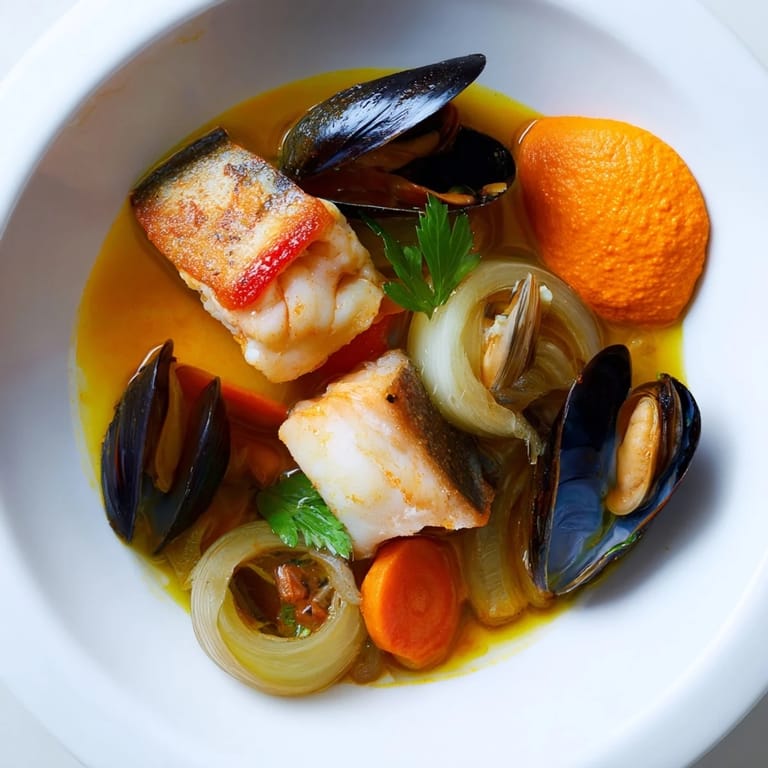
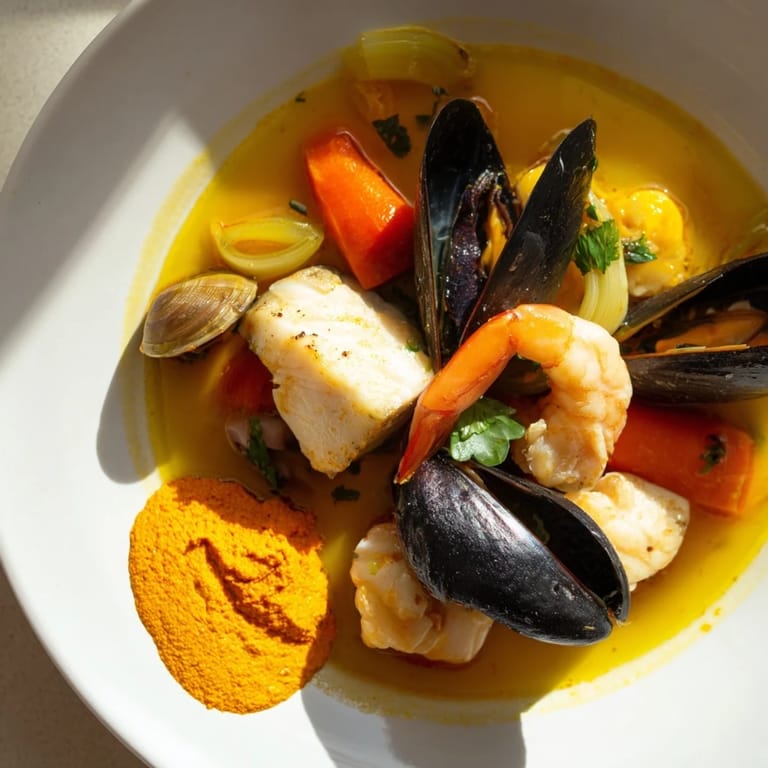
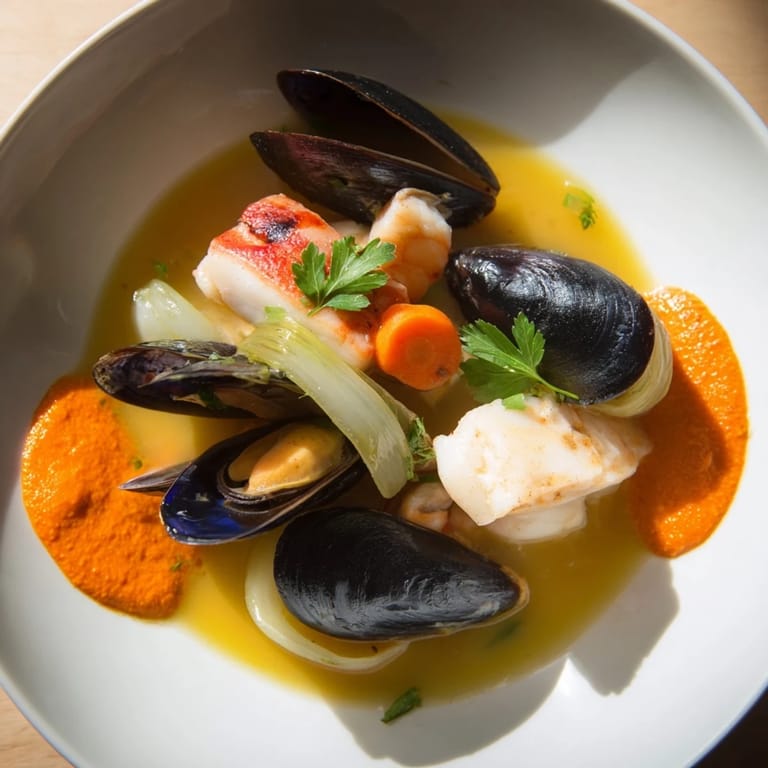
- Ladle the bouillabaisse into warm bowls, garnish with fresh parsley, and serve alongside toasted baguette slices brushed with olive oil and a generous spoonful of rouille on the side. Watch people's faces as they take that first spoonful—it's pure contentment.
 Save
Save There was an evening when a friend called just as I was finishing the rouille, and I put the phone on speaker so we could talk while I cooked. By the time the bowls were ready, she could smell it through the speaker and laughed that laughter that means something real just happened. That's when I realized bouillabaisse isn't really about technique or ingredients—it's about the moment you're creating, the people you're feeding, and the way a pot of golden broth can say 'you matter' without speaking a word.
The Story Behind Saffron and Seafood
Bouillabaisse emerged from the fishing villages of Marseille, born from necessity as much as creativity—fishermen would use the catch that didn't sell well, transforming humble scraps into something transcendent. Over time, it became a point of pride, a dish so tied to Provençal identity that locals have fierce opinions about how it 'should' be made. What I love about this is the flexibility buried beneath the tradition—yes, saffron and fennel are non-negotiable, but the specific fish changes with what's fresh. It's tradition with permission to adapt, which feels like the best kind of cooking rule.
Timing and Temperature Matter More Than You Think
The difference between a transcendent bouillabaisse and a mediocre one often comes down to patience in the broth-building phase. Those first 25 minutes of simmering aren't wasted time; they're when the magic happens, when disparate flavors become one. Similarly, adding seafood at staggered intervals isn't fussy—it's respect for the fact that shrimp and scallops cook in minutes while firm fish needs longer. Temperature control throughout prevents the broth from breaking down and keeps everything tasting fresh rather than boiled.
Rouille: The Golden Finishing Touch
Rouille is where bouillabaisse becomes unforgettable, transforming from elegant to absolutely indulgent with just one spoonful. This saffron-spiked aioli takes real care to emulsify properly—rushing the oil drizzle or using cold ingredients will cause it to break. But when it works, it's like adding a crown to the dish, rich and garlicky and stained golden with saffron.
- Make the rouille up to a day ahead and refrigerate it, so you're not juggling both the stew and the sauce at the last minute.
- If your rouille breaks (the oil separates from the yolk), start fresh with a new egg yolk in a clean bowl and slowly whisk in the broken mixture to rescue it.
- Serve rouille on the side so people can add as much or as little as they like—some prefer to let the broth shine, others want that garlicky richness in every bite.
 Save
Save Bouillabaisse is one of those dishes that rewards you for slowing down, for honoring ingredients, for cooking with intention. Make it, taste it, and watch the people around your table discover why this humble stew became a legend.
Recipe FAQs
- → What types of fish work best for this dish?
Firm white fish like monkfish or sea bass and oily fish such as red mullet provide the ideal texture and flavor balance in this stew.
- → How do I prepare the rouille sauce?
Whisk egg yolk, garlic, chili, saffron, and mustard together, then slowly drizzle in olive oil until thickened. Season with salt to taste.
- → Can I use seafood other than mussels and shrimp?
Yes, scallops and other shellfish can be added for variety, but ensure all are cleaned and cooked just until tender to maintain texture.
- → Is there a recommended way to serve this dish?
Serve the stew hot with toasted baguette slices brushed with olive oil, topped with fresh parsley and a spoonful of rouille for added flavor.
- → How can I adjust the broth's flavor intensity?
Simmering the broth uncovered allows flavors to concentrate; straining solids ensures a clear, aromatic base that can be adjusted with seasoning.