 Save
Save The first spoonful of étouffée I ever tasted wasn't in a restaurant—it was in my neighbor's cramped kitchen on a Tuesday night when her air conditioner had given out. She stood there, sweat on her forehead, stirring a pot of dark, glossy roux like it was the most natural thing in the world. The smell of butter-toasted flour and bell pepper filled every corner of that little room. I didn't know then that I was watching someone make magic, or that I'd spend the next decade chasing that same depth of flavor. But I remember the way she smiled when I asked for seconds, like she'd been waiting for someone to finally understand.
I made this for my brother's birthday once, back when he was going through a rough patch and didn't want a fuss. He sat at my kitchen table, quiet, spooning rice and étouffée into his mouth while I pretended not to watch. Halfway through the bowl, he looked up and said it tasted like something worth sticking around for. We didn't talk much after that, but I knew the food had done its job. Sometimes a good meal says everything you can't find words for.
Ingredients
- Vegetable oil and all-purpose flour: These two form the roux, the soul of the dish—cook it low and slow until it's the color of melted chocolate, and don't rush it or you'll end up with bitter specks.
- Onion, green bell pepper, and celery: The holy trinity of Cajun cooking, they add sweetness and structure that balances the heat and depth of the roux.
- Garlic: Four cloves might seem like a lot, but they mellow into a warm, aromatic hum that ties everything together.
- Shrimp or crawfish: Use the freshest you can find—frozen works fine, just thaw them gently and pat them dry so they don't water down your sauce.
- Seafood stock: Homemade is ideal, but a good quality store-bought version saves time and still delivers rich, briny flavor.
- Worcestershire sauce: Just a tablespoon adds umami and a hint of tang that deepens the whole pot.
- Cajun seasoning and cayenne pepper: These bring the heat and complexity—start conservative, you can always add more but you can't take it back.
- Bay leaf: One leaf whispers herbal, earthy notes into the background without stealing the show.
- White rice: Fluffy and plain, it's the perfect canvas for all that saucy, spicy goodness.
- Green onions and parsley: Fresh, bright, and grassy, they cut through the richness right at the end.
Tired of Takeout? 🥡
Get 10 meals you can make faster than delivery arrives. Seriously.
One email. No spam. Unsubscribe anytime.
Instructions
- Start the roux:
- Heat the oil in a heavy pot over medium heat, then whisk in the flour slowly and steadily. Stir constantly with a wooden spoon, scraping the bottom, until the mixture turns a deep, nutty brown—this takes patience, about 15 to 20 minutes, and it's worth every second.
- Add the holy trinity:
- Toss in the onion, bell pepper, and celery, letting them sizzle and soften into the roux for 5 to 7 minutes. The kitchen will start to smell like a Louisiana porch in summertime.
- Stir in the garlic:
- Add the minced garlic and let it cook for just a minute until it releases that sharp, sweet fragrance. Don't let it burn or it'll turn bitter.
- Build the sauce:
- Pour in the seafood stock gradually, whisking to blend it smoothly with the roux and vegetables. The mixture will thicken and darken as it comes together.
- Add the shrimp and seasonings:
- Stir in the shrimp, Worcestershire sauce, Cajun seasoning, cayenne, bay leaf, salt, and pepper. Everything should be swimming in a glossy, aromatic sauce.
- Simmer and thicken:
- Bring it to a gentle simmer, then lower the heat and let it cook uncovered for 20 to 30 minutes, stirring now and then. The shrimp will turn pink and tender, and the sauce will coat the back of your spoon.
- Taste and adjust:
- Pull out the bay leaf and taste the étouffée—add more salt, pepper, or cayenne if it needs a nudge. Trust your tongue.
- Serve it up:
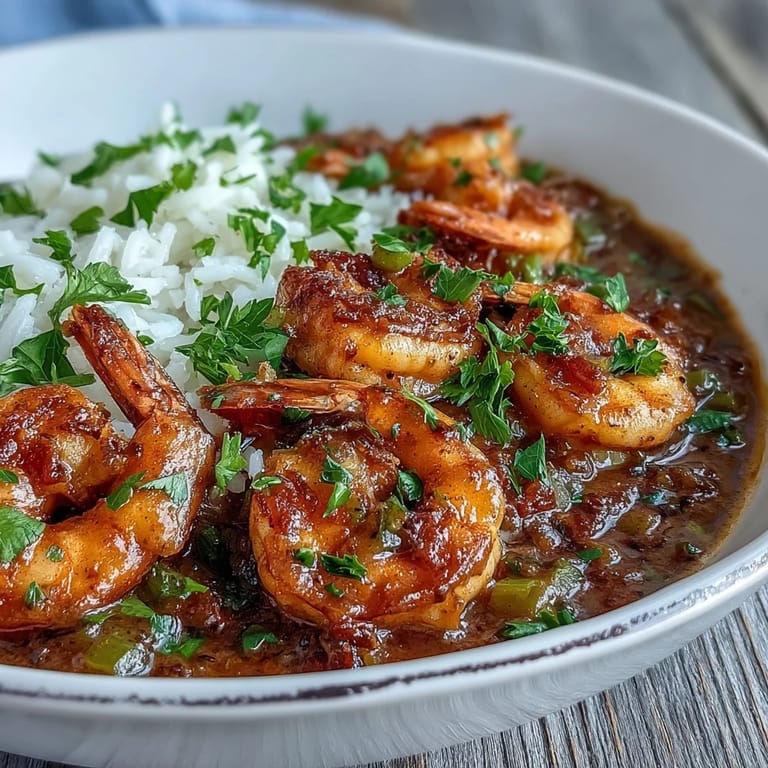
- Spoon the étouffée over bowls of hot white rice and scatter green onions and parsley on top. Serve it while it's still steaming.
 Save
Save There was a night I made this for a potluck, and I watched a woman I barely knew close her eyes after the first bite and say it reminded her of her grandmother's kitchen in Baton Rouge. She didn't say anything else, just smiled and went back for another spoonful. That's when I realized this dish isn't just food—it's a bridge to places and people we carry inside us. It's comfort that doesn't need explanation.
Choosing Your Protein
Shrimp is traditional and quick-cooking, but crawfish gives it that authentic Louisiana soul if you can get your hands on fresh tails. I've also swapped in chunks of chicken thighs for a heartier version, and once I used sliced andouille sausage when I was out of seafood—it turned smoky and deeply satisfying. Even mushrooms work beautifully for a vegetarian spin, soaking up all that roux and spice like little flavor sponges. The base is so good, it can carry just about anything you throw at it.
Getting the Roux Right
The roux is everything in this dish, and it's also the trickiest part if you've never made one. I learned the hard way that you can't walk away—not even to check your phone—because it goes from perfect to burnt in the blink of an eye. Use a heavy pot, keep the heat steady at medium, and stir without stopping until it's the color of a Hershey bar. If it smells toasty and nutty, you're on the right track. If it smells burnt, dump it and start fresh.
Serving and Storing
Étouffée is one of those dishes that actually improves after a night in the fridge—the flavors marry and mellow, and the sauce gets even silkier. I like to make a big batch on Sunday and eat it all week over rice, with a slice of crusty French bread to mop up every drop. If you're serving it for company, set out hot sauce and extra green onions so everyone can customize their bowl. It reheats gently on the stove with a little added stock, and it freezes well for up to three months.
- Leftovers keep in the fridge for up to four days in an airtight container.
- Reheat gently over low heat, adding stock or water to loosen the sauce.
- Serve with cornbread, a simple green salad, or sautéed greens on the side.
 Save
Save Every time I make this, I think about that neighbor and her broken air conditioner, and how she taught me that the best food comes from patience and a little bit of sweat. This étouffée won't fix everything, but it'll fill your kitchen with something that feels like home.
Recipe FAQs
- → What is the key to a perfect roux?
The secret is patience and constant stirring. Cook the oil and flour mixture over medium heat for 15-20 minutes, stirring continuously until it reaches a deep chocolate brown color. Never leave it unattended as it can burn quickly.
- → Can I use crawfish instead of shrimp?
Absolutely! Crawfish is a traditional and authentic choice for étouffée. Use the same amount (1 pound) of peeled crawfish tails and follow the same cooking instructions for delicious results.
- → How can I make this dish less spicy?
Simply reduce or omit the cayenne pepper and use a mild Cajun seasoning blend. You can always add hot sauce at the table for those who prefer more heat.
- → What can I substitute for seafood stock?
Chicken stock works perfectly as a substitute and is commonly used in many étouffée variations. For richer flavor, add a splash of clam juice to the chicken stock.
- → How should I store and reheat leftovers?
Store in an airtight container in the refrigerator for up to 3 days. Reheat gently on the stovetop over low heat, adding a splash of stock if needed to loosen the sauce. The flavors actually deepen overnight, making leftovers even more delicious.
- → Can I make this gluten-free?
Yes! Use a certified gluten-free flour blend for the roux and ensure your seafood or chicken stock is gluten-free. The cooking process remains exactly the same.