 Save
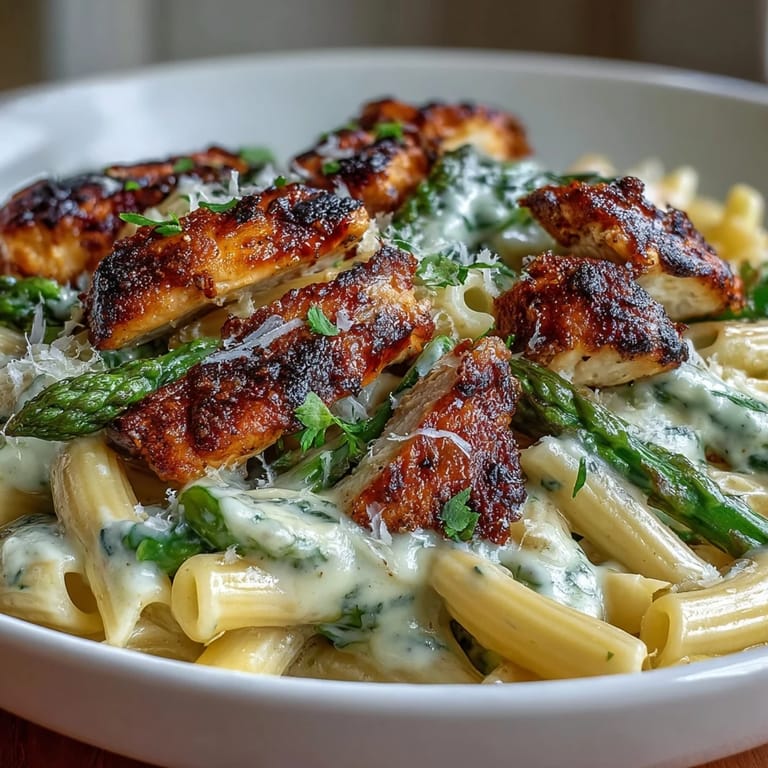
Save There's this moment that happens when you're cooking pasta on a Wednesday night and suddenly everything converges—the smell of garlic hitting hot butter, the sound of asparagus crisping in the oven, the quiet satisfaction of chicken slicing cleanly under your knife. That's when I first made this dish, not from a plan but from having all these ingredients staring back at me and wondering what magic could happen if I brought them together. The lemon zest was the last-minute addition that changed everything, a bright note that cut through the richness and made the whole thing sing.
I made this for my partner on a rainy evening when we'd both had those days where cooking felt impossible, and watching their face light up when they tasted it reminded me why I cook in the first place. The chicken was so tender it practically melted, and the pasta clung to the creamy sauce like it was meant to be together. We ate in comfortable silence for the first few bites, which is the highest compliment any dish can receive in our house.
Ingredients
- Asparagus (1 bunch, about 400 g): Trim those woody ends without mercy—they're the first thing that tells you the stalks are fresh and worth roasting until they're golden and crispy.
- Asiago cheese (1/3 cup grated): This nutty, aged cheese is what makes the asparagus sing; if you can't find it, Parmesan works but Asiago has this extra depth that's worth seeking out.
- Parmesan cheese (1 cup total, divided): Use freshly grated if you possibly can—pre-shredded versions have anti-caking agents that prevent silky melting.
- Chicken breasts (2 medium, about 400 g): Pat them dry before seasoning; moisture is the enemy of a golden sear.
- Penne or rigatoni pasta (350 g): The tubes catch sauce beautifully, but any short pasta will work if that's what you have on hand.
- Heavy cream (1/2 cup): Don't skip this or substitute—the richness is essential to the character of the dish.
- Lemon (1 whole, for juice and zest): This is your secret weapon; the brightness prevents the cream from feeling cloying.
- Fresh parsley (2 tablespoons, optional): It's optional but recommended because it adds a fresh flourish that makes the plate look alive.
Tired of Takeout? 🥡
Get 10 meals you can make faster than delivery arrives. Seriously.
One email. No spam. Unsubscribe anytime.
Instructions
- Roast the asparagus with golden cheese crust:
- Line your baking sheet, toss the asparagus with oil and seasonings, sprinkle on both cheeses and lemon zest, then slide it into a 220°C oven. In about 12–15 minutes you'll smell something incredible—that's when the cheese starts to caramelize and the tips turn crispy. Let it cool just enough to handle, then chop into bite-sized pieces.
- Sear the chicken until golden and cooked through:
- Season those breasts well, then get your skillet screaming hot with oil. Listen for the sizzle when they hit the pan—that's the sound of a proper sear building flavor. Cook 4–5 minutes per side until the internal temperature reaches 75°C, then let them rest while you get everything else ready.
- Cook pasta to al dente perfection:
- Salt your water generously and get it to a rolling boil before the pasta goes in. Taste it a minute or two before the package says it's done—you want it tender but with a slight resistance when you bite. Reserve that pasta water before draining; it's liquid gold for adjusting your sauce.
- Build the creamy sauce with garlic and aromatics:
- In the same skillet you used for chicken, melt butter and let minced garlic toast for just a minute—don't let it brown. Pour in broth and cream, let it simmer gently, then add Parmesan and watch it transform into something silky and elegant.
- Combine pasta and sauce with pasta water:
- Toss the drained pasta with the sauce, squeezing in that fresh lemon juice while everything is hot. Add pasta water a bit at a time until the sauce coats each piece evenly but still moves fluidly in the pan.
- Fold in chicken and crispy asparagus gently:
- Now that your protein and vegetables are ready, fold them in carefully to warm through without breaking up the chicken. This is the moment it all becomes one dish rather than separate components.
 Save
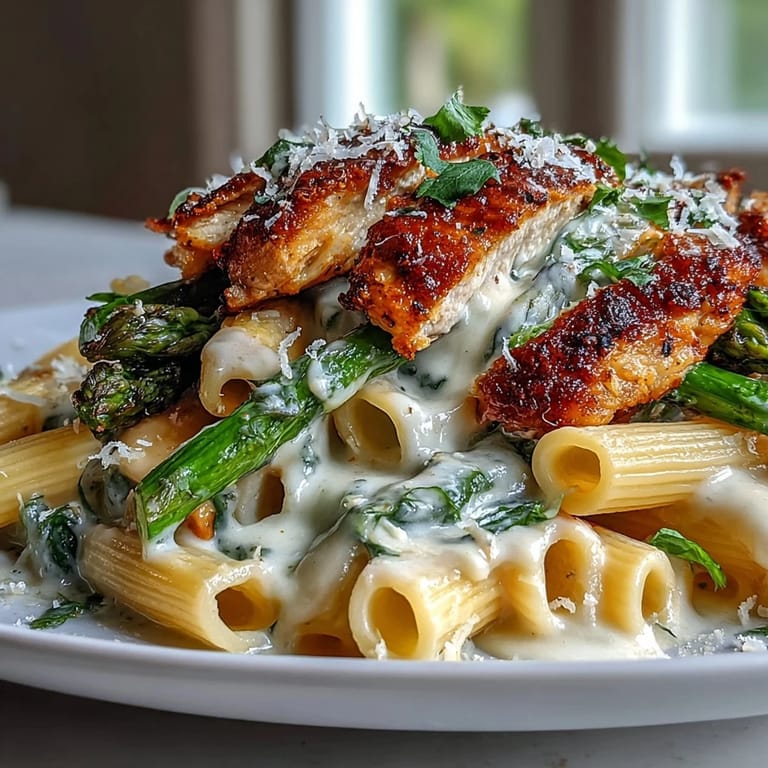
Save What strikes me most about this dish is how humble ingredients transform into something that tastes like you spent hours in the kitchen. It's the kind of meal that reminds you cooking doesn't have to be complicated to be memorable.
The Magic of Lemon in Cream Sauces
Lemon juice is the ingredient that separates a heavy, one-note cream sauce from something bright and balanced. I learned this the hard way after making countless pasta dishes that sat heavy in my stomach, wondering what was missing. A squeeze of fresh lemon brightens everything without making it taste citrusy—it just wakes the palate up and makes you want another bite.
Why Asparagus Deserves the Cheese Treatment
Roasting asparagus with cheese transforms it into something entirely different from the steamed vegetable you might've had as a kid. The dry heat of the oven intensifies the natural sweetness while the cheese creates pockets of umami-rich flavor. When it hits the hot pasta and cream, those crispy edges soften just slightly, adding textural depth that makes every forkful interesting.
Timing and Temperature
The secret to this dish coming together seamlessly is managing your heat and timing so everything finishes around the same moment. You want the asparagus golden and chopped, the chicken sliced and rested, and the pasta cooked while the sauce is still warm and ready to embrace everything. Start the asparagus first since it takes longest, then begin the chicken when you put the pasta water on to boil.
- Check your chicken's internal temperature with a meat thermometer—75°C is the magic number for moist, safe chicken.
- If your sauce breaks or becomes too thick, a splash of reserved pasta water fixes it instantly.
- Serve immediately in warmed bowls so the pasta stays at that perfect temperature throughout the meal.
 Save
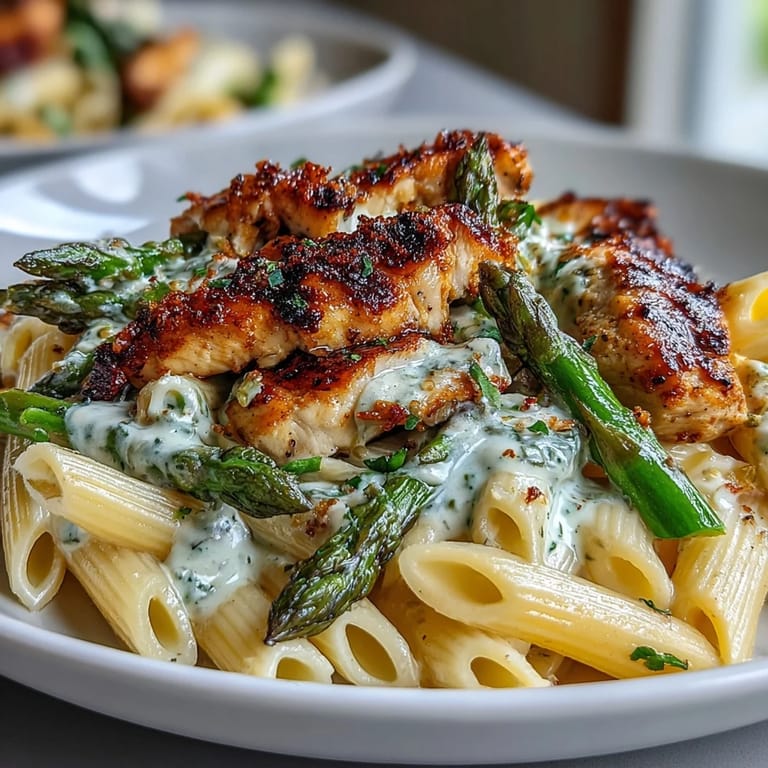
Save This is the kind of dinner that feels special without requiring special occasions, the sort of meal that quietly becomes a favorite without you even planning it. Make it once and it becomes part of your cooking repertoire, ready whenever you want something that tastes like care.
Recipe FAQs
- → Can I make the crispy asparagus ahead of time?
The asparagus is best roasted just before serving to maintain its crispy cheese topping. If you need to prep ahead, roast the asparagus and reheat at 200°C (400°F) for 5-7 minutes to recrisp the cheese before adding to the pasta.
- → What pasta shapes work best for this dish?
Penne and rigatoni are ideal because their ridges and tubes catch the creamy sauce. Ziti, fusilli, or gemelli would also work well. Avoid long strands like spaghetti—the chunky asparagus and sliced chicken need pasta with more heft.
- → Can I substitute the heavy cream?
Half-and-half works but will produce a thinner sauce. For a lighter version, try evaporated milk or blend in some silken tofu. Plant-based creams can be used, though the texture may vary slightly.
- → How do I store and reheat leftovers?
Store in an airtight container for up to 3 days. Reheat gently with a splash of pasta water or cream to restore the sauce's silkiness. The crispy asparagus will soften, but the flavors will still meld beautifully.
- → Can I use other vegetables instead of asparagus?
Broccoli florets, green beans, or Brussels sprouts halved would roast beautifully with the same cheese crust. Adjust roasting time—broccoli may need 15-18 minutes, while green beans typically cook faster in 10-12 minutes.