 Save
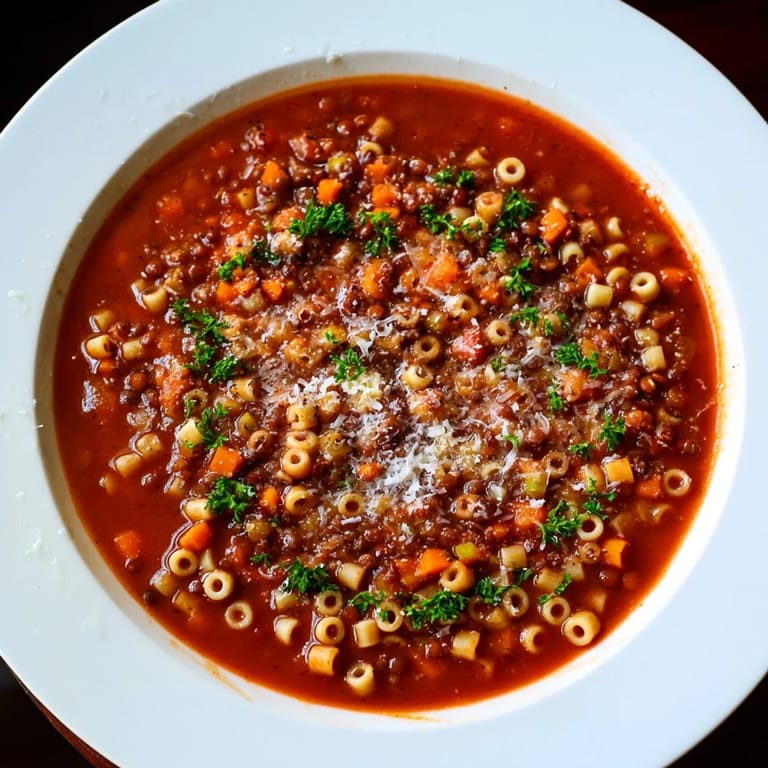
Save I started making this soup on rainy Sundays when the pantry was running low but I still wanted something warm and filling. The first batch turned out thicker than I expected, almost like a stew, and I loved how the tiny pasta soaked up all that rich tomato broth. Now it's my go-to when I need comfort without fuss. It smells like an Italian grandmother's kitchen, even though mine never cooked this way. Something about lentils and ditalini just works.
I once made this for a friend who swore she hated lentils, and she finished two bowls without realizing what she was eating. She kept asking what made it so creamy, and I just smiled. The secret is letting the vegetables soften completely before adding anything else. That slow sauté builds a sweetness that balances the tomatoes perfectly. It's the kind of meal that makes people feel cared for without you having to say much.
Ingredients
- Olive oil: A good glug of this starts everything off right, coating the vegetables so they soften instead of sticking, and it adds a subtle richness that water just can't give.
- Yellow onion: Chop it fine so it melts into the broth, not in big chunks that surprise you mid-spoonful.
- Carrots and celery: These two are the backbone of the flavor, sweet and earthy, and they hold their shape just enough to give the soup texture.
- Garlic: Three cloves minced small release their perfume fast, so don't walk away from the stove once they hit the pot.
- Brown lentils: They cook evenly and don't turn to mush like red lentils would, which is exactly what you want here.
- Ditalini pasta: These little tubes catch the broth in every bite, and they're sturdy enough not to overcook if the soup sits on the stove a few extra minutes.
- Vegetable broth: Low-sodium lets you control the salt, and it keeps the soup from tasting flat or overly salty by the time everything simmers down.
- Diced tomatoes and tomato paste: The canned tomatoes bring acidity and body, while the paste deepens the color and adds a concentrated sweetness.
- Thyme, oregano, bay leaf: Dried herbs work perfectly here because they bloom in the long simmer, filling the kitchen with that unmistakable Italian warmth.
- Crushed red pepper flakes: Optional, but a pinch wakes up the whole pot without making it spicy.
- Parsley and Parmesan: Fresh parsley at the end brightens everything, and a little grated cheese makes it feel like a special occasion even when it's just Tuesday.
Tired of Takeout? 🥡
Get 10 meals you can make faster than delivery arrives. Seriously.
One email. No spam. Unsubscribe anytime.
Instructions
- Soften the vegetables:
- Heat the olive oil in your largest pot over medium heat, then add the onion, carrots, and celery. Stir them around every minute or so until they start to soften and smell sweet, about 6 to 8 minutes.
- Wake up the garlic:
- Toss in the minced garlic and stir constantly for a minute. You'll know it's ready when the smell hits you and makes your mouth water.
- Build the base:
- Add the lentils, diced tomatoes with all their juice, tomato paste, thyme, oregano, bay leaf, and red pepper flakes if you're using them. Stir everything together so the tomato paste dissolves and coats the lentils.
- Simmer the lentils:
- Pour in the vegetable broth and turn the heat up to bring it to a boil. Once it's bubbling, lower the heat, cover the pot, and let it simmer gently for 20 minutes until the lentils are tender but not falling apart.
- Cook the pasta:
- Stir in the ditalini, leave the lid off, and simmer for another 8 to 10 minutes. Keep an eye on it and stir occasionally so the pasta doesn't stick to the bottom.
- Season and serve:
- Fish out the bay leaf, taste the soup, and add salt and pepper until it sings. Ladle it into bowls, sprinkle parsley on top, and pass the Parmesan at the table.
 Save
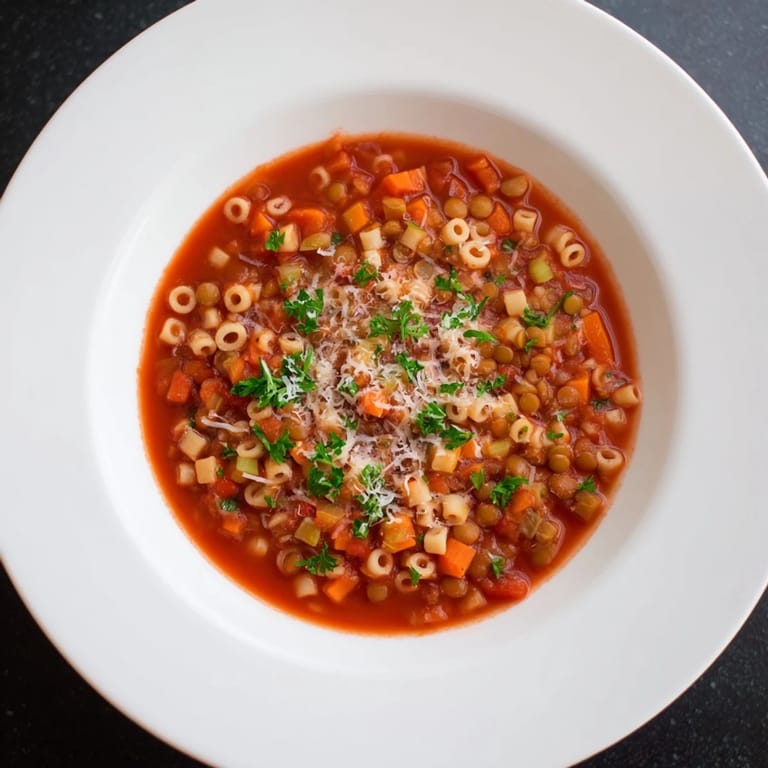
Save One winter evening I served this with thick slices of crusty bread, and my partner said it tasted like the kind of meal that makes you want to stay home instead of going out. We sat at the table longer than usual, scraping our bowls and talking about nothing important. That's when I realized this soup isn't just food, it's an excuse to slow down. It doesn't demand much from you, but it gives back more than you'd think.
Make It Your Own
I've added handfuls of chopped spinach or kale in the last five minutes, and it turns the soup into something even more substantial without changing the flavor much. Sometimes I use a different small pasta shape, whatever I have in the cupboard, and it always works. If you want it brothier, add an extra cup of vegetable stock. If you like it thick, let it simmer uncovered a bit longer so the liquid reduces.
Storing and Reheating
This soup keeps in the fridge for up to four days, but the pasta will continue absorbing liquid as it sits. When you reheat it, add a splash of broth or water to loosen it back up, and warm it gently on the stove. I've frozen it in portions before, and it works fine, though the pasta can get a little soft after thawing. If you know you're freezing it, consider cooking the pasta separately and adding it fresh when you reheat.
Serving Suggestions
I always put out a bottle of good olive oil and some crusty bread so people can dip and drizzle as they go. A simple green salad with lemon vinaigrette balances the richness of the soup without weighing you down. If you're feeding a crowd, set out bowls of grated Parmesan, extra parsley, and red pepper flakes so everyone can customize their bowl.
- Serve with garlic bread or focaccia for soaking up every last drop.
- Pair with a crisp white wine or sparkling water with lemon.
- Top with a drizzle of your best olive oil right before eating for a little luxury.
 Save
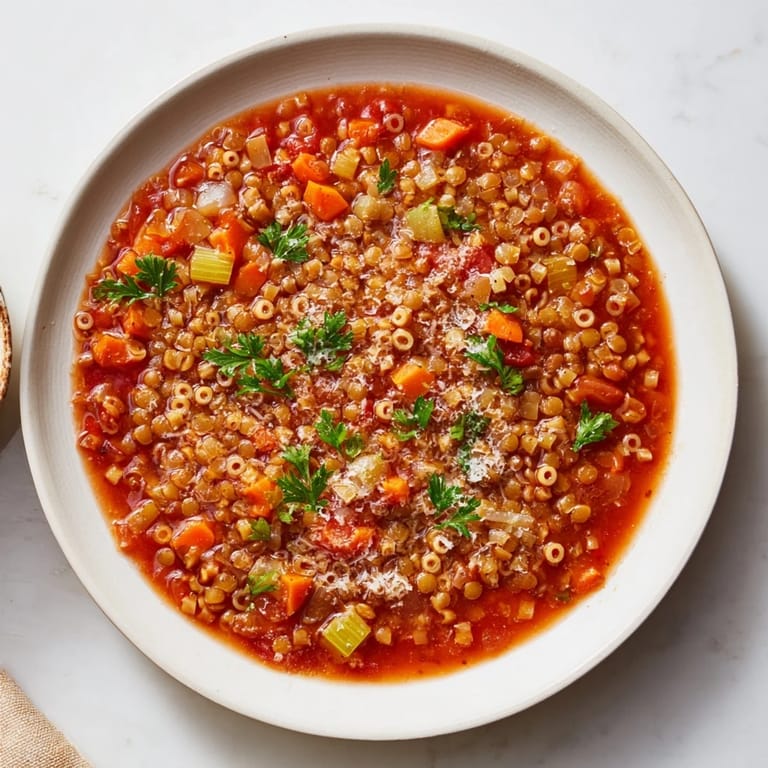
Save This soup has become one of those recipes I make without thinking, the kind that feels like muscle memory now. I hope it becomes that for you too, something easy and warm that you can count on when you need it most.
Recipe FAQs
- → Can I substitute ditalini pasta with another type?
Yes, small pasta shapes like elbow macaroni or orzo work well as substitutes, maintaining similar cooking times and texture.
- → How can I make this dish vegan?
Omit the Parmesan cheese or replace it with a plant-based alternative to keep it fully plant-based without sacrificing flavor.
- → What herbs enhance the flavor of this dish?
Dried thyme and oregano are key, while fresh parsley added at the end brightens the overall flavor.
- → Is it possible to add greens to this dish?
Yes, stirring in chopped spinach or kale in the last 5 minutes of cooking adds extra nutrients and freshness.
- → How long does it take to cook the lentils and pasta properly?
Lentils require about 20 minutes of simmering before adding the pasta, which then needs an additional 8–10 minutes to become tender.