 Save
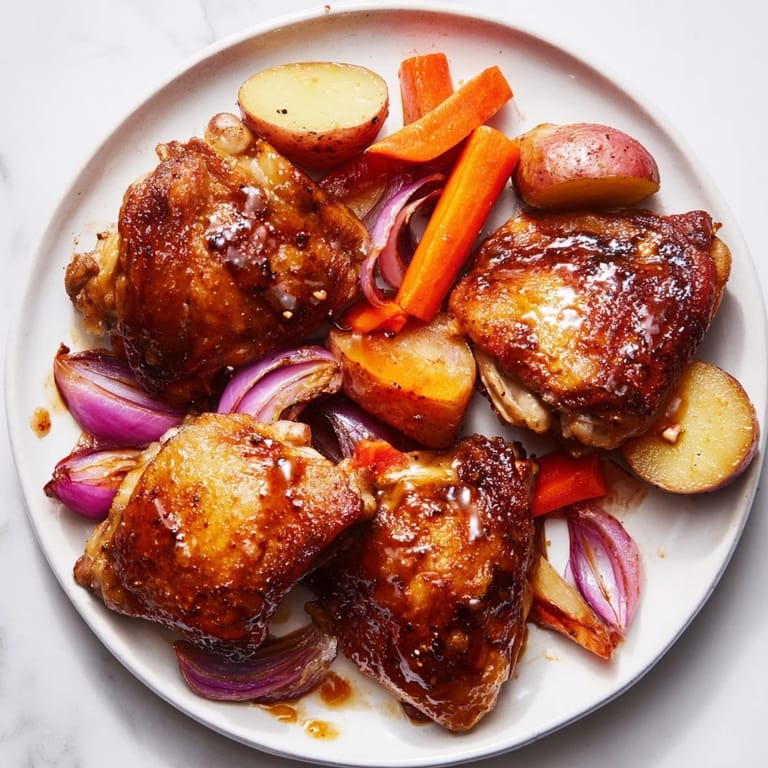
Save There's something about roasted chicken thighs that makes the kitchen smell like home, even when you're trying a new glaze for the first time. I stumbled onto this maple Dijon combination on a random Tuesday when I had those two bottles sitting open in my pantry and decided to see what happened if I mixed them together. The sweet maple against the sharp mustard created this glossy, caramelized coating that made my teenage son actually put his phone down at dinner. Now it's become the recipe I reach for when I need something that looks impressive but doesn't demand much from me.
I made this for my in-laws last fall when we had that surprise early frost, and nobody expected much from a simple sheet pan dinner. When I pulled it out of the oven and the maple syrup had caramelized into this dark amber glaze, even my father-in-law—who usually critiques everything—asked for the recipe before dessert. That's when I knew I'd found something special.
Ingredients
- Bone-in, skin-on chicken thighs: These are the star because the bone keeps the meat moist while the skin crisps up beautifully; don't swap them for breasts unless you like drier chicken.
- Pure maple syrup: The real stuff, not pancake syrup, because that depth of flavor actually matters when it's the main sweetness in your glaze.
- Dijon mustard: This adds the tangy backbone that stops the glaze from being one-note sweet; use a good quality one if you can.
- Apple cider vinegar: A splash of this brightens everything and keeps the sauce from feeling heavy.
- Garlic and thyme: Fresh garlic and thyme leaves give you more flavor impact than their dried cousins, though dried works in a pinch.
- Smoked paprika: Just enough to add a subtle depth and a whisper of color to that gorgeous glaze.
- Baby potatoes and carrots: These roast to tender sweetness and pick up all the flavor from the pan; red onion adds sharpness that balances the maple.
- Kosher salt and black pepper: Season generously because you're working with bold flavors in that glaze.
Tired of Takeout? 🥡
Get 10 meals you can make faster than delivery arrives. Seriously.
One email. No spam. Unsubscribe anytime.
Instructions
- Get your oven ready and prep your workspace:
- Preheat to 220°C (425°F) and line your sheet pan with parchment or foil; you want this ready to go so you're not scrambling.
- Dry and season your chicken:
- Pat those thighs completely dry with paper towels because moisture is the enemy of crispy skin, then season both sides generously with salt and pepper.
- Whisk your magic glaze:
- Combine the maple syrup, Dijon mustard, olive oil, apple cider vinegar, minced garlic, fresh thyme, and smoked paprika in a bowl; taste it if you're curious—it should taste bold and complex, not one-note.
- Arrange your vegetables:
- Toss your potatoes, carrots, and red onion with a little olive oil, salt, and pepper, then spread them in an even layer on the pan so they all have room to caramelize.
- Nestle and coat the chicken:
- Place the thighs skin-side up among the vegetables and brush each piece generously with that glaze, saving about 2 tablespoons for later.
- First roast:
- Pop everything into the oven for 30 minutes; you'll see the glaze starting to caramelize and the skin beginning to turn golden.
- Refresh and finish:
- Pull the pan out, brush the chicken with the remaining glaze, then roast for another 5–10 minutes until the internal temperature hits 74°C (165°F) and that skin is deep caramel and crackling. Let it rest for 5 minutes before serving, which keeps the meat tender and lets all those juices redistribute.
 Save
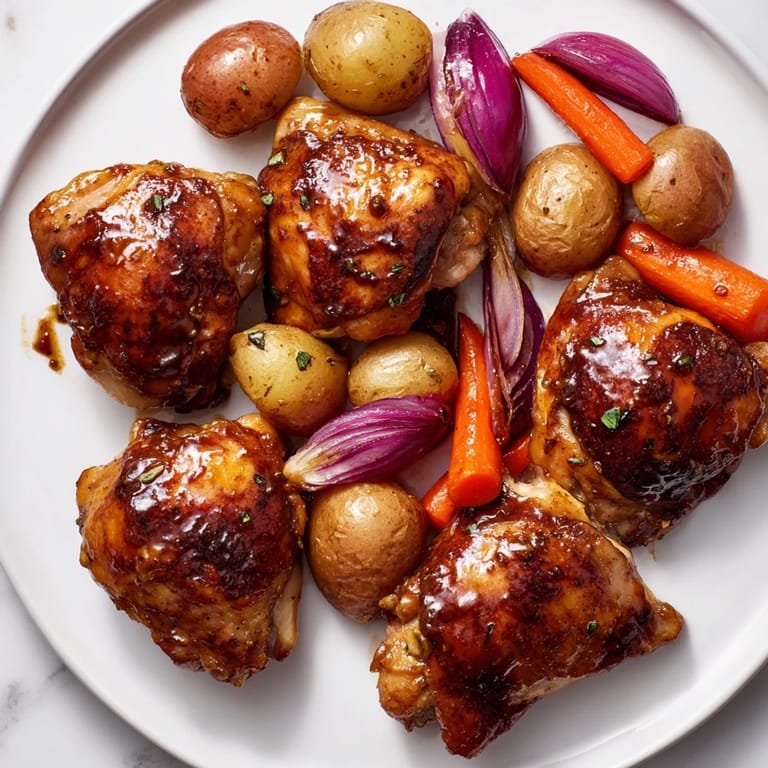
Save My daughter once declared this was the only dinner she'd actually eat without complaining, which tells you something about how well that sweet-and-tangy glaze works. Even now, years later, she still asks me to make it when she's coming home.
Why This Glaze Works So Well
The real magic here is how maple syrup and Dijon mustard amplify each other instead of fighting; the mustard cuts through the sweetness while the maple softens the mustard's sharp edges. Add the apple cider vinegar and you've got this layered flavor that tastes way more complex than five minutes of whisking should allow. When it all caramelizes on the chicken skin, you get this almost-savory, almost-sweet glaze that makes people ask for seconds.
Vegetable Flexibility
I've made this with Brussels sprouts when they were on sale, sweet potatoes when I was feeling autumn, and parsnips just because I was curious. Any root vegetable works beautifully because they all have enough natural sweetness to complement that maple glaze and enough density to get properly caramelized. The real rule is to cut them so they're roughly the same size as your potatoes, so everything finishes at the same time.
Wine Pairing and Serving Ideas
A crisp Chardonnay or dry Riesling is the way to go because the acidity cuts through the richness of that skin and the maple sweetness; white wine is your friend here, not red. Serve this family-style straight from the pan if you're cooking for people you actually like, because there's something special about passing a beautiful sheet pan around the table and letting people help themselves.
- Garnish with fresh thyme leaves right before serving for a pop of green and a reminder of what's in that glaze.
- Leftover chicken is just as good cold the next day if you've got any, though it rarely happens in my house.
- If you're making this for a crowd, double the batch because bone-in thighs take up space and people eat more than you'd expect.
 Save
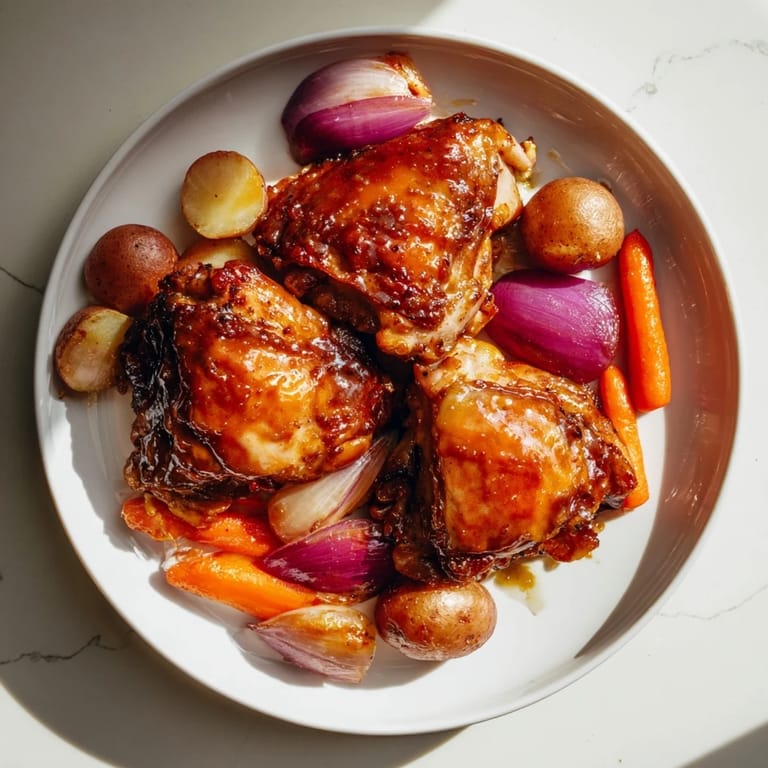
Save This recipe has become my go-to when I need dinner that tastes like I tried without actually spending hours in the kitchen. It's the kind of meal that makes people feel cared for, which might be the whole point anyway.
Recipe FAQs
- → What is the best way to ensure juicy chicken thighs?
Using bone-in, skin-on thighs helps retain moisture during roasting, resulting in juicier meat. Patting the skin dry before seasoning also promotes crispiness.
- → Can I substitute the vegetables used in the dish?
Yes, sweet potatoes, parsnips, or Brussels sprouts are great alternatives that roast well and complement the flavors.
- → How do I make sure the chicken skin gets crispy?
Roast at a high temperature and place the chicken skin side up. Brushing with the maple-Dijon glaze towards the end helps caramelize the skin.
- → Is it necessary to use fresh thyme in the glaze?
Fresh thyme adds vibrant flavor, but dried thyme can be used as a substitute without significantly altering the taste.
- → What wines pair well with this dish?
A crisp Chardonnay or a dry Riesling complements the sweet and tangy glaze nicely, balancing the savory notes of the chicken and vegetables.