 Save
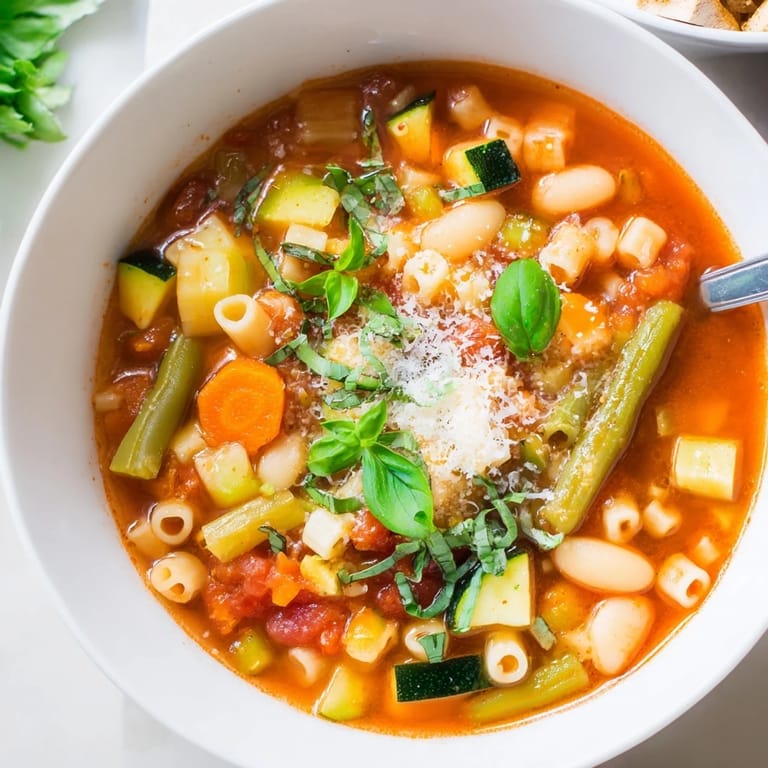
Save Last winter I came home from a chaotic day absolutely freezing, with zero energy to cook anything elaborate. My grandmother had dropped off a bag of random vegetables from her garden and I just started throwing them into a pot with whatever was in the pantry. That impulsive soup ended up being the most comforting thing I had eaten in months.
My friend Marco came over for lunch last week and immediately asked for the recipe. He said it reminded him of the soup his nonna used to make on Sundays, with the house smelling like garlic and herbs all morning long. We stood around the pot eating it straight from ladles, not even bothering with bowls.
Ingredients
- Olive oil: A good extra virgin olive oil adds richness that you will taste in every spoonful
- Onion and garlic: The aromatic foundation that builds deep flavor right from the start
- Carrots and celery: These create that classic mirepoix base that makes soup taste professionally made
- Zucchini and potato: Potato adds body while zucchini melts into the broth beautifully
- Green beans: They hold their texture even after long simmering and add fresh crunch
- Diced tomatoes: The juices add essential acidity that brightens all the vegetables
- Vegetable broth and water: Using both prevents the broth flavor from becoming too intense
- Cannellini beans: These creamy beans protein and make the soup feel complete
- Small pasta: Ditalini or elbows are perfect because they catch in your spoon
- Dried herbs: Oregano and basil need time to bloom in the hot liquid
- Bay leaf: This subtle herb adds depth that you will notice most when you remove it
- Fresh parsley and basil: Add these at the very end for bright pops of herbal freshness
- Parmesan cheese: A salty savory garnish that ties everything together
Tired of Takeout? 🥡
Get 10 meals you can make faster than delivery arrives. Seriously.
One email. No spam. Unsubscribe anytime.
Instructions
- Build the aromatic base:
- Heat the olive oil in your largest soup pot over medium heat and sauté the onion and garlic until they turn translucent and your kitchen starts smelling amazing
- Soften the vegetables:
- Add all the chopped vegetables and let them sweat for about five minutes until they begin to yield to your spoon
- Create the soup base:
- Pour in the tomatoes with all their juices along with the broth and water then add the dried herbs and bring everything to a rolling boil
- Simmer gently:
- Lower the heat cover the pot and let it simmer slowly for fifteen minutes so the vegetables become tender
- Add the heart:
- Stir in the beans and pasta and cook uncovered for another ten minutes until the pasta is perfectly tender
- Finish with fresh herbs:
- Fish out the bay leaf and stir in the fresh parsley and basil then taste and adjust the seasoning
- Serve it up:
- Ladle the hot soup into bowls and pass the Parmesan at the table so everyone can add their own
 Save
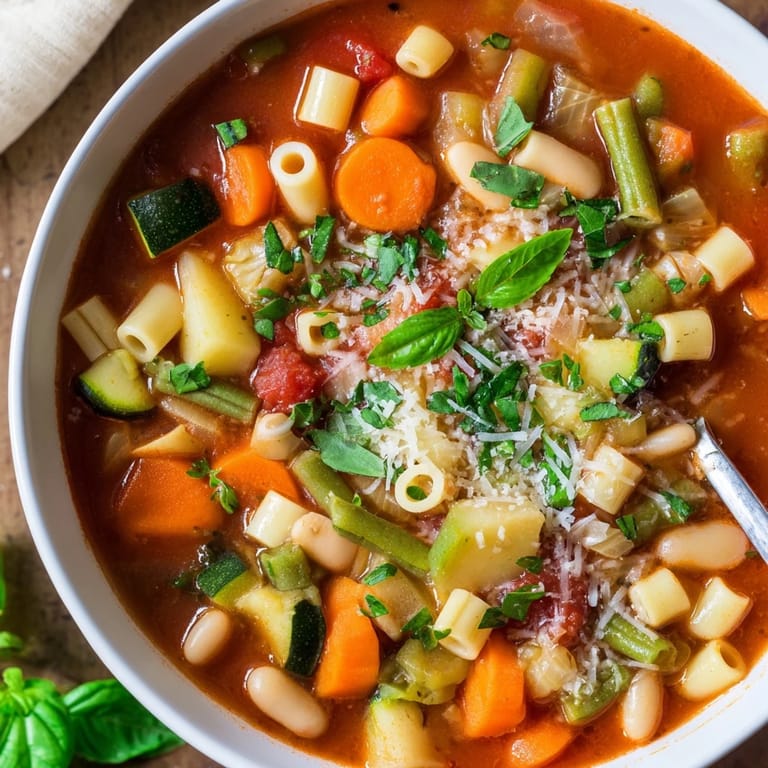
Save This soup has become my go-to whenever I need to feed a crowd on a budget. Last month I made a giant batch for my book club and everyone kept asking when I was going to publish the recipe.
Making It Your Own
I love swapping vegetables based on what looks good at the farmers market. In spring I add fresh peas and asparagus while winter calls for hearty kale and butternut squash.
The Pasta Question
Small pasta shapes work best here because they fit onto your spoon with all the vegetables. Break long pasta into small pieces if that is what you have in the pantry.
Make Ahead Magic
This soup actually tastes better the next day when all the flavors have had time to meld together in the refrigerator. I always make a double batch so we can eat it all week long.
- Cook the pasta separately when meal prepping so it does not absorb all the broth
- Freeze individual portions for quick lunches on busy days
- Never add the fresh herbs until you reheat or they will lose their bright flavor
 Save
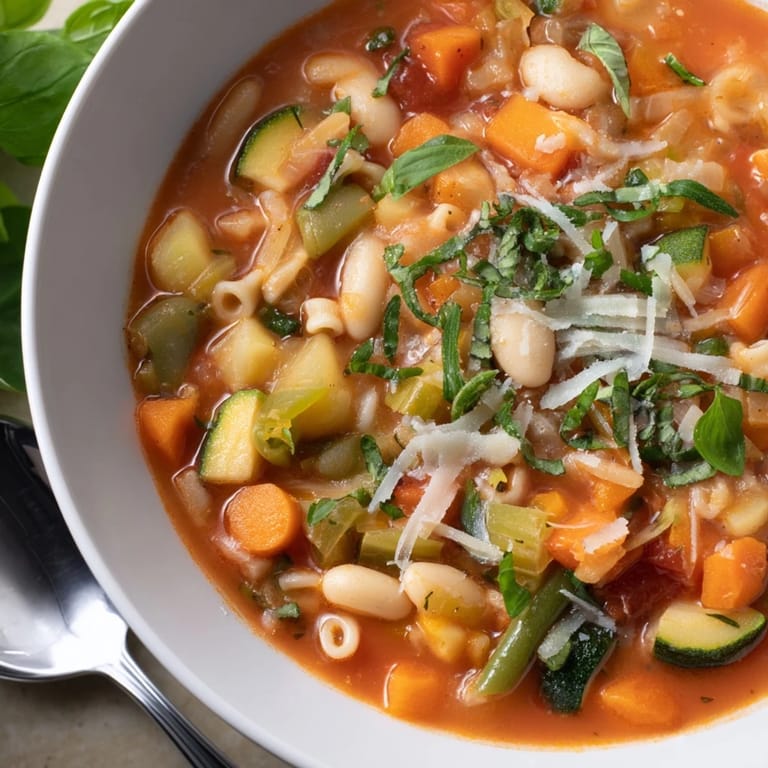
Save There is something deeply satisfying about a soup that transforms simple ingredients into something this nourishing. I hope this recipe finds its way into your regular rotation too.
Recipe FAQs
- → What vegetables work best in minestrone?
Classic choices include carrots, celery, zucchini, green beans, and potatoes. Seasonal variations welcome spinach, kale, cabbage, or Swiss chard. The beauty lies in using what's fresh and available.
- → Can I make this gluten-free?
Absolutely. Simply substitute regular pasta with your favorite gluten-free variety—ditalini, elbow macaroni, or small shells work perfectly. All other ingredients remain naturally gluten-free.
- → How should I store leftovers?
Refrigerate in airtight containers for up to 4 days. The pasta will absorb some liquid, so add a splash of broth or water when reheating. This soup also freezes beautifully for up to 3 months.
- → What pasta shape is traditional?
Small shapes like ditalini, elbow macaroni, or small shells are classic. These tiny pieces catch beautifully in spoonfuls alongside the vegetables and beans, creating perfect bite-sized portions.
- → Can I add protein beyond beans?
Yes. Brown some pancetta or bacon with the onions for depth, or stir in cooked sausage slices. Extra beans or lentils boost plant protein while keeping it vegetarian.
- → Is minestrone better the next day?
Definitely. Flours meld and deepen overnight, creating richer taste. Make ahead for meal prep or prepare a batch on weekend—reheated servings often taste even better than freshly made.