 Save
Save The first time I made paella, I was standing in a cramped Barcelona apartment kitchen with my friend María, who kept insisting I was stirring too much. She watched me fuss over the rice like a nervous parent, then gently moved my hand away and said, "Now you wait." That moment of surrender—letting the saffron do its work, trusting the rice to know what to do—changed how I cook. Years later, when I make paella at home, I still hear her voice telling me to step back and let the magic happen.
I served this paella to my in-laws during their first visit, nervous about impressing people who actually knew what real paella tasted like. The kitchen filled with that golden-saffron smell, and when I brought it to the table still sizzling slightly, my mother-in-law's eyes softened. She didn't say much, but she asked for seconds, and my husband squeezed my hand under the table. That's when I knew it wasn't about authenticity—it was about care.
Ingredients
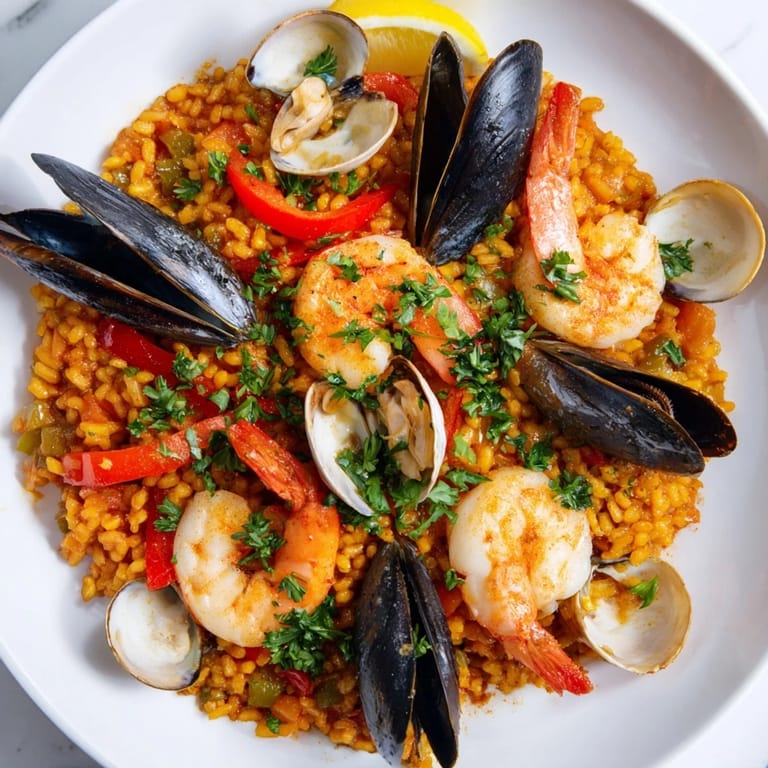
- 12 large shrimp: Buy them still frozen if possible and thaw them just before cooking—they stay tender that way, not rubbery.
- 12 mussels and 12 clams: These should feel heavy in your hand, like they're full of ocean, and smell briny and clean, never fishy.
- 1 1/2 cups short-grain paella rice: Bomba rice is forgiving because it doesn't turn to mush, but Arborio works beautifully too if that's what you have.
- 1 medium onion: The sweetness balances the salty seafood, so don't skip it or rush through cooking it.
- 1 red and 1 green bell pepper: I learned the hard way that their color matters as much as their flavor—they make the dish look alive.
- 2 cloves garlic: Mince it fine and watch it closely; garlic burns faster than you'd think and tastes bitter if you do.
- 1 medium tomato: Grate it rather than chop it so it breaks down into the rice without leaving chunks.
- 1/4 teaspoon saffron threads: This tiny amount transforms everything—steep it in warm stock first so the color and flavor spread evenly.
- 4 cups fish or seafood stock: Warm it before you use it; cold stock will shock the rice and mess up the timing.
- 1 teaspoon smoked paprika: This is what gives paella its soul—the smoky sweetness that makes you keep eating.
- Salt and pepper: Start with less than you think you need; the stock and seafood are already salty.
- 2 tablespoons olive oil: Good oil makes a difference here because it coats every grain and carries the flavor.
- Fresh parsley and lemon: The brightness at the end cuts through the richness and makes people want another bite.
Tired of Takeout? 🥡
Get 10 meals you can make faster than delivery arrives. Seriously.
One email. No spam. Unsubscribe anytime.
Instructions
- Steep the saffron:
- Pour your stock into a saucepan and bring it to a gentle warmth over low heat, then scatter in the saffron threads and let them sit there turning the whole pot golden. This takes about 5 minutes and your kitchen will smell like something special is happening.
- Build your flavor base:
- Heat oil in your paella pan over medium heat and cook the onion, letting it soften and turn translucent—this is where sweetness starts. Add garlic and cook until you can really smell it, then toss in the peppers and let them soften just slightly so they still have a little snap.
- Add the tomato:
- Stir in the grated tomato and let the moisture cook off, which takes a few minutes and concentrates the flavor into something deeper than what you started with.
- Toast the rice:
- Add the rice and stir it around, coating every grain with the oil and vegetables for about a minute—this toasting matters more than people realize and prevents mushy rice.
- Pour in the stock and don't look back:
- Add the warm saffron stock all at once, sprinkle in the paprika salt and pepper, and here's the hardest part: don't stir it anymore. Distribute the rice evenly, then step away.
- Arrange the seafood:
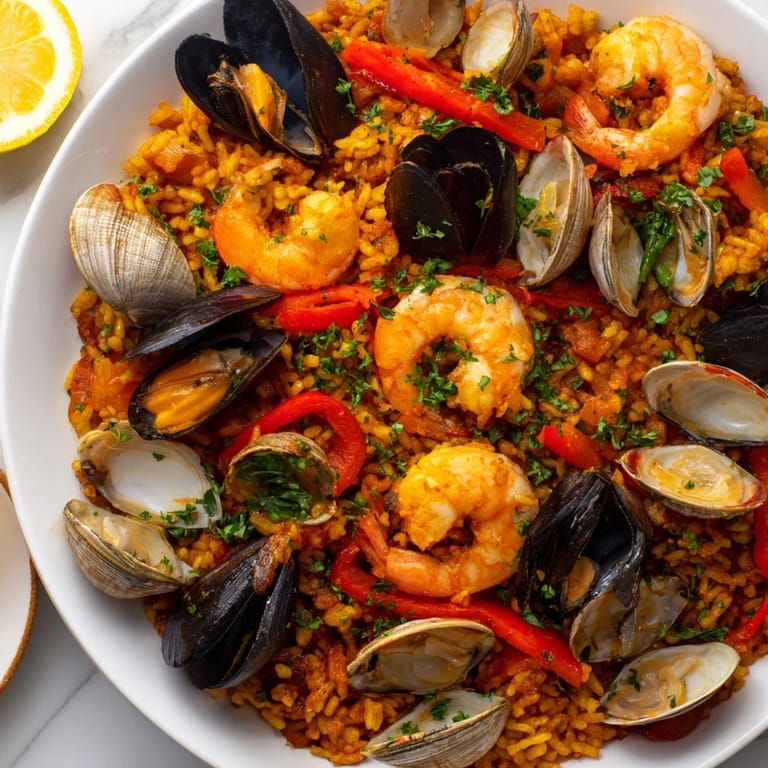
- After about 15 minutes of simmering, when the liquid has reduced by about half, lay your shrimp, mussels, and clams across the top in whatever way feels beautiful to you. They'll cook gently in the steam.
- Watch for the crust:
- Listen for a gentle crackling sound from the bottom of the pan after a few minutes—that's the socarrat, the crispy layer that people fight over. Let it happen, but don't let it burn.
- Rest and finish:
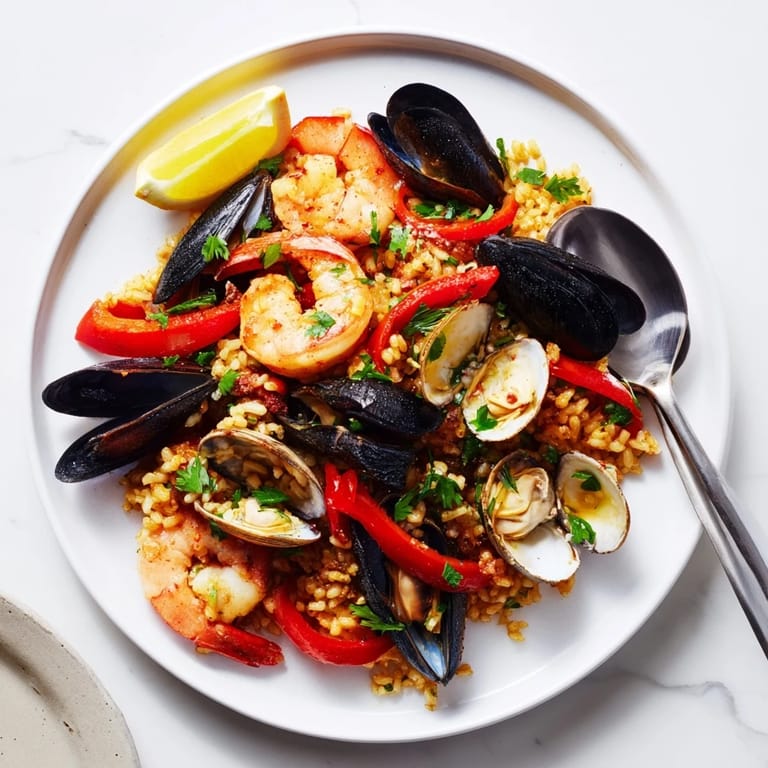
- When the rice is tender and the shells have opened (discard any that stayed shut), remove from heat and let it rest covered for 5 minutes while everything settles together. Scatter parsley over the top and serve with lemon wedges on the side.
 Save
Save My daughter once asked why paella tasted different every time I made it, and I realized it's because I'm always paying attention to different things—one time the color of the saffron, another time the sound of the mussels opening, once the conversation happening around the table. That's when paella stopped being a recipe for me and became a conversation with the ingredients.
The Saffron Question
I used to think saffron was a luxury ingredient that didn't matter that much, until someone explained that it's not just color—it's flavor memory. When you taste it in paella, you're tasting something that grew under a specific sun in a specific place, and that matters. Your guests might not be able to name what makes the dish special, but they'll taste that it is.
Seafood Selection and Care
The quality of your seafood determines everything, so get friendly with your fishmonger and ask questions about where things came from and when they arrived. Fresh shellfish should smell like the ocean, not fishy, and should feel alive in your hand. If something smells off or looks dull, skip it—there's no saffron in the world that can fix tired seafood.
Making It Your Own
Some cooks get precious about paella, insisting there's only one right way, but I think it's more alive when you respect its bones while bending the rules a little. Add frozen peas if you love color and sweetness, substitute squid or firm white fish if that's what speaks to you, serve it with a crisp Albariño and watch how it brings everything into focus.
- The beauty of paella is that it feeds a crowd without making you spend hours at the stove, which means you can actually enjoy the people you're cooking for.
- If you burn the bottom a little, call it intentional socarrat and own it confidently.
- Make this dish when you want to feel like you've traveled somewhere without leaving your kitchen.
 Save
Save Paella is the kind of dish that reminds you why we cook for people we love—it brings everyone together around something golden and fragrant and impossible to eat alone. Make it and watch what happens.
Recipe FAQs
- → What type of rice is best for this dish?
Short-grain rice varieties like Bomba or Arborio are preferred for their ability to absorb flavorful broths and maintain texture.
- → Can I substitute the seafood with other ingredients?
Yes, calamari or firm white fish can be used as alternatives to shrimp, mussels, or clams for variation.
- → How do I know when the seafood is cooked properly?
Mussels and clams should open during cooking; discard any that remain closed to ensure safety and freshness.
- → What is the role of saffron in this dish?
Saffron imparts a distinct aroma, color, and subtle earthy flavor that defines the dish’s signature taste.
- → Can I prepare this dish gluten-free?
Using gluten-free seafood stock and fresh ingredients typically keeps this dish gluten-free; always check stock labels to confirm.