 Save
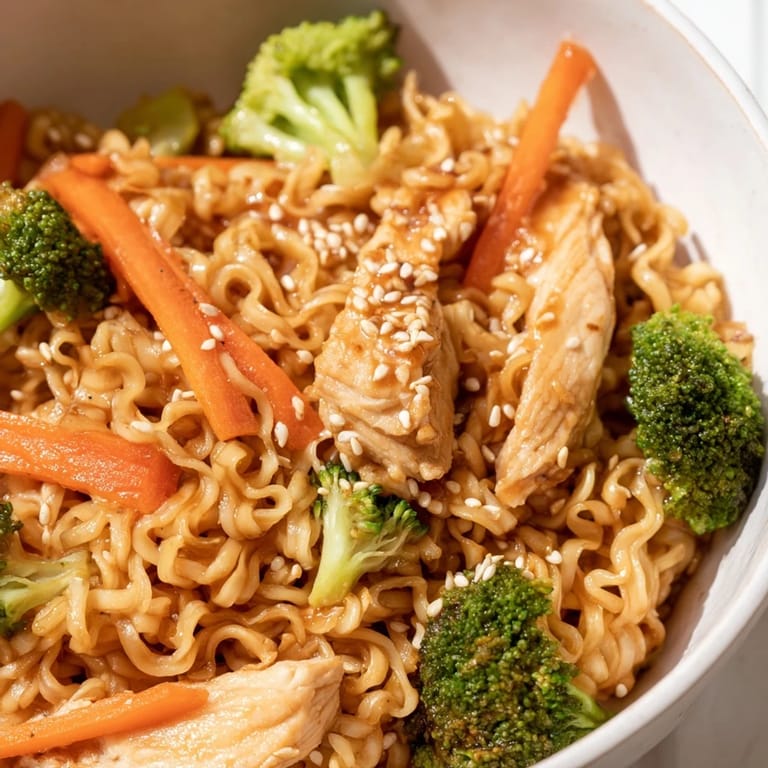
Save The smell of garlic and ginger hitting hot oil always pulls me straight back into my kitchen after too many takeout nights. I'd been craving something fast and punchy, something that didn't involve waiting on delivery or reheating leftovers. That's when I grabbed two packs of instant ramen, some chicken, and whatever vegetables were still crisp in the crisper drawer. What came together in under half an hour tasted better than anything I could've ordered, and I've been making it on repeat ever since.
I made this for my roommate on a Tuesday night when we were both too tired to think. She wandered into the kitchen halfway through, drawn by the sizzle and the smell, and ended up pulling up a stool to watch. By the time I plated it, she was already reaching for her fork. We ate standing at the counter, laughing about how something this simple could taste this good, and she asked me to text her the recipe before she even finished her bowl.
Ingredients
- Boneless, skinless chicken breasts: Slice them thin so they cook fast and stay tender, and don't worry if the pieces aren't perfect.
- Instant ramen noodles: Toss the seasoning packets and treat these like any other noodle, they're surprisingly versatile and hold sauce beautifully.
- Red bell pepper: Adds a pop of color and a sweet crunch that balances the heat from the sauce.
- Broccoli florets: They soak up the sauce while staying crisp, just don't overcook them or they'll lose their bite.
- Carrot: Julienned thin so it cooks quickly and adds a subtle sweetness to the mix.
- Green onions: Slice them on a bias for a prettier finish and a mild onion flavor that doesn't overpower.
- Garlic and ginger: The aromatics that make the whole dish come alive, mince them fresh for the best flavor.
- Soy sauce: The salty backbone of the sauce, use low sodium if you're watching salt intake.
- Sriracha or chili garlic sauce: This is where you control the heat, start with less and add more at the end if needed.
- Oyster sauce: Adds a savory depth that makes the sauce taste more complex than it actually is.
- Sesame oil: A little goes a long way, it adds a nutty richness that ties everything together.
- Brown sugar: Balances the salty and spicy with just a hint of sweetness.
- Toasted sesame seeds: Optional but worth it, they add a nutty crunch that makes the dish feel finished.
Tired of Takeout? 🥡
Get 10 meals you can make faster than delivery arrives. Seriously.
One email. No spam. Unsubscribe anytime.
Instructions
- Boil the noodles:
- Cook the ramen according to the package directions, then drain and set aside. Don't worry if they clump a bit, they'll loosen up when you toss them in the pan.
- Mix the sauce:
- In a small bowl, whisk together soy sauce, sriracha, oyster sauce, sesame oil, brown sugar, and water until the sugar dissolves. Set it within reach so you can pour it in quickly when the time comes.
- Stir fry the chicken:
- Heat a tablespoon of vegetable oil in a large wok or skillet over medium high heat, then add the sliced chicken and stir fry until just cooked through, about 4 to 5 minutes. Remove the chicken and set it aside so it doesn't overcook.
- Bloom the aromatics:
- In the same pan, add the garlic and ginger and stir fry for 30 seconds until fragrant and sizzling. This step smells incredible and sets the stage for everything that follows.
- Cook the vegetables:
- Toss in the bell pepper, broccoli, and carrot, then stir fry for 3 to 4 minutes until the vegetables are just tender but still crisp. Keep them moving so they cook evenly and don't stick.
- Bring it all together:
- Return the chicken to the pan, add the cooked noodles, and pour the sauce over everything. Toss well to combine and heat through for 2 to 3 minutes, making sure every noodle gets coated.
- Finish and taste:
- Stir in the green onions, then taste and adjust the seasoning or spice level as desired. Serve hot, garnished with toasted sesame seeds and fresh herbs if you like.
 Save
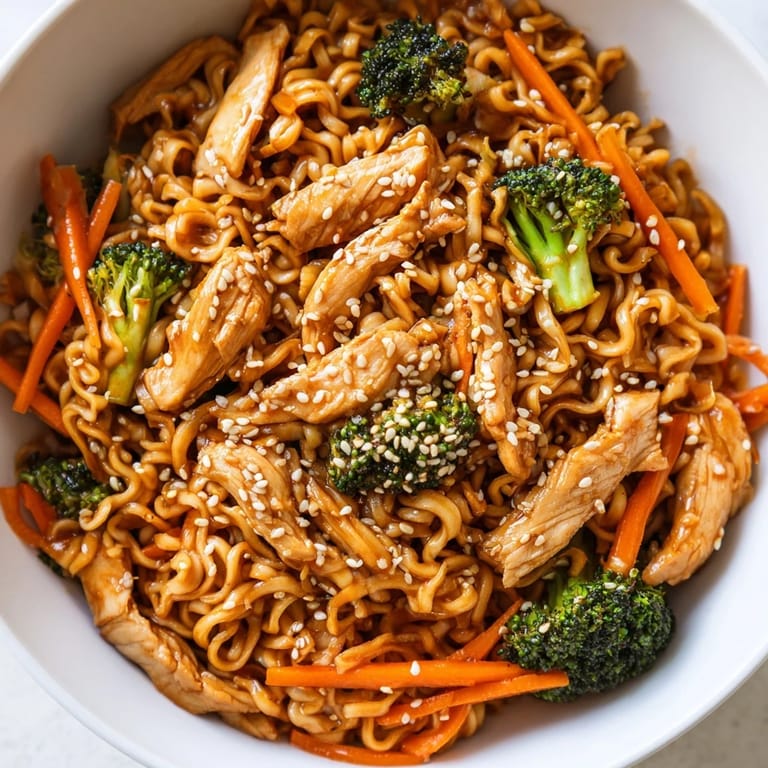
Save I served this to a friend who swore she didn't like spicy food, and she ended up going back for seconds with a sheepish grin. She said it wasn't the kind of spicy that punished you, just the kind that made you want to keep eating. That's when I realized this dish wasn't just about heat, it was about balance and flavor and the way everything came together in a way that felt satisfying without being heavy.
How to Adjust the Heat
Start with one tablespoon of sriracha and taste the sauce before you add it to the pan. If you want more heat, stir in extra sriracha or a pinch of red pepper flakes at the end, that way you can control the spice without overwhelming anyone at the table. I've learned that it's easier to add heat than to take it away, so err on the side of caution and let everyone doctor their own bowl if they want more kick.
Swapping Proteins and Making It Vegetarian
I've made this with tofu, shrimp, and even leftover pork, and it works every time as long as you adjust the cooking time. For tofu, press it well and cube it before stir frying so it gets crispy on the edges. Shrimp cooks even faster than chicken, so watch it closely and pull it out as soon as it turns pink, then toss it back in at the end just like you would with the chicken.
Storage and Reheating
This dish tastes best fresh, but leftovers will keep in an airtight container in the fridge for up to two days. The noodles will soak up more sauce as they sit, so when you reheat it, add a splash of water or a drizzle of sesame oil to bring it back to life. I usually reheat it in a skillet over medium heat, tossing it until it's warmed through and the noodles loosen up again.
- Garnish with fresh cilantro or extra green onions right before serving for a burst of color and freshness.
- If you like crunch, throw in some snap peas or water chestnuts along with the other vegetables.
- Pair it with a cold lager or a pot of jasmine tea to balance the richness and heat.
 Save
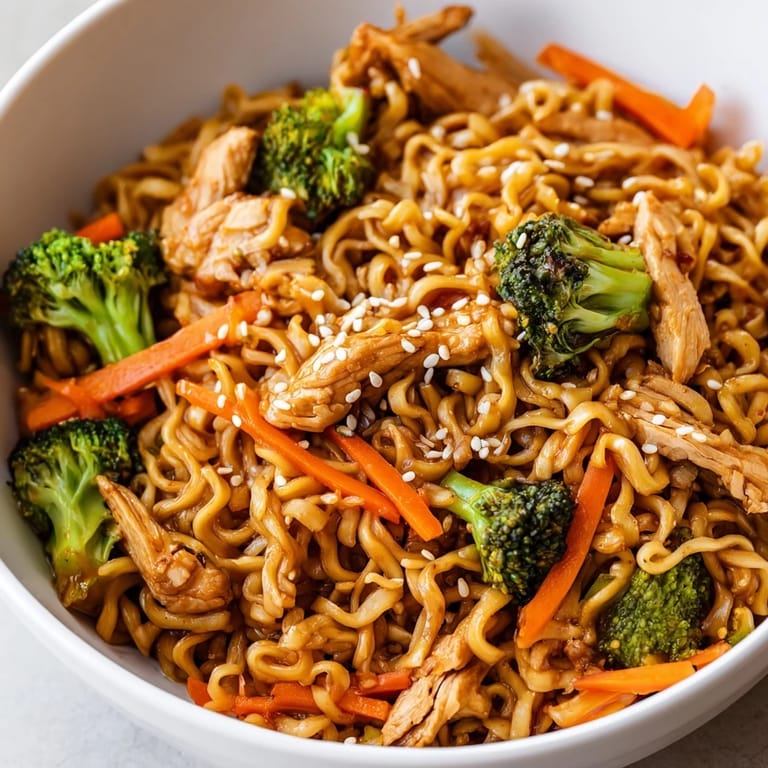
Save This is the kind of meal that makes you feel capable, even on nights when you're running on fumes. It's fast, it's flexible, and it never fails to deliver that satisfying hit of flavor that reminds you why cooking at home is worth it.
Recipe FAQs
- → Can I use fresh ramen noodles instead of instant?
Yes, absolutely. Fresh ramen noodles work wonderfully and may require slightly less cooking time. Follow package directions and drain well before adding to the stir-fry to prevent excess moisture.
- → How can I adjust the spice level?
Start with the suggested amount of sriracha and taste as you go. Add more sriracha, fresh red chili, or red pepper flakes for extra heat. You can also reduce or omit it entirely for a milder version.
- → What vegetables work best for this stir-fry?
Vegetables that hold their crunch work best—bell peppers, broccoli, carrots, snap peas, mushrooms, and baby corn are all excellent choices. Avoid watery vegetables like zucchini, which can make the dish soggy.
- → Is this dish vegetarian-friendly?
Easily adaptable for vegetarians. Simply substitute the chicken with firm tofu, tempeh, or additional vegetables. Ensure your soy sauce and oyster sauce are vegetarian-certified if needed.
- → Can I make this ahead of time?
Best served immediately after cooking for optimal texture and flavor. However, you can prep ingredients ahead and store them separately. Reheat leftovers gently in a wok or pan, adding a splash of water to prevent sticking.
- → What should I serve with this stir-fry?
This dish stands alone as a complete meal. For beverage pairings, try a crisp lager, jasmine tea, or ginger ale. If you'd like a side, steamed dumplings or a light cucumber salad complement it well.