 Save
Save There's a particular sound that takes me back to my first Wiener Schnitzel—the sharp crack of a meat mallet hitting veal, that satisfying thud that means you're about to transform a simple cutlet into something extraordinary. I was visiting Vienna in early spring, and my host's mother invited me into her kitchen with the kind of quiet confidence that only comes from making the same dish hundreds of times. She didn't fuss or overthink it; she just moved through each step with an ease that made it look like magic, though really it was just technique meeting respect for the ingredient.
Years later, I made this for a dinner party and watched my guests' faces light up when they bit through that crispy exterior—one friend actually closed his eyes and made a little sound of surprise that I still laugh about. That moment taught me that schnitzel isn't just food; it's a small gift you give people, something that says you care enough to do the technique right.
Ingredients
- Veal cutlets: Four pieces at about 150 grams each, pounded to exactly 1/4 inch thick—this thickness is your secret because it lets them cook through while the crust stays crispy, and the pounding tenderizes the meat in a way that changes everything.
- All-purpose flour: 100 grams for the first breading step, which creates a light adhesive layer that helps the egg stick properly.
- Eggs and milk: Two large eggs beaten with 4 tablespoons of milk to make your egg wash, and this mixture is what bonds the breadcrumbs to the veal in a way nothing else quite does.
- Fine dry breadcrumbs: 150 grams of breadcrumbs—and I mean fine breadcrumbs, not the chunky kind, because fine ones fry up golden and crispy instead of turning dark and bitter.
- Clarified butter or neutral oil: 250 milliliters for frying, and this is the non-negotiable part because clarified butter gives you that distinctive Viennese flavor while oil works if you need it to be neutral.
- Lemon wedges and fresh parsley: For serving, because the brightness of lemon against the richness is what makes this dish sing.
Tired of Takeout? 🥡
Get 10 meals you can make faster than delivery arrives. Seriously.
One email. No spam. Unsubscribe anytime.
Instructions
- Pound the veal until it surrenders:
- Lay each cutlet between two sheets of plastic wrap and use your meat mallet to gently pound outward from the center until it's exactly 1/4 inch thick. You'll feel when it's ready—the meat becomes uniform and slightly translucent at the edges.
- Pat dry and season lightly:
- Use paper towels to pat away any moisture because water is the enemy of crispiness. A light sprinkle of salt and pepper on both sides is all you need at this stage.
- Build your breading station:
- Line up three shallow dishes with flour in the first, beaten eggs mixed with milk in the second, and breadcrumbs in the third. Having everything ready and within arm's reach makes the actual breading meditative rather than chaotic.
- Bread each cutlet with intention:
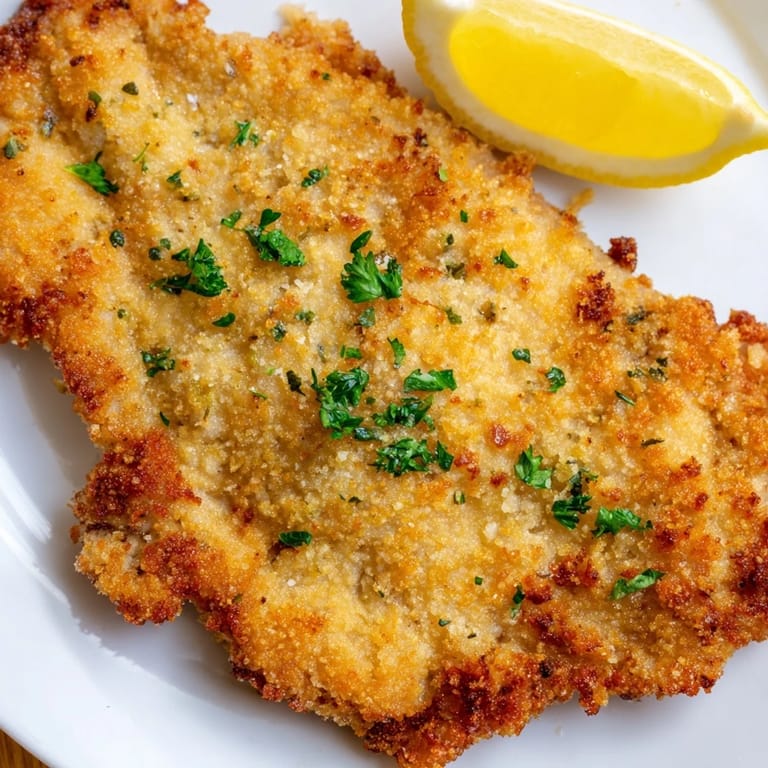
- Dredge in flour first, shake off any excess, then dip into the egg mixture until fully coated, then transfer to the breadcrumbs and press gently but don't compress—you want a light, almost loose coating that will fry up incredibly crispy. This step takes maybe thirty seconds per cutlet and it's worth going slowly.
- Heat your fat until it shimmers:
- Pour clarified butter or oil into a large skillet and turn the heat to medium-high, waiting until tiny wisps of steam start rising and the surface moves with a shimmer. This moment tells you everything is ready.
- Fry with patience and technique:
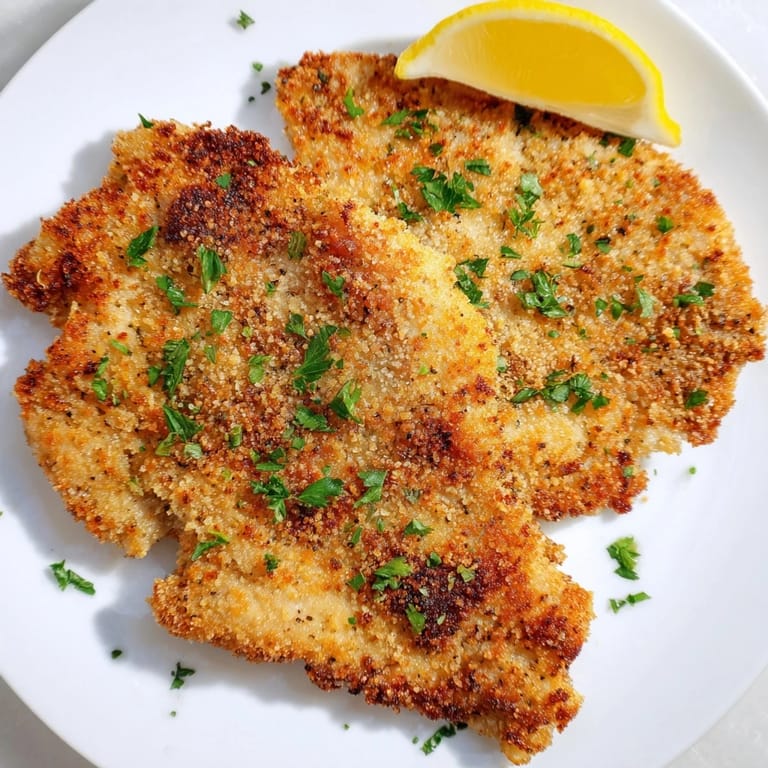
- Working with one or two schnitzels at a time depending on your pan size, place them gently into the hot fat and let them cook undisturbed for 2 to 3 minutes until the bottom turns deep golden brown. Then flip and cook the other side the same way, and if you want to be truly authentic, tilt the pan and spoon the hot fat over the tops for even browning.
- Drain and serve immediately:
- Use a slotted spatula to lift the schnitzels from the fat, hold them briefly over the pan to let excess drain, then transfer to paper towels for just a moment. Serve right away with lemon wedges on the side because schnitzel is best when it's still warm and the crust is still shatteringly crisp.
 Save
Save There was a moment during that dinner party when someone asked me for the secret, and I realized it wasn't really a secret at all—it was just care. The kind of care that comes from understanding that every small step matters, that the sound of the meat mallet and the shimmer of hot fat and the patience to let things brown properly are what transforms simple ingredients into something memorable.
The Art of the Perfect Pound
The pounding step is where amateurs and home cooks often part ways, and it's worth understanding why it matters so much. When you pound the veal evenly, you're not just making it thinner—you're breaking down the muscle fibers in a way that makes the meat more tender and helps it cook through faster while staying juicy. The key is to use steady, confident strokes outward from the center rather than random heavy whacks, because you want uniform thickness so every part cooks at the same rate. If you have a meat mallet with a flat side and a textured side, use the flat side for veal because the textured side can sometimes tear delicate meat.
Why Clarified Butter Changes Everything
Clarified butter isn't just a fancy ingredient choice—it's fundamental to authentic schnitzel because it has a higher smoke point than regular butter and none of the milk solids that would burn and leave bitter tastes. If you've never made clarified butter before, it's simpler than you'd think: melt butter slowly over low heat, let the milk solids settle to the bottom, and pour off the clear golden liquid on top, leaving the solids behind. The first time I used clarified butter for schnitzel, I was shocked by how the flavor stayed clean and the crust became even more golden, and I've never gone back to regular butter since.
Serving and Sides
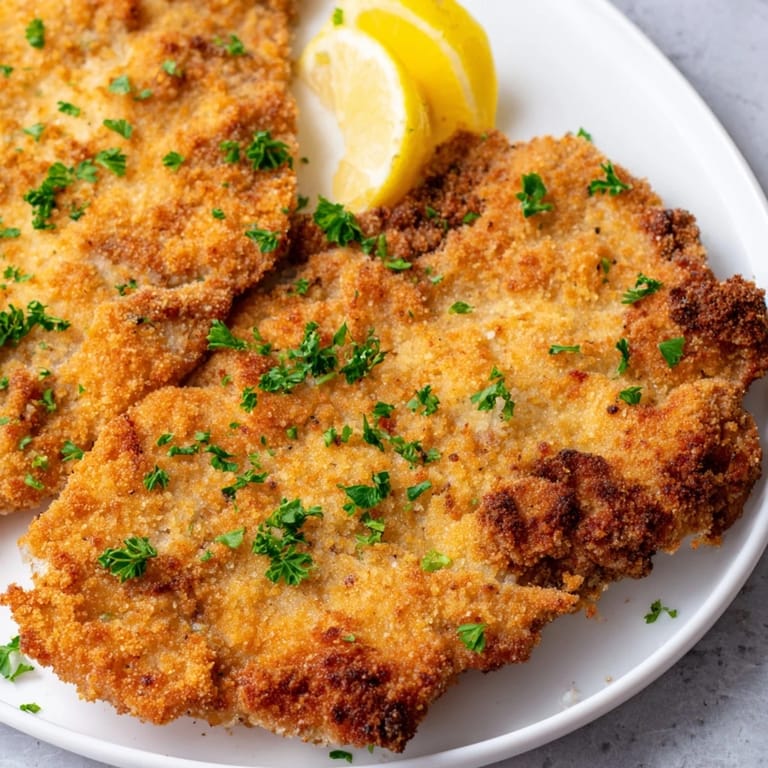
In Vienna, schnitzel is rarely served alone, and once you understand the traditional accompaniments, you'll realize they exist for a reason. Warm potato salad with a light vinaigrette complements the richness perfectly, as does a crisp cucumber salad that cleanses your palate between bites, and some places add a touch of lingonberry jam for a sweet and tart contrast that somehow works beautifully. The lemon wedge is non-negotiable—squeeze it over the schnitzel just before eating, letting the bright acidity cut through the richness and wake up your mouth.
- Potato salad made with warm potatoes and a simple vinaigrette is the classic choice and tastes even better if made an hour ahead so the flavors meld.
- A cucumber salad or mixed green salad with lemon vinaigrette provides necessary freshness against the richness of the fried meat.
- Never skip the lemon wedges because they transform a good schnitzel into something that feels complete and intentional.
 Save
Save This is the kind of recipe that rewards precision and confidence, and once you've made it a few times, it becomes second nature. There's something deeply satisfying about creating something this classic and getting it right.
Recipe FAQs
- → What type of meat is used for authentic Wiener Schnitzel?
Traditional Wiener Schnitzel uses veal cutlets, pounded thin for tenderness and even cooking.
- → How do I get a crispy coating without it being greasy?
Use clarified butter or neutral oil heated properly and do not overcrowd the pan; this allows schnitzels to fry evenly and stay crisp.
- → Why should breadcrumbs be applied loosely?
A light, loose coating ensures a crisp texture instead of a heavy, soggy crust after frying.
- → Can I substitute veal with other meats?
Pork or chicken can be used as alternatives but they create different flavors than the classic veal preparation.
- → What sides complement this dish traditionally?
Potato salad, cucumber salad, or lingonberry jam are common accompaniments for a classic Austrian meal experience.