 Save
Save I'll never forget the summer my neighbor Dave first introduced me to the art of the backyard BBQ board. He'd spent years perfecting his grill technique at family gatherings, and one afternoon he invited our whole crew over. Instead of plating everything separately, he arranged this magnificent spread across a massive wooden board—thick steaks, smoky pork chops, charred vegetables tumbling in generous piles, and bowls of creamy dips nestled between everything. That moment changed how I thought about feeding people. It wasn't just dinner; it was an invitation to gather, to build your own plate, to be part of something abundant and unpretentious.
I remember the first time I made this for a crowd, I was honestly nervous. But watching people's faces light up when they saw that board overflowing with meat and vegetables, reaching for the tongs with genuine excitement—that's when I realized the magic wasn't in technique. It was in abundance, in the permission to eat generously, in the theater of it all.
Ingredients
- Beef ribeye steaks, cut thick: Ribeye's marbling is your friend here—it keeps the meat juicy even with high heat, and those strips are the show-stealers of the board. Don't skimp on thickness; thin cuts dry out faster than you'd think.
- Bone-in pork chops, thick-cut: The bone adds flavor and keeps things moist. Thicker cuts give you a window to get a great crust while keeping the inside tender.
- Boneless, skinless chicken thighs: Dark meat stays juicier than breast, and thighs are forgiving on the grill—they're harder to dry out, which is exactly what you want when you're cooking for a crowd.
- Smoked paprika and garlic powder: These are the secret weapons that make your grill taste like you've been doing this for years. The smoke flavor bonds with the meat in a way that feels almost effortless.
- Zucchini, diagonally sliced: Those diagonal cuts create more surface area for beautiful char marks, and they cook quickly without falling apart if you keep an eye on them.
- Red bell peppers in large strips: They stay sturdy on the grill and that natural sweetness gets concentrated by the heat. The larger strips mean people can actually grab them without them crumbling.
- Red onion in thick rings: Thick rings hold together through grilling and become almost sweet and caramelized. They're the vegetable that wins over onion skeptics.
- Fresh corn in thirds: Cut into thirds so they're easy to grab and share. The kernels caramelize beautifully and get those irresistible charred bits.
- Cremini mushrooms, halved: Hearty and meaty, mushrooms appeal to everyone at the table. They're also the only vegetable that gets more flavorful the more you char them.
- Ranch, barbecue, and blue cheese dips: These three flavors cover every preference at the table—tangy, smoky, and bold. Having multiple dips makes people feel fancy without any extra work from you.
- Rustic country bread, thickly sliced: Grilled bread absorbs the char and becomes a vehicle for the dips. Thin slices would just fall apart under the tongs.
Tired of Takeout? 🥡
Get 10 meals you can make faster than delivery arrives. Seriously.
One email. No spam. Unsubscribe anytime.
Instructions
- Get your grill ready:
- Preheat to medium-high heat until you can hold your hand about four inches above the grate for only 3-4 seconds. Too hot and you'll char the outside before cooking through; not hot enough and you won't get those seared edges everyone loves. If you're using charcoal, wait for the flames to die down and the coals to glow with just a light ash coating.
- Season the meats generously:
- Toss your beef, pork, and chicken together with olive oil, smoked paprika, garlic powder, salt, and pepper until every piece is coated. This is the moment that transforms ordinary meat into something with personality. Don't be shy with the seasoning—the grill will bring it to life.
- Prepare the vegetables:
- In a separate bowl, coat your vegetables with olive oil, salt, and pepper. The oil is crucial—it prevents sticking and helps create those beautiful grill marks we're all secretly seeking.
- Grill the beef first:
- Lay those ribeye strips on the grate and listen for that sizzle. Three to four minutes per side will give you a beautiful medium-rare with a gorgeous crust. The meat will continue cooking slightly after you remove it, so resist the urge to overcook. You should see clear grill marks on each side.
- Cook the pork chops:
- These take a bit longer—five to six minutes per side. You want them cooked through completely, but the thickness means they'll stay juicy inside. They're ready when they feel firm but not hard when you press them with your finger.
- Grill the chicken through:
- Six to seven minutes per side for boneless thighs. The thighs are done when the thickest part reaches 165 degrees on a meat thermometer, or when the juices run clear. Dark meat can handle a little more cooking time without drying out.
- Let the meat rest:
- As each protein finishes, transfer it to a clean platter and loosely cover with foil. This resting period—even just five minutes—lets the juices redistribute through the meat, making every bite more tender and flavorful. This is a step that transforms good meat into remarkable meat.
- Char the vegetables:
- Zucchini and bell peppers need just 2-3 minutes per side. You're looking for grill marks and slight softness, not mushiness. The onions and corn need a bit longer, 3-4 minutes per side, until they develop that beautiful golden char and taste almost caramelized. The mushrooms are quick—just 2 minutes per side—and they'll have absorbed all the grill flavor.
- Toast the bread:
- Grill those thick slices for 1-2 minutes per side until they're lightly golden and have some char. You want them sturdy enough to handle a scoop of dip without falling apart, but still soft inside.
- Build your board:
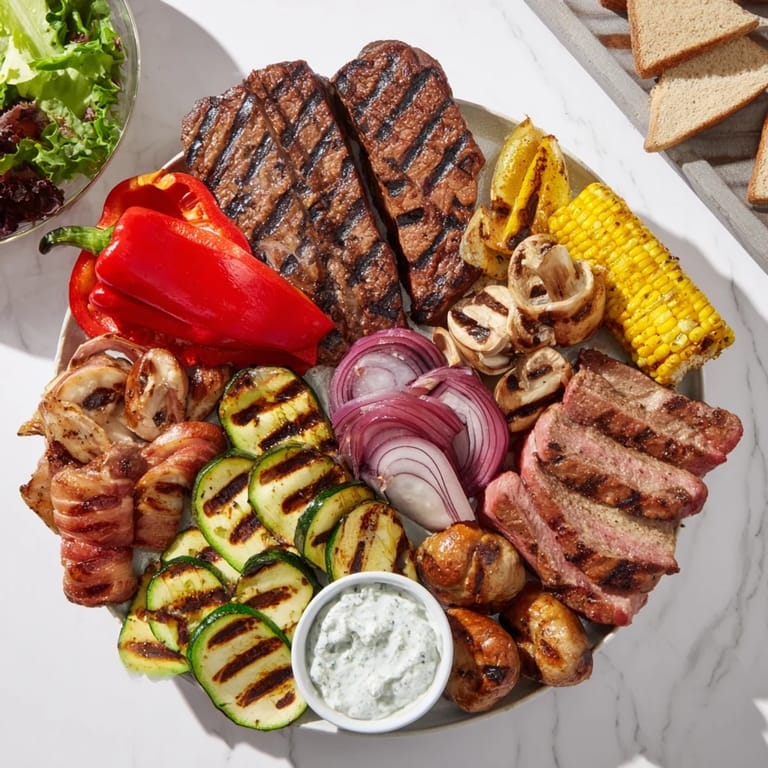
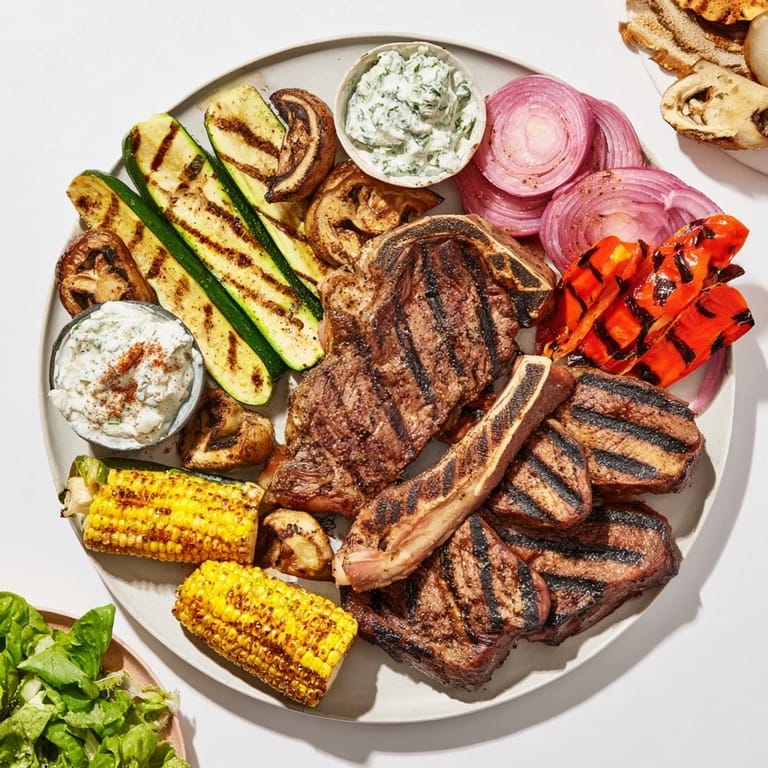
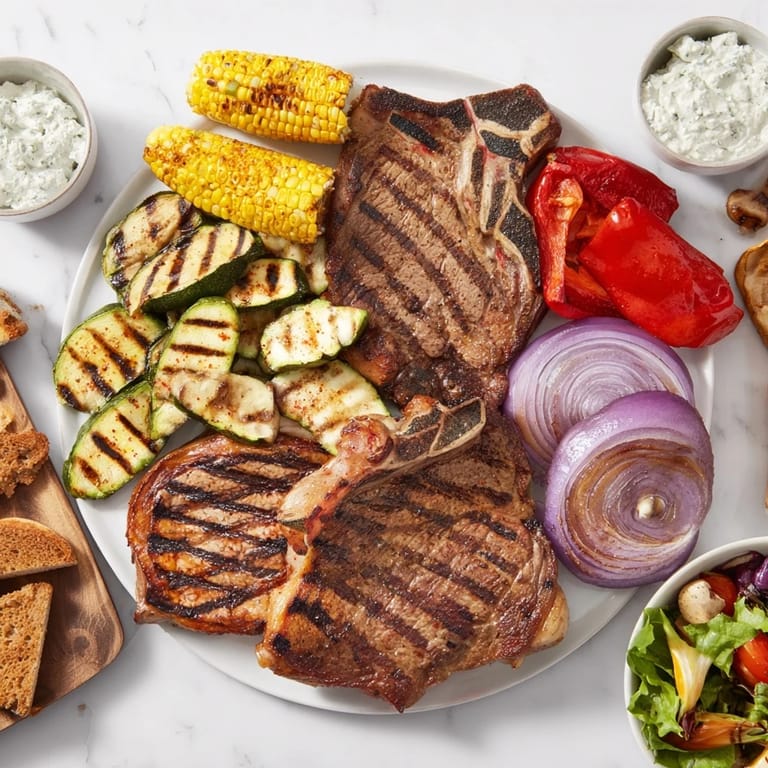
- This is where the magic happens. Arrange your grilled meats and vegetables in generous, abundant piles on a large wooden board or platter. Don't worry about making it look perfect—the rustic, overflowing quality is exactly the point. Nestle your dips in bowls throughout the board, scatter the grilled bread around the edges, and add a handful of fresh greens for color and freshness.
- Serve with joy:
- Bring the board to the table and let your guests dive in. They'll build their own plates, mix and match dips, make combinations you never would have thought of. This is food that's meant to be interactive and personal.
 Save
Save The best part of that first backyard board experience wasn't actually the food itself, though it was delicious. It was watching my five-year-old nephew build his own plate, carefully choosing exactly what he wanted, feeling grown-up and important. It was seeing my mom and Dave's wife deep in conversation while reaching for another mushroom. Food became the excuse for togetherness, and that's when I understood why BBQ boards have become my go-to for gatherings.
The Art of the Grill Board
There's something about serving food this way that changes the entire energy of a meal. Instead of you playing host and worrying about whether everyone's plate is full, you're inviting people into the experience. Everyone gets exactly what they want, in exactly the quantity they want. The conversation flows more naturally because people aren't waiting for you to serve them. You're actually there, enjoying the gathering instead of disappearing into chef mode. It's a shift in philosophy as much as it is in plating.
Reading Your Grill and Adjusting on the Fly
Every grill has its own personality, and part of becoming comfortable with this recipe is learning yours. Gas grills heat evenly, which is wonderful for consistency. Charcoal grills have hot spots and cool zones, which actually works in your favor—you can move items to cooler spots if they're charring too fast. Pay attention to how your particular grill behaves. Jot down timing notes the first time you make this, because that knowledge becomes your shortcut to confident cooking. After you've made this once, you'll know exactly where to place your vegetables for perfect char and how to position your meats for that restaurant-quality sear.
Variations and the Joy of Personalization
Once you've mastered the basic formula, this board becomes your canvas. Add grilled sausages for heartiness, swap in plant-based proteins for vegetarian friends, throw grilled pineapple on for brightness, add pickles for tang, or cherry tomatoes for fresh pops of color. Some of my favorite versions have happened because someone brought an idea to the table. The core concept—abundant grilling, generous portions, dips, bread—stays the same, but your signature emerges in the details you choose to add.
- Grilled pineapple wedges add a surprising sweetness that pairs beautifully with smoky barbecue sauce
- Quick-pickled vegetables give brightness and cut through the richness of the meats and creamy dips
- Fresh herbs scattered over the board at serving time—cilantro, basil, or parsley—make it look restaurant-quality and add a final fresh note
 Save
Save Every time I make this board now, I think of that afternoon at Dave's, and how such a simple idea—grilling a bunch of things and letting people serve themselves—became my favorite way to feed the people I care about. That's the gift of this recipe.
Recipe FAQs
- → How do I evenly grill different meats together?
Grill each meat type separately according to its cooking time; beef takes 3–4 minutes per side, pork chops 5–6, and chicken thighs 6–7 minutes, ensuring each is cooked perfectly before resting.
- → What’s the best way to achieve smoky flavor on vegetables?
Brush vegetables with olive oil, season with salt and pepper, and grill over medium-high heat until lightly charred, usually 2–4 minutes per side depending on thickness.
- → Can the platter be prepared ahead of time?
It’s best served fresh off the grill for maximum flavor and texture, but meats and vegetables can be prepped and marinated earlier, then grilled just before serving.
- → What dips pair well with grilled meats and veggies?
Classic ranch, smoky barbecue sauce, and creamy blue cheese dips complement the smoky and savory flavors, adding variety and richness.
- → How should I serve this platter for a gathering?
Arrange grilled meats and vegetables in generous piles on a large wooden board, place dips in bowls, scatter thick slices of rustic bread and mixed greens around for guests to enjoy building their own plates.
- → Are there suitable substitutions for dietary preferences?
Yes, sausages or plant-based proteins can substitute for meats, and gluten-free bread or additional vegetables can accommodate dietary needs.