 Save
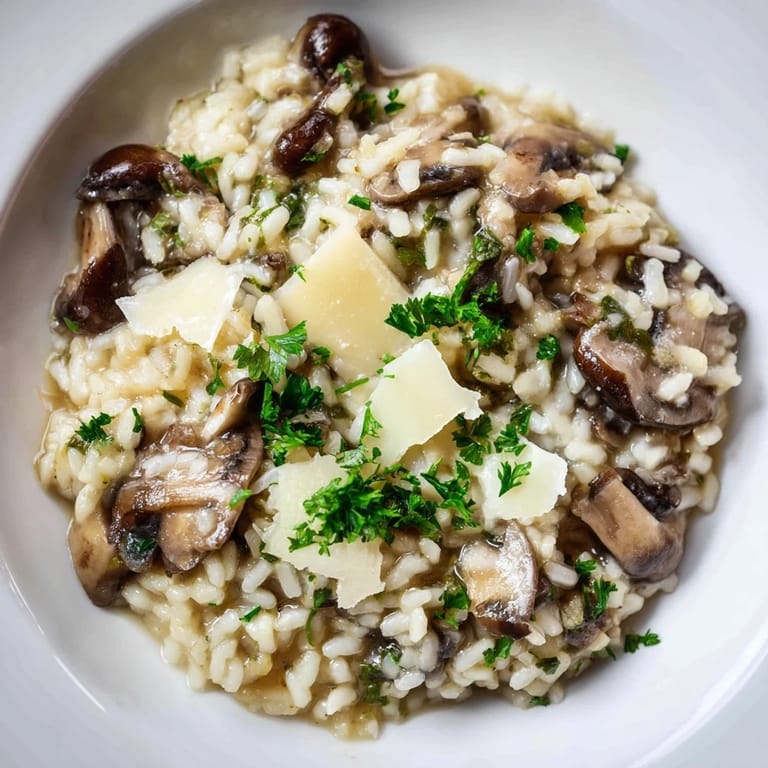
Save There's something about the way risotto forces you to slow down that I didn't appreciate until a rainy Tuesday when I had nowhere else to be. I stood at the stove with a wooden spoon in hand, stirring what seemed like an endless pot of rice, and somewhere between the third and fourth ladle of broth, the kitchen filled with this golden, almost meaty aroma from the mushrooms. That's when I understood why Italian grandmothers guard their risotto recipes so carefully—it's not just about technique, it's about presence. This mushroom version became my meditation, my comfort, my small rebellion against rushed weeknight dinners.
I made this for my partner after he'd had the worst day at work, and I watched his shoulders actually relax with the first spoonful. He didn't say much, just kept eating, and I realized that risotto isn't really about the ingredients—it's about showing someone you care enough to stand at a stove and stir.
Ingredients
- Arborio Rice: This short-grain rice releases starch as it cooks, creating that signature creamy texture that makes risotto different from pilaf or regular rice. Don't skip this variety or substitute it with long-grain rice, or you'll lose that luxurious mouthfeel entirely.
- Mixed Wild Mushrooms: A blend of cremini, shiitake, and porcini brings different flavors—earthy, slightly smoky, nutty—that build on each other. Clean them with a damp paper towel rather than washing them, as they're like sponges and will get waterlogged.
- Vegetable Broth: Keep it warm in a separate pot or kettle the entire time; cold broth will shock the rice and interrupt the cooking process, and you want every grain to cook evenly and gently.
- Unsalted Butter: Used twice here—once at the beginning for sautéing, and again at the end as cold cubes for finishing, which creates a silky emulsion that's the difference between good risotto and restaurant-quality risotto.
- Parmesan Cheese: Freshly grated is non-negotiable; pre-grated cheese has anti-caking agents that prevent it from melting smoothly into the rice.
- Dry White Wine: The acidity cuts through the richness and adds brightness; a crisp Pinot Grigio or Sauvignon Blanc works beautifully here.
- Fresh Parsley: Added at the end, it's not just garnish—it brings a fresh, herbaceous note that prevents the whole dish from feeling heavy.
Tired of Takeout? 🥡
Get 10 meals you can make faster than delivery arrives. Seriously.
One email. No spam. Unsubscribe anytime.
Instructions
- Toast Your Aromatics:
- Heat the olive oil and 2 tbsp butter in a large skillet over medium heat until the butter foams. Add the onion and let it soften slowly for 3–4 minutes until it turns translucent—this is where flavor begins.
- Build the Mushroom Foundation:
- Stir in the garlic and cook until fragrant, about 1 minute, then add the mushrooms and let them sauté for 5–7 minutes until they're golden brown and any moisture they released has evaporated. This concentrates their earthy flavor.
- Toast the Rice:
- Add the Arborio rice and stir it constantly for 1–2 minutes, letting each grain get coated in the buttery mushroom mixture and warm through. You'll notice the grains start to look slightly translucent at the edges—that's your signal you're ready for the wine.
- Deglaze and Begin:
- Pour in the white wine and stir until it's completely absorbed into the rice. This takes just a minute or two, and the kitchen will smell incredible.
- The Patient Stir:
- This is where risotto asks for your attention. Add the warm broth one ladleful at a time, stirring frequently, and wait until each addition is mostly absorbed before adding the next. After about 18–20 minutes of this rhythmic motion, the rice will become creamy and tender but still have a slight firmness when you bite it—that's al dente, and it's perfection.
- The Finishing Touch:
- Remove the skillet from heat and immediately stir in the cold butter cubes and grated Parmesan. The cold butter creates an emulsion that makes the risotto glossy and luxurious. Fold in half the parsley, taste, and adjust salt and pepper to your preference.
- Rest and Serve:
- Let the risotto sit for 2 minutes—this allows the starches to settle and the flavors to marry. Spoon it into warm bowls, garnish with remaining parsley and extra Parmesan, and serve immediately.
 Save
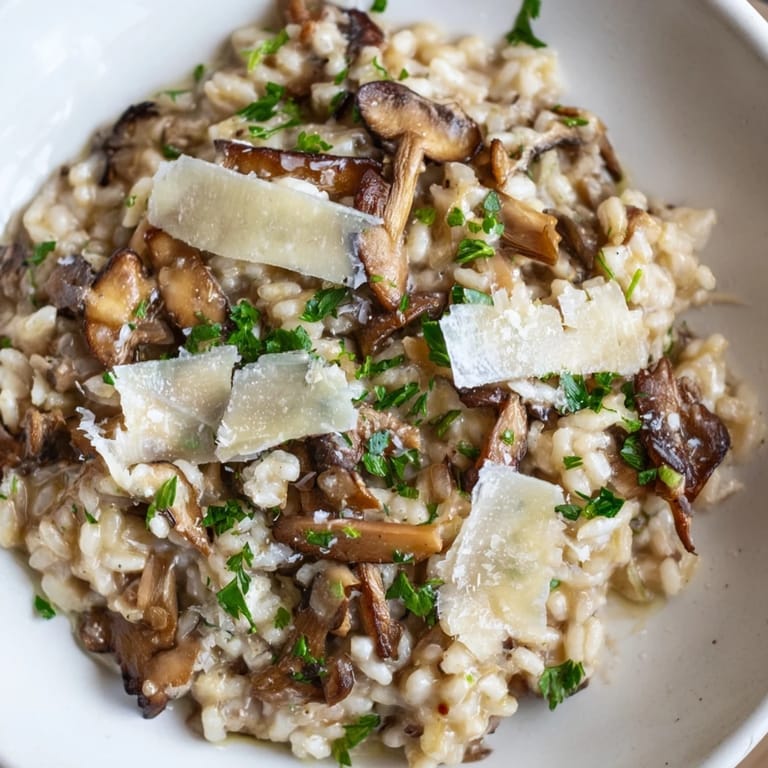
Save I realized one evening that risotto isn't just a dish you cook—it's a conversation with the rice, with the heat, with time itself. Every time I make it, I understand something new about patience, and I come away from the stove feeling more grounded than when I started.
Why Mushrooms Matter Here
Wild mushrooms are the silent hero of this dish. Their natural umami—that savory, mouth-filling depth—transforms a simple rice dish into something that tastes like it took hours to develop. The earthiness of cremini, the slight woodiness of shiitake, and the subtle nuttiness of porcini create layers of flavor that make people ask what the secret ingredient is. There isn't one; it's just good ingredients treated with respect and time.
The Science of Stirring
When you stir risotto constantly, you're doing more than preventing sticking—you're releasing the starch from each grain of rice, which is what makes the dish creamy without any cream at all. This is why risotto feels luxurious: it's built on technique, not shortcuts. The motion itself is meditative, rhythmic, and once you understand what's happening at a molecular level, stirring becomes less of a chore and more of a small act of creation.
Make It Your Own
The beauty of risotto is that it's a canvas. This mushroom version is my current favorite, but I've added roasted asparagus in spring, saffron and peas in summer, and butternut squash in autumn. The technique stays the same; only the vegetables change. You can also use chicken broth instead of vegetable broth for a slightly richer flavor, or add a splash of truffle oil at the very end if you're feeling indulgent. Risotto rewards both tradition and creativity.
- For even deeper mushroom flavor, rehydrate dried porcini mushrooms and use their soaking liquid (strained through a coffee filter) as part of your broth.
- A crisp Pinot Grigio or Chardonnay alongside the dish echoes the wine you've cooked with and brightens each bite.
- If you make risotto regularly, investing in a special wooden spoon you reserve just for this task becomes a small ritual worth keeping.
 Save
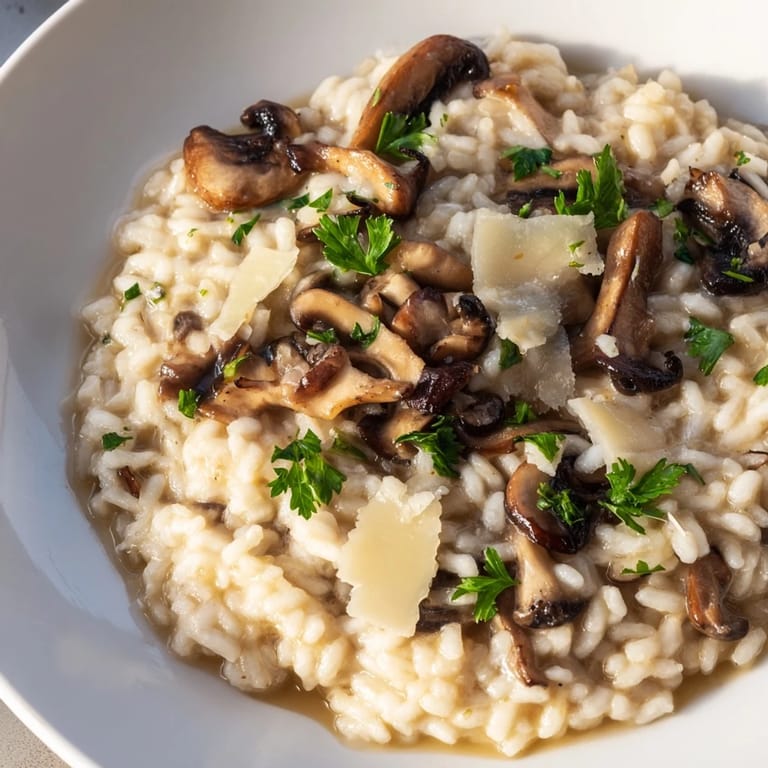
Save There's a reason risotto has survived centuries of cooking trends—it works. It's an invitation to be present, to trust the process, and to feed people something that tastes like care.
Recipe FAQs
- → What type of rice is best for this dish?
Arborio rice is ideal because its high starch content creates the creamy texture essential for this dish.
- → Can I use other mushrooms?
Yes, a mix of cremini, shiitake, and porcini mushrooms adds depth and earthy flavor.
- → Why is white wine used during cooking?
White wine adds subtle acidity and complexity that balances the richness of the dish.
- → How do I achieve the creamy consistency?
Gradually adding warm broth while constantly stirring releases starch from the rice, creating a silky texture.
- → Is it necessary to use cold butter at the end?
Yes, stirring in cold butter off heat enhances richness and gives a smooth finish without overcooking.