 Save
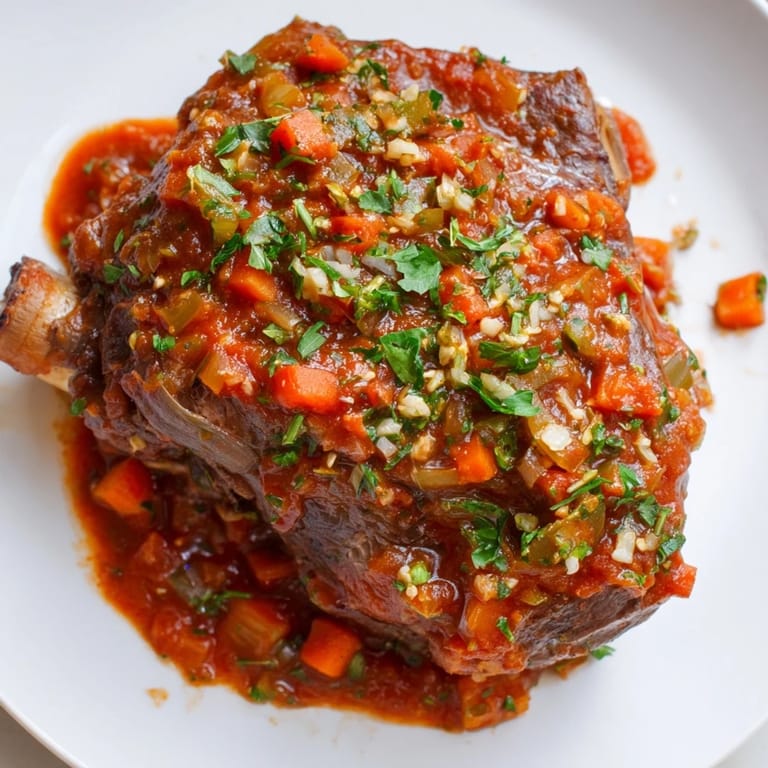
Save The first time I made osso buco, I watched the veal shanks transform from pale and unassuming to a deep mahogany color, and something clicked about why this dish has endured for centuries in Milanese kitchens. It wasn't just the technique—it was the patience, the way the kitchen filled with the smell of wine and tomatoes and slow-cooked meat, and how my doubt melted away once I tasted that fork-tender shank for the first time. Now I make it when I want to impress someone, or when I need to remind myself that the best meals are the ones you have to wait for.
I remember making this for my partner's birthday dinner when we first moved into our apartment—the oven was temperamental, the timing felt chaotic, but by the time we sat down to eat, everything tasted like we'd been cooking it all day. That moment when they took the first bite and said nothing for a few seconds, just chewed and closed their eyes, made me understand why people fuss over this dish. It became our unofficial celebration meal after that.
Ingredients
- Veal shanks: Look for thick cross-cuts with the bone still in—it gives the braising liquid so much body and richness that you can taste the difference.
- All-purpose flour: A light dredge (not a heavy coating) helps create a subtle crust that locks in flavor without tasting floury.
- Olive oil and butter: The combination gives you the browning power of butter with the heat tolerance of oil, and it matters more than you'd think.
- Onion, carrots, celery: This holy trinity builds a flavor foundation that's almost impossible to get wrong if you take time to soften them properly.
- Dry white wine: Pick one you'd actually drink—cheap wine makes cheap-tasting food, and you'll taste every shortcut here.
- Tomatoes and tomato paste: The paste adds depth that fresh tomatoes alone can't deliver, especially during cooler months.
- Bay leaves and thyme: These quiet herbs work behind the scenes, adding earthiness without shouting about it.
- Lemon zest: Save some for the gremolata—that bright citrus is what wakes up your palate at the end and makes you want another bite.
- Fresh parsley and garlic for gremolata: This garnish transforms the dish from rich and heavy to balanced and alive.
Tired of Takeout? 🥡
Get 10 meals you can make faster than delivery arrives. Seriously.
One email. No spam. Unsubscribe anytime.
Instructions
- Dry and season your shanks:
- Pat them completely dry with paper towels—moisture is the enemy of browning. Season generously, like you're seasoning more than you think you need to.
- Dredge and set aside:
- A thin, even coating of flour helps create that crucial crust. Shake off any excess or you'll end up with floury sauce.
- Build your fond:
- Get the oil and butter hot enough that the shanks sizzle immediately when they hit the pan. Let each side develop a golden crust without moving them around—this is where flavor lives.
- Sauté the soffritto:
- Once the shanks are out, add your vegetables to the same pot. The browned bits on the bottom are liquid gold, and they'll dissolve into your sauce as everything softens.
- Deglaze with wine:
- Scrape those crusty brown bits up with a wooden spoon while the wine bubbles—you're dissolving flavor into the liquid. It's one of those small techniques that makes a real difference.
- Build your braising liquid:
- Combine tomatoes, stock, tomato paste, and herbs. Stir it all together so the tomato paste breaks down and colors everything evenly.
- Return the shanks and braise:
- Nestle them back into the pot in a single layer, spoon sauce over top, then cover and let the oven do the work. The low, slow heat is what makes the meat so impossibly tender.
- Make your gremolata:
- While everything braises, chop fresh parsley and garlic fine, mix with lemon zest. It takes five minutes and completely changes the final dish.
- Finish and serve:
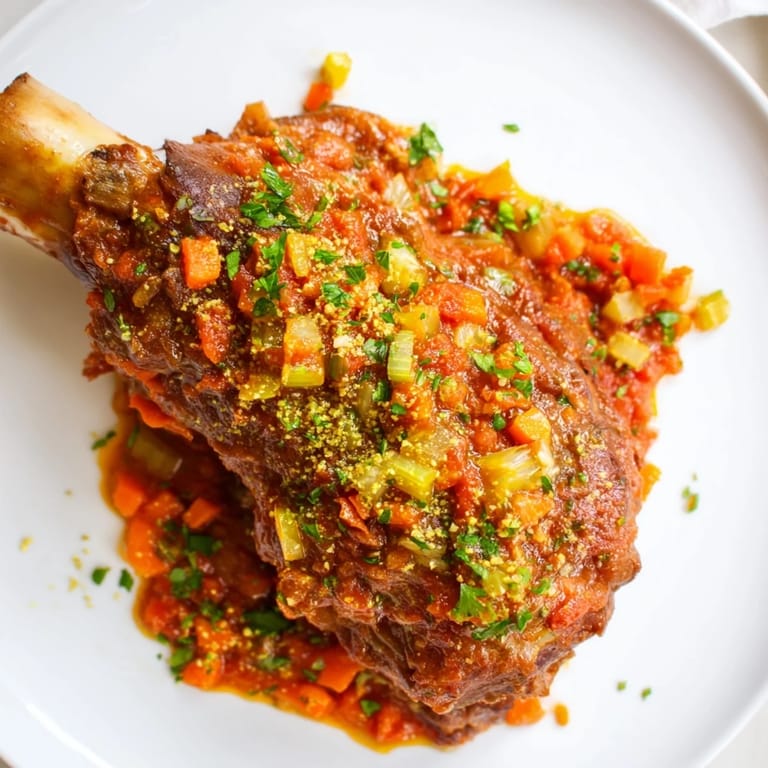
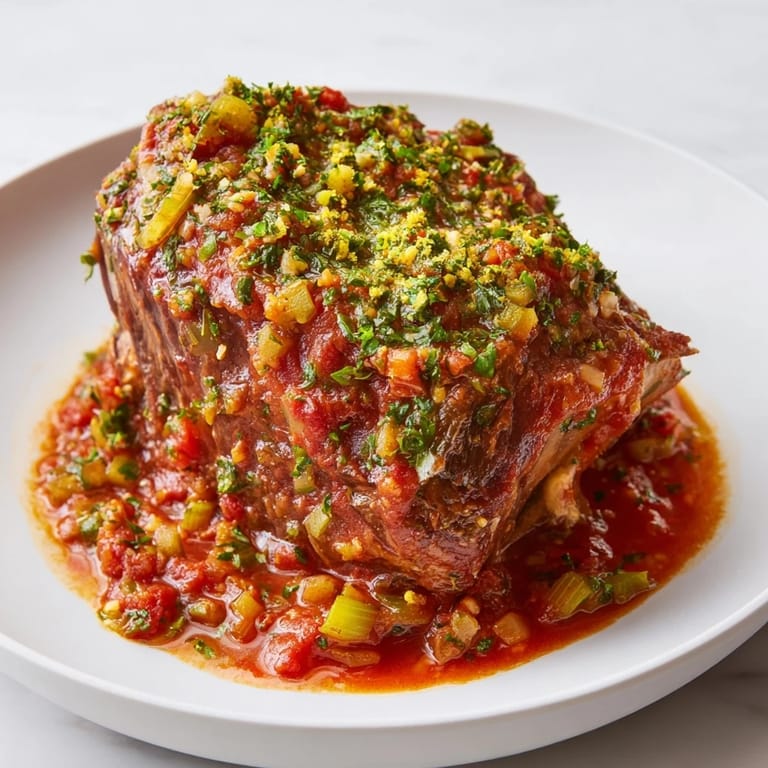
- Once the meat is falling-apart tender, remove the shanks carefully and skim any excess fat from the sauce. Spoon the sauce over the meat and finish with a generous sprinkle of that bright gremolata.
 Save
Save There's something almost meditative about checking on osso buco as it braises—opening the oven to that waft of tomato and wine and slow-cooked meat, adjusting nothing, knowing that time is doing the work for you. That feeling of trusting the process, of knowing you've done the hard part and now you can step back, is when cooking feels like rest.
Choosing Your Veal Shanks
The quality of your shanks really does matter here—you want pieces that are uniform in thickness and still have the bone running through the center. When you're at the butcher, ask for cross-cut shanks, and don't be shy about requesting they're all roughly the same size so they cook evenly. I've had better luck with butchers who actually break down whole animals than with big supermarket meat sections.
Building Flavor in the Pan
The browning step isn't just for color—it's where you're developing flavors through the Maillard reaction, creating a savory depth that simmering alone can never achieve. Don't move the shanks around frantically; let each side sit in the hot fat long enough to develop a proper crust. It takes patience, but it's the difference between good osso buco and the kind that makes people ask for seconds.
What to Serve Alongside
Osso buco is rich and luxurious, so it demands a starch that can stand up to it without being boring. Risotto alla Milanese is the traditional choice, and if you're going that route, the saffron complements the sauce beautifully. Creamy mashed potatoes work too, or polenta if you want something a bit earthier and less fussy.
- Risotto soaks up the sauce in a way that feels almost decadent.
- If you're short on time, a simple buttered polenta takes less attention and still feels elevated.
- Even good crusty bread is enough if you're keeping it simple.
 Save
Save This is a dish that rewards you for slowing down, for showing up in the kitchen and tending to something that takes time. Make it when you have an afternoon to yourself, or when you want to cook for people who matter.
Recipe FAQs
- → What cut of meat is used for Osso Buco?
Veal shanks, cross-cut and bone-in, provide the ideal texture and flavor for slow braising.
- → How long should veal shanks be braised?
They should be braised for about 2 hours at a low temperature until fork-tender and infused with sauce flavors.
- → What is gremolata and why is it added?
Gremolata is a mix of parsley, garlic, and lemon zest that adds a bright, fresh contrast to the rich braised meat.
- → Can this dish be made gluten-free?
Yes, by using gluten-free flour for dredging the shanks, the dish can accommodate gluten-free diets.
- → What side dishes complement this Milanese style dish?
Traditional accompaniments include saffron risotto, creamy mashed potatoes, or polenta to soak up the sauce.