 Save
Save The smell of wine warming in a ceramic pot, the sound of cheese slowly melting into silk—those are the things that make fondue night feel less like dinner and more like an event. I started making this after a trip to a tiny alpine restaurant where the server insisted we stir in a figure-eight for luck. It felt silly at first, but now I can't imagine doing it any other way. There's something about gathering around one bubbling pot, everyone reaching in with their forks, that turns a simple meal into something people remember.
The first time I made this for friends, I panicked halfway through because the cheese started clumping. I'd added it too fast and the heat was too high. My friend grabbed the spoon, turned the flame down, and we just kept stirring until it smoothed out. That's when I learned fondue is forgiving if you're patient. Now I make it every winter, and it's become the dish people ask for by name.
Ingredients
- Gruyere cheese: This is the backbone of the fondue, bringing a nutty sweetness that deepens as it melts—grate it yourself instead of buying pre-shredded, which often has anti-caking agents that make the texture grainy.
- Emmental cheese: Adds a mild, slightly fruity note and helps the fondue stay smooth—look for authentic Swiss Emmental with the big holes, not the bland domestic version.
- Dry white wine: It's not just for flavor; the acidity helps the cheese melt evenly and stay silky—use something you'd actually drink, like a Sauvignon Blanc or a Swiss Fendant.
- Kirsch: A splash of cherry brandy cuts through the richness and adds a subtle warmth, but if you skip it, the fondue will still be delicious.
- Cornstarch: Tossing the cheese in this before melting prevents it from separating into a greasy mess—don't skip this step even if it seems fussy.
- Garlic clove: Rubbing the pot with raw garlic leaves just a whisper of flavor without overpowering the cheese—it's a small move that makes a big difference.
- Nutmeg and white pepper: These warm spices wake up the cheese without stealing the show—use freshly grated nutmeg if you have it, the flavor is brighter.
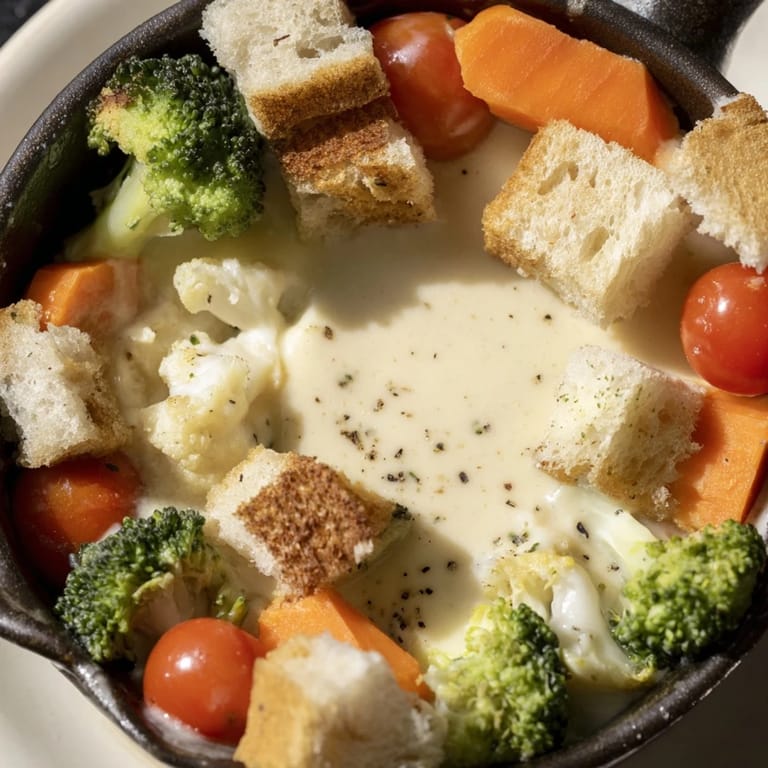
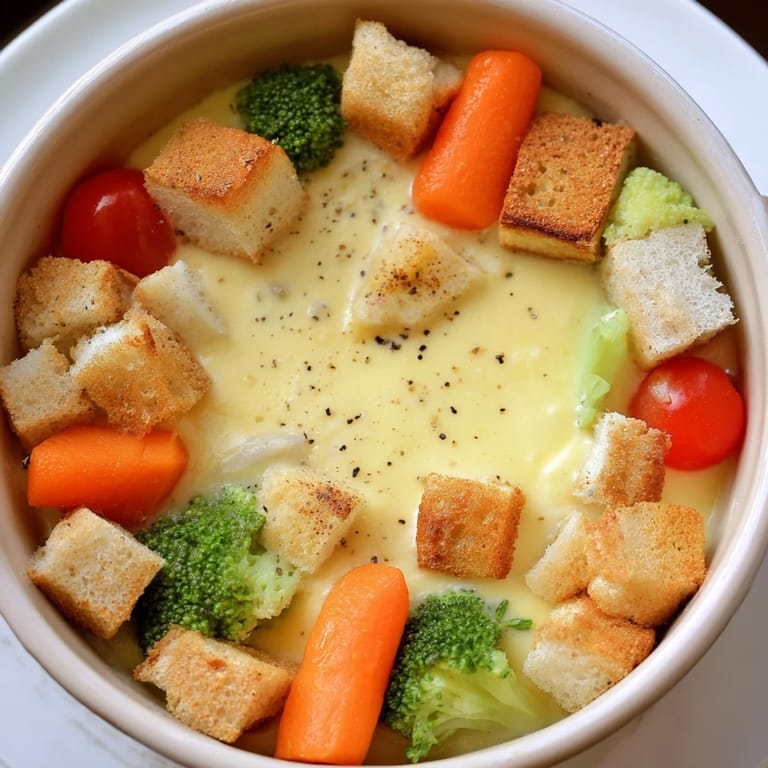
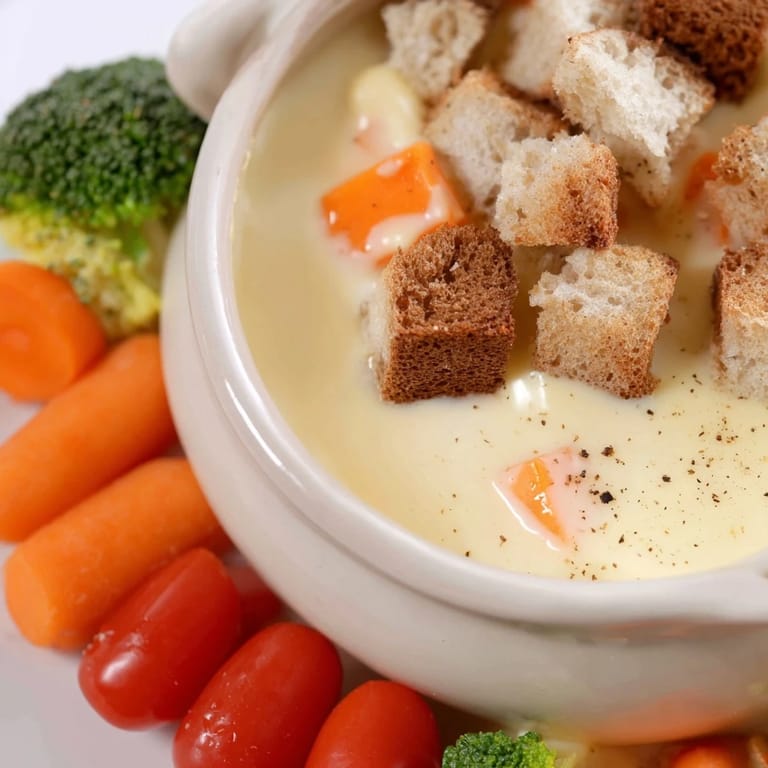
- Bread cubes: Slightly stale or toasted bread holds up better on the fork and doesn't turn soggy when dipped—I leave mine out overnight.
- Blanched vegetables: Broccoli, cauliflower, and carrots add color and a lighter option for dipping—blanch them just until tender-crisp so they don't fall apart.
Tired of Takeout? 🥡
Get 10 meals you can make faster than delivery arrives. Seriously.
One email. No spam. Unsubscribe anytime.
Instructions
- Prep the pot:
- Rub the inside of your fondue pot with the cut garlic clove, pressing gently so the oils release. This coats the pot with just enough garlic to perfume the cheese without biting back.
- Warm the wine:
- Pour in the white wine and heat it over medium-low until you see tiny bubbles forming at the edges. You want it hot but not boiling, or the alcohol will cook off too fast and the cheese won't melt properly.
- Coat the cheese:
- Toss the grated Gruyere and Emmental with the cornstarch in a bowl until every shred is lightly dusted. This step is your insurance against a broken, oily fondue.
- Melt the cheese:
- Add the cheese to the simmering wine one handful at a time, stirring constantly in a figure-eight motion. Wait until each addition is fully melted before adding more—it takes patience, but rushing it will make the cheese seize up.
- Season and finish:
- Stir in the kirsch, nutmeg, and white pepper, then lower the heat to the barest simmer. The fondue should be smooth, glossy, and just thick enough to coat a cube of bread without dripping off.
- Serve:
- Transfer the pot to a tabletop burner set on low heat and arrange the bread cubes and vegetables on a platter. Give everyone a fondue fork and remind them to stir the pot occasionally to keep it from scorching on the bottom.
 Save
Save One night, after we'd eaten all the bread and vegetables, someone scraped the crispy layer of cheese from the bottom of the pot and passed it around on a plate. It was crackling, golden, and tasted like the best part of mac and cheese times ten. Now we fight over who gets to scrape the pot, and it's become a ritual we look forward to as much as the fondue itself.
How to Keep It Smooth
The secret to silky fondue is low, steady heat and constant stirring. If the pot gets too hot, the proteins in the cheese will clump together and squeeze out the fat, leaving you with a grainy, separated mess. I keep the burner just barely on and stir every time I dip, which keeps the cheese moving and prevents hot spots. If it does start to break, pull the pot off the heat, whisk in a teaspoon of lemon juice or cornstarch slurry, and stir hard until it comes back together.
What to Serve Alongside
While bread and vegetables are traditional, I've learned that variety keeps things interesting. Boiled new potatoes, apple slices, roasted mushrooms, and even cornichons all work beautifully. The key is offering a mix of textures and flavors so people can build their own combinations. I also set out a small bowl of coarse mustard and another of pickled onions for those who want a sharper contrast to the creamy cheese.
Making It Ahead and Storing Leftovers
You can grate the cheese and toss it with cornstarch a day ahead, then store it in the fridge in a sealed container. The fondue itself doesn't reheat well—it tends to break and turn oily—but if you have leftovers, I stir them into scrambled eggs or spread them on toast and broil until bubbly. It's not the same as fresh fondue, but it's a delicious way to use every last bit.
- If you're hosting, set up the burner and arrange the dippers before guests arrive so you can melt the cheese at the table without rushing.
- Let the pot cool completely before washing it, and use warm soapy water instead of putting it in the dishwasher, which can crack ceramic pots.
- Keep a kettle of warm wine nearby in case the fondue thickens as it sits—a tablespoon or two will loosen it right back up.
 Save
Save Fondue isn't fancy, but it turns dinner into something warm and communal, the kind of meal where conversation flows as easily as melted cheese. Make it once and it'll become the thing people ask you to make again.
Recipe FAQs
- → What cheeses are ideal for the dish?
Gruyère and Emmental cheeses are traditional choices, providing a creamy and flavorful base.
- → Can I omit alcohol in the preparation?
Yes, the dry white wine and kirsch enhance flavor, but the dish can be made without them for a milder taste.
- → What breads and vegetables work best for dipping?
Crusty bread like baguette and vegetables such as broccoli, cauliflower, baby carrots, and cherry tomatoes complement the creamy blend well.
- → How do I keep the melted blend smooth?
Gradually melt cheeses into warm white wine while stirring continuously in a figure-eight to maintain a smooth texture.
- → Is there a way to enhance the flavor?
Adding kirsch or substituting part of the cheese with Appenzeller can deepen the flavor profile.